


















- Industrie-LCD-Display
-
Industrial Products
- DC Servo Drive
- AC Servo Drive
- PCB
- Siemens
- Switch Sensor
- Näherungsschalter
- Temperaturregler
- Schutzrelais
- Fiber Optic Sensor
- Encoder
- Fan
- other
- Heidelberg
- MITSUBISHI
- FANUC
- Siemens adapter
- Fujitsu connector
- Der Aufsichtsrat
- Board
- Contactor
- Circuit
- Omron
- Relais.
- Motortreiber
- power supply
- Cable
- Transformator
- HMI Touch-Glas
-
HMI-Vollautomat Ganze Einheit
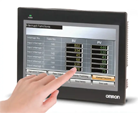
- OMRON HMI Touch Panel
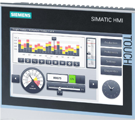
- Siemens HMI Touch Panel
- Mitsubishi HMI Touch Panel
- Allen-Bradley Automatisierung HMI Touch
- DELTA HMI Touch Panel
- EVIEW DELTA HMI Touch Panel
- KINCO DELTA HMI Touch Panel
- HITECH HMI Touch Panel
- WEINTECK HMI Touch Panel
- TECVIEW HMI Touch Panel
- WEINVIEW HMI Touch Panel
- PANASONIC HMI Touch Panel
- KYOCERA HMI Touch Panel
- SCHNEIDER HMI Touch Panel
- Module
- LCD Wechselrichter
- Membran Tastenfeld Schalter
- Winni Touch Screens
- Frequenzumrichter
- Servo Motor
- PLC
In the landscape of high-end display technology, the G270ZAN01.2 from AU Optronics (AUO) stands as a specialized solution designed for environments where color fidelity, stability, and optical uniformity are non-negotiable. While many modern displays cater to mass consumer aesthetics—prioritizing peak brightness for HDR or high refresh rates for gaming—the G270ZAN01.2 is engineered for a different purpose: mission-critical visual accuracy. This article provides a comprehensive technical evaluation of this 27-inch module, exploring its underlying architecture, its comparative value in the professional market, and the specific use cases that justify its implementation.

1. Core Specifications and Panel Architecture
Diagonal Size: 27.0 inches (16:9 aspect ratio)
Display Mode: IPS (In-Plane Switching), normally black, transmissive
Resolution: 3840 x 2160 (UHD / 4K) at 60Hz
Pixel Pitch: 0.1554 mm (resulting in a high pixel density of approximately 163 PPI)
Backlight Type: WLED (White Light Emitting Diode), edge-lit design
Surface Treatment: Antiglare (AG), Hard coating (3H)
The reliance on IPS technology is critical. Unlike VA or TN panels, IPS ensures that color shift and contrast degradation remain minimal across wide viewing angles (typically 89°/89°/89°/89°). For a module intended for collaborative medical or design environments, this is essential. The anti-glare coating further reinforces this professional pedigree, reducing specular reflections in brightly lit clinical or studio settings where screen glare can cause viewer fatigue.
2. The Optical Precision Advantage
Consistent grayscale rendering: No perceptible hot-spotting in corners.
Stable color temperature: Color accuracy is maintained from the center to the edges.
Low blue light shift: Reduced variance in chromaticity at different luminance levels.
For accuracy-critical work, a ΔE of less than 2 is desirable. The G270ZAN01.2, when paired with an external LUT (Look-Up Table) box or hardware calibration, can achieve this with reliability not found in standard office monitors.
3. Technical Considerations: Driving the Module
For system integrators, the power consumption profile is an important factor. The G270ZAN01.2 typically consumes 20-25W for the backlight and logic combined, which is efficient for a 4K 27-inch panel. However, the inrush current must be considered when designing the power delivery circuit. Furthermore, the module’s operating temperature range (typically 0°C to 50°C) and storage range (-20°C to 60°C) dictate that it is not suited for unconditioned outdoor environments but is ideal for climate-controlled medical or industrial settings.
4. Market Position and Target Applications
Medical Imaging (PACS): The need for 4K resolution to view fine details in radiology (X-rays, CT scans, MRIs) is a perfect match. The stable grayscale performance and DICOM compliance support (via calibration) make it a viable choice for diagnostic workstations.
Graphic Arts and Pre-Press: Manufacturers and publishers requiring SWOP or Fogra-GRACoL certification use panels like this to verify color proofs before mass printing.
Financial Trading Floors: The wide viewing angle and anti-glare surface reduce eye strain for traders working with multiple screens simultaneously for up to 12 hours a day.
High-End Video Surveillance: Crystal-clear detail and low image retention are critical for security control rooms.
Avionics and Simulation: Where space constraints demand a flat, edge-lit module with predictable optical performance for flight simulator instrument panels.
5. Long-Term Reliability and E-E-A-T Considerations
For professionals, the ability to source a replacement module with identical optical characteristics is a significant logistical advantage. When a medical monitor from a branded integrator (Eizo, Barco, NEC) fails, the cost of replacing the entire unit is often prohibitive. With the G270ZAN01.2, service technicians can perform a field replacement, maintaining the same color performance as the original, provided they have the proper calibration equipment. This repairability and standardization is a key factor in reducing total cost of ownership (TCO) for large-scale deployments.
6. Summary and Strategic Value
The G270ZAN01.2 is not a product of flashy innovation; it is a product of rigorous engineering refinement. It excels where the market demands predictability, reliability, and color science alignment. While consumers may chase 144Hz refresh rates or 1000-nit peak brightness, the professional user values a module that presents the same precise image today as it will in two years. AUO has delivered exactly that—a stable, high-resolution platform for the most demanding visual tasks.





