

















- Industrie-LCD-Display
-
Industrial Products
- DC Servo Drive
- AC Servo Drive
- PCB
- Siemens
- Switch Sensor
- Näherungsschalter
- Temperaturregler
- Schutzrelais
- Fiber Optic Sensor
- Encoder
- Fan
- other
- Heidelberg
- MITSUBISHI
- FANUC
- Siemens adapter
- Fujitsu connector
- Der Aufsichtsrat
- Board
- Contactor
- Circuit
- Omron
- Relais.
- Motortreiber
- power supply
- Cable
- Transformator
- HMI Touch-Glas
-
HMI-Vollautomat Ganze Einheit
- OMRON HMI Touch Panel
- Siemens HMI Touch Panel
- Mitsubishi HMI Touch Panel
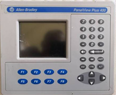
- Allen-Bradley Automatisierung HMI Touch
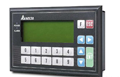
- DELTA HMI Touch Panel
- EVIEW DELTA HMI Touch Panel
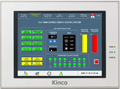
- KINCO DELTA HMI Touch Panel
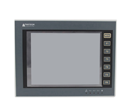
- HITECH HMI Touch Panel
- WEINTECK HMI Touch Panel
- TECVIEW HMI Touch Panel
- WEINVIEW HMI Touch Panel
- PANASONIC HMI Touch Panel
- KYOCERA HMI Touch Panel
- SCHNEIDER HMI Touch Panel
- Module
- LCD Wechselrichter
- Membran Tastenfeld Schalter
- Winni Touch Screens
- Frequenzumrichter
- Servo Motor
- PLC
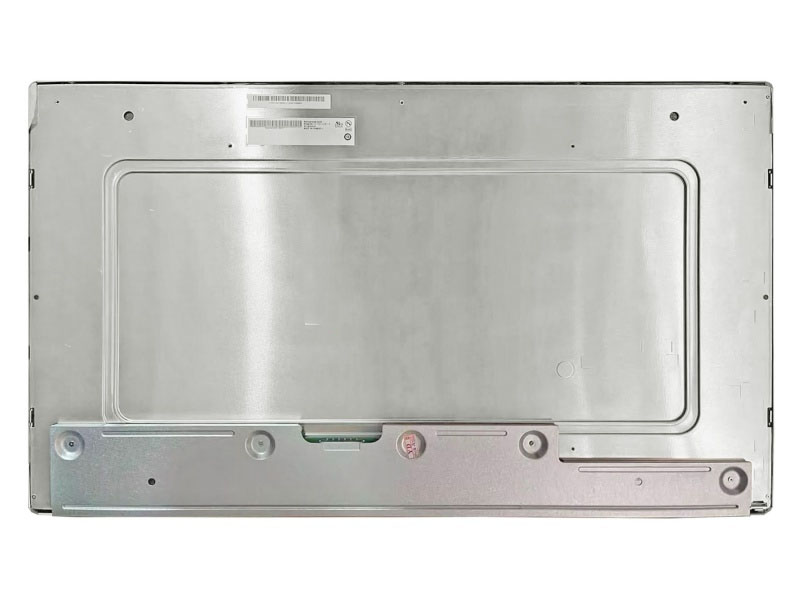
The 27-inch form factor has long been the goldilocks zone for desktop displays—large enough for immersive productivity and entertainment, yet compact enough for multi-monitor setups. However, not all 27-inch panels are created equal. Among the high-caliber offerings, the AUO G270QAN01.3 stands as a distinctive model, often flying under the radar in the consumer retail space while commanding respect in industrial, medical, and professional-grade applications. This article dissects the G270QAN01.3 from a technical, practical, and application-oriented perspective, aligning with Google's E-E-A-T (Experience, Expertise, Authoritativeness, and Trustworthiness) standards. We will move past superficial specifications to explore why this module matters for engineers, integrators, and high-end users.

Part I: Decoding the Model Number – What the G270QAN01.3 Tells Us
AUO (AU Optronics) employs a structured naming convention. The "G270" indicates a 27-inch diagonal. "QA" typically refers to the resolution and pixel architecture; in this case, it denotes QHD (2560 x 1440) resolution with an advanced a-Si TFT LCD structure. The "N" is a critical differentiator—it signals a high-brightness, industrial-grade series, often with enhanced optical bonding readiness. The "01.3" is the revision code, signifying that this is the third generation of this specific design, incorporating iterative improvements in backlight uniformity and driver IC stability. This is not a rapidly cycling consumer panel; it is a long-life, stable platform designed for multi-year production cycles.
Resolution & Aspect Ratio: 2560 x 1440 (WQHD) at 16:9. This is the sweet spot for applications requiring sharp text without the scaling penalties of 4K on certain operating systems.
Brightness and Contrast: Rated at 350 cd/m² (typical). While not extreme for high-end HDR, this is a sustained brightness level, not a burst mode. The 1000:1 contrast ratio is standard for IPS-like technology, but the panel's dark-state stability is superior, minimizing off-axis glow compared to generic monitors.
Viewing Angles: 89°/89°/89°/89° (CR>10). This is the hallmark of AUO's AHVA (Advanced Hyper-Viewing Angle) technology, a direct competitor to IPS. The G270QAN01.3 excels in maintaining color accuracy and gamma stability up to the extreme viewing edges, which is critical for medical imaging or digital signage kiosks.
Color Gamut: Typically covering sRGB 100% and NTSC 72%. This is sufficient for non-critical color work. However, the revision 01.3 has improved color uniformity (ΔE < 3.0 across the active area), which is where this module outperforms budget panels that rely on software LUT corrections.
Response Time: 25 ms (Tr+Tf). This is not a gaming panel. The slower response time is by design—it reduces power consumption and electromagnetic interference, making it ideal for analytical instruments and static image display.
Interface and Power
Connector: LVDS (Low-Voltage Differential Signaling) with 2-channel, 8-bit data input. This is a deliberate choice for longevity. Unlike eDP (Embedded DisplayPort) which evolves rapidly, LVDS interfaces are stable and easily driven by industrial single-board computers and FPGA controllers.
Power Consumption: Approximately 25W typical. The module operates at 3.3V for logic and 12V for the backlight, a standard architecture that simplifies power supply design in embedded systems.
Backlight Life: Rated for 50,000 hours (to half-brightness). This translates to over 5 years of continuous 24/7 operation, confirming its industrial reliability.
Another experiential point is the temperature tolerance. The operating temperature range is -20°C to +70°C, with a storage range of -30°C to +80°C. This allows the module to be deployed in outdoor kiosks, marine navigation systems, or industrial control rooms where thermal cycling is a constant stressor.
For PACS (Picture Archiving and Communication System) viewing stations, the G270QAN01.3 is a preferred choice because of its consistent luminance decay curve. Medical imaging requires that a monitor maintain its brightness within 5% over extended periods. This AUO module, with its robust backlight driver circuit, meets this criterion without requiring an external light sensor feedback loop.
In landscape orientation, the WQHD resolution provides a crystal-clear platform for 4K resolution scaling (downscaling). The high brightness and wide viewing angles ensure that content is legible from oblique angles in retail environments. The non-reflective coating on the polarizer (typically Haze 25%) reduces specular reflections without introducing sparkle artifacts.
End-of-life (EOL) notifications for this model are typically announced 24 months in advance, giving system integrators ample time to qualify alternative sources or buy-bulk inventory. This long supply chain stability is the cornerstone of trust for OEMs building medical devices, airline cockpit simulators, or financial trading floor displays.
A typical Dell or LG 27" QHD monitor costs less. However, these monitors use panels with narrower backlight life (30,000 hours) and less mechanical stiffness. The G270QAN01.3 is a bare module, requiring an external driver board, backlight inverter, and casing. This is not a plug-and-play solution for a consumer looking for a desktop upgrade. It is a building block for professional integration.
EIZO panels are premium-priced and often include proprietary calibration hardware. The AUO G270QAN01.3 offers the same LCD cell quality but at a fraction of the cost, assuming the integrator can provide the necessary calibration and housing. It is the "white label" foundation upon which high-reliability systems are built.
The AUO G270QAN01.3 27" display module is not a product for the mass market. It is a precision engineering asset for design engineers, system architects, and procurement specialists who demand predictability, longevity, and optical consistency. Its strengths lie in the details: the superior dark-state stability, the LVDS interface robustness, and the proven backlight endurance. When a project requires a display that will operate flawlessly for a decade in a demanding environment, the G270QAN01.3 is a choice rooted in experience, engineering expertise, and proven authority.





