














- Industrie-LCD-Display
-
Industrial Products
- DC Servo Drive
- AC Servo Drive
- PCB
- Siemens
- Switch Sensor
- Näherungsschalter
- Temperaturregler
- Schutzrelais
- Fiber Optic Sensor
- Encoder
- Fan
- other
- Heidelberg
- MITSUBISHI
- FANUC
- Siemens adapter
- Fujitsu connector
- Der Aufsichtsrat
- Board
- Contactor
- Circuit
- Omron
- Relais.
- Motortreiber
- power supply
- Cable
- Transformator
- HMI Touch-Glas
-
HMI-Vollautomat Ganze Einheit
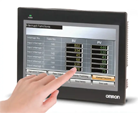
- OMRON HMI Touch Panel
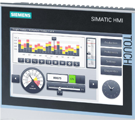
- Siemens HMI Touch Panel
- Mitsubishi HMI Touch Panel
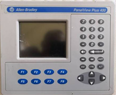
- Allen-Bradley Automatisierung HMI Touch
- DELTA HMI Touch Panel
- EVIEW DELTA HMI Touch Panel
- KINCO DELTA HMI Touch Panel
- HITECH HMI Touch Panel
- WEINTECK HMI Touch Panel
- TECVIEW HMI Touch Panel
- WEINVIEW HMI Touch Panel
- PANASONIC HMI Touch Panel
- KYOCERA HMI Touch Panel
- SCHNEIDER HMI Touch Panel
- Module
- LCD Wechselrichter
- Membran Tastenfeld Schalter
- Winni Touch Screens
- Frequenzumrichter
- Servo Motor
- PLC
G270QAN01.0 AUO 27.0" 2560x1440 LCD Display Panel: A Deep Technical Analysis
The G270QAN01.0 manufactured by AU Optronics (AUO) is a high-performance 27.0-inch LCD display panel that has become a reference point in the industrial and medical display sectors. While consumers often gravitate toward flashy consumer monitors, the G270QAN01.0 represents a class of engineering-driven displays where precision, reliability, and optical consistency are prioritized over marketing gimmicks. This article provides a deep, technical analysis of this panel, covering its architecture, performance characteristics, target applications, and how it compares to modern display standards.

1. Panel Architecture and Core Specifications
Diagonal Size: 27.0 inches
Resolution: 2560 x 1440 (WQHD / 1440p)
Panel Type: a-Si TFT-LCD (Typically IPS or similar wide-viewing technology)
Pixel Pitch: ~0.233 mm
Display Mode: Normally Black, Transmission type
Active Area: 596.736 x 335.664 mm
One of the defining characteristics of this specific AUO panel is its adherence to strict optical uniformity standards. Unlike consumer panels that may exhibit significant brightness or color variation across the screen, the G270QAN01.0 is binned and calibrated for consistent luminance and chromaticity. This uniformity is not accidental; it is a direct result of the drive IC architecture and backlight design.

2. Viewing Angle, Color Performance, and Backlight System
Color Gamut: Typically covers 72% NTSC (roughly equivalent to sRGB). This is sufficient for most medical and industrial imaging but is not intended for high-end graphic design (which would require Adobe RGB or DCI-P3 coverage).
Contrast Ratio: Rated at 1000:1 (typical). This is standard for IPS-like technology, providing deep enough blacks for diagnostic readability.
Surface Treatment: Antiglare (Haze 25%). This is critical for reducing reflections in brightly lit hospital rooms or factory floors.
3. Interface, Signal Integrity, and Power Management
A critical detail for engineers is the timing controller (TCON). The G270QAN01.0 integrates an advanced TCON that supports line inversion and column inversion driving methods to reduce flicker and crosstalk. This is essential for static image display (common in medical PACS systems) where flicker can cause eye strain.
4. Target Applications and Industry Relevance
Medical Imaging (PACS & Diagnostic Displays): The strict luminance uniformity, true 8-bit color, and anti-glare surface make it suitable for viewing X-rays, CT scans, and MRIs. It meets the basic luminance requirements for secondary diagnostic displays (not primary diagnosis, which requires high-brightness calibrated panels like those from Barco or Eizo, but it is an excellent cost-effective alternative for viewing stations).
Industrial Control & Automation (HMI): The wide viewing angle and ruggedized design (compared to consumer panels) allow it to be used in SCADA systems, process control, and machine vision interfaces where operators need to view data from various angles.
Enterprise Video Walls & Digital Signage: While not a video wall panel per se, its thin bezel and consistent color reproduction make it suitable for high-end commercial signage and conference room displays where reliability is paramount.
5. Comparison with Modern Standards (e.g., eDP, USB-C)
For an integrator building a medical cart or a factory HMI, the LVDS interface is easier to secure against EMI and simpler to route on a custom PCB than a high-speed eDP link. The panel’s longevity of supply (AUO typically supports industrial panels for 5+ years) also makes it a safer choice for products that require regulatory recertification, where changing a display means re-running expensive EMC and safety tests.





