

















G270HAN01.0 27" LCD Display Panel: A Deep Dive into AUO’s Engineering Excellence
The G270HAN01.0, manufactured by AU Optronics (AUO), is a 27-inch a-Si TFT-LCD panel that occupies a critical niche in the professional display market. While many consumers gravitate toward consumer-grade monitors, panels like the G270HAN01.0 are engineered for environments where color accuracy, viewing angles, and operational reliability are non-negotiable. This article dissects the panel’s technical architecture, performance characteristics, and ideal use cases, offering a comprehensive analysis for procurement specialists, integrators, and industry professionals.
1. Core Technical Specifications and Panel Architecture
Diagonal Size: 27.0 inches
Resolution: 1920 x 1080 (Full HD, 81 PPI)
Display Mode: IPS, Normally Black, Transmissive
Active Area: 597.888 x 336.312 mm
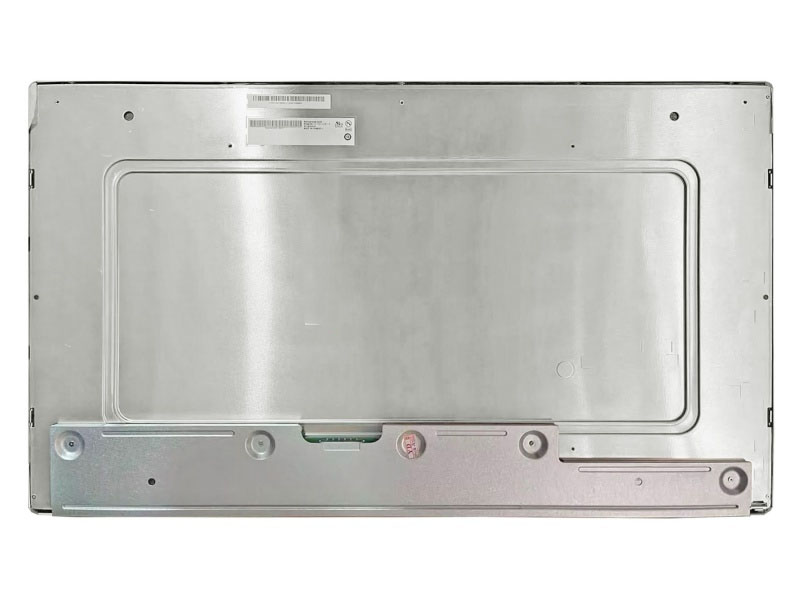
Outline Dimensions: 630.0 x 368.2 x 16.2 mm (with brackets)
Brightness (Typical): 400 cd/m²
Contrast Ratio (Typical): 1000:1
Response Time: 12 ms (Gray-to-Gray typical)
Viewing Angle: 89/89/89/89 (CR >= 10)
Color Gamut: 72% NTSC (CIE1931)
Interface: eDP (4 Lanes), HBR2 (5.4Gbps/lane)
Backlight: WLED, 50,000 hours lifetime
Operating Temperature: 0°C to 50°C
Storage Temperature: -20°C to 60°C
The choice of a 1920x1080 resolution on a 27-inch screen yields a pixel density of roughly 81 PPI. This is not intended for high-density text rendering; rather, it optimizes for readability at typical viewing distances (60-80 cm) in industrial or medical setups. The 12ms response time, while slow by gaming standards, is deliberately calibrated for stable color transitions without overshoot artifacts.

2. Optical Performance and Color Science
A key engineering detail is the normally black IPS mode. In this mode, voltage is applied to allow light transmission. This has two practical benefits: it reduces black-level leakage (common in older IPS panels) and improves dark room contrast performance. For medical imaging or video surveillance, this nuance can be the difference between detecting a subtle shadow and missing it.
3. Interface, Signal Integrity, and Power Management
Signal integrity is reinforced by the LVDS-like signaling of eDP, which offers inherent noise immunity compared to traditional VGA or DVI. The panel also includes EDID (Extended Display Identification Data) that accurately reports native resolution and timing, ensuring plug-and-play compatibility with embedded systems (e.g., Raspberry Pi 4, NVIDIA Jetson) and medical PCs.
4. Mechanical Design, Thermal Management, and Reliability
Reliability testing follows AUO’s MIL-STD-810G protocol for vibration and shock. The panel can withstand 1.5G RMS random vibration across 10-200 Hz, making it suitable for installation in forklift terminals, agricultural equipment, or mobile medical carts. The MTBF (Mean Time Between Failures) is rated at 300,000 hours per MIL-HDBK-217F, which translates to over 34 years of continuous 24/7 operation.
5. Application Domains and Integration Insights
Medical imaging workstations: The IPS uniformity and consistent sRGB reproduction allow for accurate diagnosis of radiology scans, especially X-rays and CT scans. The anti-glare surface (3H hardcoat) reduces reflections in brightly lit clinical environments.
Industrial control rooms: The 400 cd/m² brightness and wide viewing angles enable operators to monitor process data from any position. The eDP interface supports long cable runs required in distributed control systems.
Digital signage kiosks: The slim mechanical dimensions and integrated backlight driver reduce enclosure complexity. The 50,000-hour backlight life ensures 5.7 years of 24/7 operation before hitting 70% brightness.
Marine and outdoor terminals: While not fully sunlight-readable, the 400 cd/m² panel can be paired with an optical bonding layer to reduce glare, and the vibration resistance makes it viable for shipboard navigation displays.
When integrating this panel, engineers must note that it requires a separate controller board with an eDP output. While many off-the-shelf monitor controllers support this interface, the power supply must be 12V DC at 4A minimum to support inrush current. Additionally, the panel generates electrostatic discharge (ESD) susceptibility above 8kV air discharge, requiring proper grounding of the chassis.
6. Comparative Analysis: G270HAN01.0 vs. Competing Panels
vs. Innolux M270HJJ-L50: Both are 27" IPS FHD panels, but the Innolux uses a AHVA (Advanced Hyper-Viewing Angle) technology with slightly wider color gamut (72% NTSC) but lower contrast ratio (800:1). The AUO panel has a more robust thermal design and longer backlight life.
vs. Samsung LTM270DL01: Samsung’s PLS (Plane-to-Line Switching) panel offers higher brightness (450 cd/m²) but has a narrower viewing angle (85° typical). The AUO panel wins in off-axis color stability.
vs. BOE MV270FHB-N20: BOE’s panel uses a ADSDS (Advanced Super Dimension Switch) technology with faster response time (8ms) but higher power consumption (26W). The AUO panel is more efficient and physically thinner.
The G270HAN01.0’s primary advantage is not raw performance, but balanced reliability: it sacrifices peak brightness and speed for longevity, thermal stability, and mechanical durability. This makes it the preferred choice for 24/7 industrial operation over consumer-grade alternatives.
7. Conclusion: A Component, Not a Commodity
As display technology evolves toward higher resolutions and dynamic refresh rates, the G270HAN01.0 remains a relevant choice because it solves the fundamental problem of 24/7 reliability with proven engineering. If your project demands a predictable, thermally stable, and mechanically rugged 27-inch panel, the G270HAN01.0 is not just an option—it is a documented standard.





