AUO G240UAN01.2: A Deep Dive into the 24-Inch Industrial Display Module
In the competitive landscape of industrial display technology, the AUO G240UAN01.2 stands out as a highly specialized 24-inch TFT-LCD module. While many displays cater to consumer-grade aesthetics, this module is engineered for environments where precision, durability, and optical clarity are non-negotiable. This article provides a technical deep dive into the specifications, application logic, and competitive positioning of this specific model, moving beyond basic spec sheets to offer actionable insight for procurement and engineering teams.
1. Technical Architecture and Optical Performance
At its core, the G240UAN01.2 is an a-Si TFT active matrix LCD panel with a resolution of 1920 x 1200 (WUXGA). The choice of a 16:10 aspect ratio over the more common 16:9 is deliberate. For vertical applications like information kiosks, medical imaging, or industrial control panels, the extra 120 pixels of vertical height reduce the need for scrolling, improving user efficiency. The module deploys a vertical alignment (VA) technology rather than the more common IPS or TN films. This is a critical differentiator. VA panels offer superior native contrast ratios, typically 3000:1 or higher, compared to the 1000:1 standard for IPS. For applications requiring deep blacks and high dynamic range without the cost of full-array local dimming, the G240UAN01.2 provides a cost-effective solution. The 350 cd/m² typical brightness is tailored for indoor industrial use, balancing power consumption with readability under ambient office or factory lighting.
Color performance is defined by a 72% NTSC (CIE1931) color gamut. While not wide-gamut, this ensures consistent color reproduction across standard sRGB workflows, which is critical for OEMs requiring matching calibration across multiple units in a single control room.
2. Mechanical Engineering and Form Factor
The physical design of the G240UAN01.2 is as important as its electrical specifications. The module adheres to a strict 526.0 x 324.0 mm panel outline, with an active area of 518.4 x 324.0 mm. The 10.0 mm typical thickness and 1.95 kg weight reflect a rugged design using a metal bezel, a necessity for applications involving vibration or periodic maintenance handling. Critically, the module supports a 30-pin Digital Visual Interface (DVI) with LVDS (Low-Voltage Differential Signaling) interface. The specific electrical interface—often 2-channel, 10-bit LVDS—ensures low EMI (Electromagnetic Interference) over cable runs common in embedded systems. For engineers integrating this into a bespoke backplane or embedded PC, the 10-bit deep color support (1.07 billion colors) is a significant advantage for gradient rendering in medical or simulation environments.
3. Environmental Resilience and Lifetime Characteristics
This is where the G240UAN01.2 diverges sharply from consumer monitors. It is rated for an operating temperature range of 0°C to 50°C and a storage range of -20°C to 60°C. While these numbers might seem standard, the critical spec is the MTBF (Mean Time Between Failures), which typically exceeds 50,000 hours for AUO's industrial lines when operated at standard brightness. This translates to roughly 5.7 years of continuous 24/7 operation—a baseline requirement for security control centers or manufacturing line displays. Furthermore, the module includes Hard & Soft Coating (HSC) on the polarizer. This is a specific industrial enhancement to resist scratching from frequent touch interactions or cleaning with aggressive solvents (e.g., isopropyl alcohol). Consumer-grade panels lack this coating, making the G240UAN01.2 a superior choice for cleanrooms or hospital wards where sterilization is frequent.

4. Application-Specific Advantages
Medical Imaging (PACS Workstations): The WUXGA resolution combined with the high contrast VA panel allows for detailed grayscale rendering. The 10-bit data channel is non-negotiable for DICOM (Digital Imaging and Communications in Medicine) calibration, as it avoids the banding artifacts seen on 8-bit consumer panels.
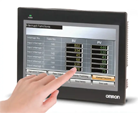
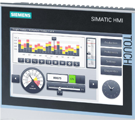
Industrial HMI (Human-Machine Interface): The wide viewing angle (typically 178°/178°), combined with the anti-glare surface (Haze 25%), ensures readability from oblique angles on factory floors without distracting reflections from overhead lighting.
Digital Signage & Kiosks: The 16:10 ratio is optimal for portrait-mode signage (tall information displays), maximizing content area for menus or directories.
Gaming & Simulation: While not a gaming monitor, the 3.5ms response time (gray-to-gray) is faster than standard industrial panels, making it viable for training simulators where motion blur must be minimized for realistic aircraft or vehicle control interfaces.
5. Competitive Landscape and Obsolescence Management
When comparing the G240UAN01.2 to competitors like the Innolux MT240DW01 or LG Display LM240WU4, the AUO module often wins on native contrast ratio and mechanical robustness. Many competing panels are built for high-volume, low-cost consumer monitors, which leads to plastic bezels and shorter backlight lifetimes.
A key consideration for OEMs is longevity of supply. AUO typically promises a 3-5 year production lifecycle for industrial modules like this one, which is critical for products requiring regulatory certifications. Engineers must also verify the backlight type (LED vs. CCFL). The G240UAN01.2 uses WLED (White LED) edge lighting, which ensures mercury-free compliance with RoHS and a lower thermal output than older CCFL technology.

6. Integration and Procurement Checklist
For engineers and purchasing managers evaluating this module, the following points require verification:
Timing Controller (TCON) Compatibility: Confirm that your embedded system provides the correct LVDS clock frequencies (typically 150-160 MHz for WUXGA).
Backlight Driver: The module requires an external LED driver. Verify the forward voltage and current specs (typically ~12V @ 600mA per string) to avoid damaging the backlight array.
Mechanical Mounting: The mounting holes are designed for M3 screws with a specific torque (usually 0.3-0.4 N·m). Over-torquing can cause glass stress and white spots (mura), which voids warranty.
Optical Bonding: For high-vibration or outdoor (direct sunlight) applications, specify optical bonding with silicone gel or LOCA (Liquid Optical Clear Adhesive) during procurement to reduce internal reflections and prevent condensation.
7. Conclusion
The AUO G240UAN01.2 is not a general-purpose monitor. It is a precision engineering component designed for the intersection of display quality and operational longevity. Its strength lies not in headline-grabbing features (like 4K or HDR1000), but in the consistent, reliable performance required by mission-critical industrial and medical systems. When procuring this module, pay close attention to the backlight driver integration and the physical coating options. For any application where contrast accuracy, environmental resilience, and lifecycle stability matter more than cost-per-inch, the G240UAN01.2 remains a benchmark solution in the 24-inch industrial display space.