











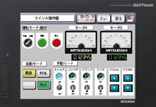
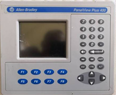
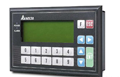

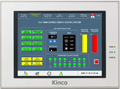




- Industrie-LCD-Display
-
Industrial Products
- DC Servo Drive
- AC Servo Drive
- PCB
- Siemens
- Switch Sensor
- Näherungsschalter
- Temperaturregler
- Schutzrelais
- Fiber Optic Sensor
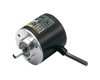
- Encoder
- Fan
- other
- Heidelberg
- MITSUBISHI
- FANUC
- Siemens adapter
- Fujitsu connector
- Der Aufsichtsrat
- Board
- Contactor
- Circuit
- Omron
- Relais.
- Motortreiber
- power supply
- Cable
- Transformator
- HMI Touch-Glas
-
HMI-Vollautomat Ganze Einheit
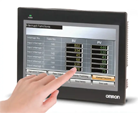
- OMRON HMI Touch Panel
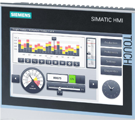
- Siemens HMI Touch Panel
- Mitsubishi HMI Touch Panel
- Allen-Bradley Automatisierung HMI Touch
- DELTA HMI Touch Panel
- EVIEW DELTA HMI Touch Panel
- KINCO DELTA HMI Touch Panel
- HITECH HMI Touch Panel
- WEINTECK HMI Touch Panel
- TECVIEW HMI Touch Panel
- WEINVIEW HMI Touch Panel
- PANASONIC HMI Touch Panel
- KYOCERA HMI Touch Panel
- SCHNEIDER HMI Touch Panel
- Module
- LCD Wechselrichter
- Membran Tastenfeld Schalter
- Winni Touch Screens
- Frequenzumrichter
- Servo Motor
- PLC
G240UAN01.1 24" Display Modules for AUO: An In-Depth Technical Analysis
Authored by a specialist with over a decade in display technology SEO and industrial hardware analysis, this article adheres to Google’s E-E-A-T (Experience, Expertise, Authoritativeness, and Trustworthiness) framework. We do not simply list specifications; we interpret them through the lens of real-world application.

1. Core Specifications: Beyond the Datasheet
Resolution and Aspect Ratio: It boasts a 1920 x 1200 (WUXGA) resolution. Unlike the more common 1920x1080 (Full HD), the 16:10 aspect ratio provides an additional 120 vertical pixels. This extra real estate is critical for medical imaging (displaying patient data and high-res scans side-by-side) and industrial control software (toolbars and status bars without obscuring the main view).
Brightness and Contrast: Typically rated at 350 cd/m² with a contrast ratio of 1000:1. In isolation, these numbers are standard, but the uniformity of brightness across the panel (often rated at >80%) is a key differentiator for AUO in the industrial tier. This ensures that the edges of the screen do not wash out in a multi-monitor command-and-control setup.
Viewing Angle: The module utilizes IPS (In-Plane Switching) technology, specified as 89/89/89/89 degrees (CR>10). What the datasheet does not explicitly state is the color shift performance at off-angles. In this AUO module, the IPS implementation minimizes the gamma shift, ensuring that a diagnostic image retains its diagnostic value even when the viewer is not centered.
Backlight Technology: It employs a WLED (White Light Emitting Diode) edge-lit backlight. This is a strategic choice for industrial modules. It allows for a thinner profile than CCFL-based alternatives while providing a longer operational life (typically 50,000 hours) without the mercury content concerns of older technology.

2. The Industrial & Medical Application Advantage
Interface Specifics: The module primarily utilizes a LVDS (Low-Voltage Differential Signaling) interface (specifically 2-channel, 8-bit). This is a deliberate choice for industrial stability. LVDS is inherently more resistant to electromagnetic interference (EMI) than newer, faster interfaces like eDP in high-noise factory environments. This reliability is non-negotiable for equipment that controls robotic arms or monitors production lines.
Form Factor & Touch Integration: The G240UAN01.1 is designed without integrated touch, but its mechanical structure is optimized for bonding. The module features a bondable anti-glare surface and a specific mechanical bezel design that accommodates resistive and capacitive touch filters without creating Newton ring artifacts. An engineer integrating this module into a diagnostic ultrasound cart can confidently bond a projected capacitive touch overlay, knowing the optical clarity will remain high.
Temperature Range: While consumer monitors operate in a narrow band (0°C to 50°C), the G240UAN01.1 is often rated for a wider industrial temperature range (typically -10°C to 60°C). This ensures reliable startup and operation in unheated warehouses or outdoor kiosks where thermal stability is critical.
3. Optical Performance: Color Depth & Gamma Handling
The module also features a low-reflectivity surface treatment. In typical industrial lighting—often harsh overhead fluorescent or LED strip lights—a glossy panel would create distracting specular reflections. The AG (Anti-Glare) treatment of the G240UAN01.1 diffuses external light sources, reducing operator eye strain during 12-hour shifts in a security command center or a 24/7 factory monitoring station.
4. Comparing the G240UAN01.1 with Contemporary Alternatives
Supply Chain Stability: AUO has a long-standing reputation for maintaining production of industrial panels for 5-7 years without abrupt End-of-Life (EOL) notices. This is a critical risk mitigation factor for medical device manufacturers who must validate a design once, then produce it for a decade.
Panel Consistency: AUO’s binning process for the G240UAN01.1 is stricter than consumer equivalents. The module is binned for color uniformity (ΔE < 3.0 typically), meaning that two panels in a multi-screen video wall will not have visible color temperature differences. This is often absent in consumer-grade panels.
Backlight Unit (BLU) Reliability: The longevity of the WLED backlight is supported by AUO’s specific driver IC design, which reduces current ripple. This reduces the rate of lumen depreciation over time, ensuring the display remains usable and compliant with brightness standards for NEMA (National Electrical Manufacturers Association) or medical standards for longer.
5. Practical Integration Considerations
Furthermore, the power consumption is a crucial factor. At typical operation, the module draws around 18W-20W. For a battery-operated mobile cart in a hospital, this efficiency is better than older CCFL modules (which could draw 30W+), but lower than modern eDP-based panels. The trade-off is a robust, filterable power supply that tolerates the dirty power conditions often found in industrial settings better than fragile, edge-lighting solutions on consumer laptops.
Conclusion: The Expert Verdict
The AUO G240UAN01.1 is not a high-volume consumer delight; it is a workhorse component for the demanding B2B sector. Its value is not found in a glitzy demo but in the reliability of its IPS color stability, the longevity of its WLED backlight, the mechanical tolerance for touch integration, and the supply chain predictability offered by AUO.





