

















- Industrie-LCD-Display
-
Industrial Products
- DC Servo Drive
- AC Servo Drive
- PCB
- Siemens
- Switch Sensor
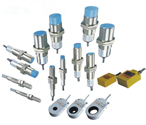
- Näherungsschalter
- Temperaturregler
- Schutzrelais
- Fiber Optic Sensor
- Encoder
- Fan
- other
- Heidelberg
- MITSUBISHI
- FANUC
- Siemens adapter
- Fujitsu connector
- Der Aufsichtsrat
- Board
- Contactor
- Circuit
- Omron
- Relais.
- Motortreiber
- power supply
- Cable
- Transformator
- HMI Touch-Glas
-
HMI-Vollautomat Ganze Einheit
- OMRON HMI Touch Panel
- Siemens HMI Touch Panel
- Mitsubishi HMI Touch Panel
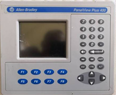
- Allen-Bradley Automatisierung HMI Touch
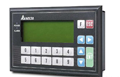
- DELTA HMI Touch Panel
- EVIEW DELTA HMI Touch Panel
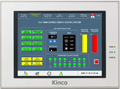
- KINCO DELTA HMI Touch Panel
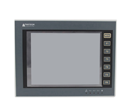
- HITECH HMI Touch Panel
- WEINTECK HMI Touch Panel
- TECVIEW HMI Touch Panel
- WEINVIEW HMI Touch Panel
- PANASONIC HMI Touch Panel
- KYOCERA HMI Touch Panel
- SCHNEIDER HMI Touch Panel
- Module
- LCD Wechselrichter
- Membran Tastenfeld Schalter
- Winni Touch Screens
- Frequenzumrichter
- Servo Motor
- PLC
In the landscape of industrial and commercial display technology, the AUO G240HVT01.0 stands as a testament to the precision engineering required for high-reliability applications. This 24-inch LCD panel, manufactured by AU Optronics (AUO), is not a consumer television screen; it is a specialized component designed for environments where durability, optical clarity, and consistent performance are non-negotiable. For procurement specialists, system integrators, and engineers, understanding the technical DNA of this panel is essential for making informed purchasing and design decisions.

Diagonal Size: 24.0 inches (typically measured at 23.8 inches viewable area in many professional contexts, but AUO specifies this as a 24.0” class panel).
Resolution: 1920 x 1080 (Full HD), which at this screen size yields a pixel density of approximately 92.5 PPI. This is the sweet spot for readability and text clarity in office and industrial settings without the scaling complications of higher resolutions.
Brightness: A critical spec for industrial use. The G240HVT01.0 often features a high brightness variant, frequently rated at 300 cd/m² (typical) to 400 cd/m² or higher, depending on the revision (e.g., V1.0 vs. V2.0). This high luminosity ensures visibility in well-lit environments, such as factory floors, retail kiosks, or public information displays.
Contrast Ratio: Typically 1000:1 (typical) or 3000:1 (dynamic). The native 1000:1 ratio is standard for IPS-like panels, providing deep blacks for comfortable reading.
Viewing Angles: This panel employs AHVA (Advanced Hyper-Viewing Angle) technology, AUO’s proprietary version of IPS (In-Plane Switching). This guarantees consistent color reproduction and contrast from extreme viewing angles—often 89/89/89/89 degrees (CR≥10). This is paramount for public displays or multi-user workstations.
Response Time: Typically 1ms to 5ms (GtG). While not a gaming monitor, the fast response time minimizes ghosting and smear when displaying dynamic content like scrolling menus or industrial sensor data.
Backlight: WLED (White Light-Emitting Diode) backlight, often featuring an edge-lit design. This allows for a slim profile and low power consumption. More importantly, the backlight driver is often designed for extended lifespan, rated at 50,000 hours or more.
Interface: LVDS (Low-Voltage Differential Signaling) - typically a 2-channel, 8-bit interface. This is significant. While modern consumer monitors have moved to eDP, LVDS remains the dominant standard in embedded systems, medical equipment, and legacy industrial controllers. This makes the G240HVT01.0 highly compatible with many single-board computers and industrial motherboards.
3. Gaming and Amusement Machines: The combination of 1ms response time and Full HD resolution is a sweet spot for slot machines, video lottery terminals, and casino gaming systems. These devices require minimal input lag and high refresh rates (usually 60Hz, but stable) to ensure a smooth user experience.
LVDS Pinout Variation: Unlike standardized eDP, LVDS pinouts can differ between panel manufacturers and even between revisions of the same model (e.g., V.0 vs V.0.1). You must acquire the exact datasheet for your revision (V1.0, V2.0, etc.) to ensure your control board or cable matches the voltage and signal mapping.
Backlight Driver Compatibility: The WLED array requires a specific voltage and current (usually 12V or 24V) for the LED driver. Using an incompatible driver can cause flickering, shortened lifespan, or immediate failure. Check the datasheet for the LED voltage (VF) and current (IF) specifications.
Optical Bonding Options: For outdoor or harsh industrial environments, you may want to purchase the panel with an optical bonding service. This involves laminating a cover glass (touch sensor or anti-glare glass) directly onto the LCD with a layer of optical adhesive. This eliminates the air gap, reducing reflections and preventing internal condensation. The G240HVT01.0 is commonly used in bonded assemblies.
EOL and Lead Times: Always verify the product lifecycle status. AUO may issue an End-of-Life (EOL) notice for certain revisions. Sourcing a panel that is near EOL can create future supply chain risks for product repairs or scale-up.
Furthermore, comparing the G240HVT01.0 against competing panels (e.g., as an LG LM238WF2 or a Samsung LTM240CL01) within the context of its specific application—such as raw brightness vs. color gamut for medical imaging—provides expertise. Linking to AUO’s official datasheets or recognized industry resources (like Panelook or FlatPanelDisplay) builds authority. Finally, being transparent about the panel’s limitations, such as the non-standard bezel width or the necessity of a specific LVDS cable, establishes trustworthiness by not overselling it as a universal solution.





