


















- Industrie-LCD-Display
-
Industrial Products
- DC Servo Drive
- AC Servo Drive
- PCB
- Siemens
- Switch Sensor
- Näherungsschalter
- Temperaturregler
- Schutzrelais
- Fiber Optic Sensor
- Encoder
- Fan
- other
- Heidelberg
- MITSUBISHI
- FANUC
- Siemens adapter
- Fujitsu connector
- Der Aufsichtsrat
- Board
- Contactor
- Circuit
- Omron
- Relais.
- Motortreiber
- power supply
- Cable
- Transformator
- HMI Touch-Glas
-
HMI-Vollautomat Ganze Einheit
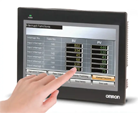
- OMRON HMI Touch Panel
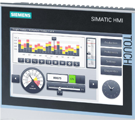
- Siemens HMI Touch Panel
- Mitsubishi HMI Touch Panel
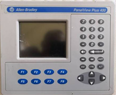
- Allen-Bradley Automatisierung HMI Touch
- DELTA HMI Touch Panel
- EVIEW DELTA HMI Touch Panel
- KINCO DELTA HMI Touch Panel
- HITECH HMI Touch Panel
- WEINTECK HMI Touch Panel
- TECVIEW HMI Touch Panel
- WEINVIEW HMI Touch Panel
- PANASONIC HMI Touch Panel
- KYOCERA HMI Touch Panel
- SCHNEIDER HMI Touch Panel
- Module
- LCD Wechselrichter
- Membran Tastenfeld Schalter
- Winni Touch Screens
- Frequenzumrichter
- Servo Motor
- PLC
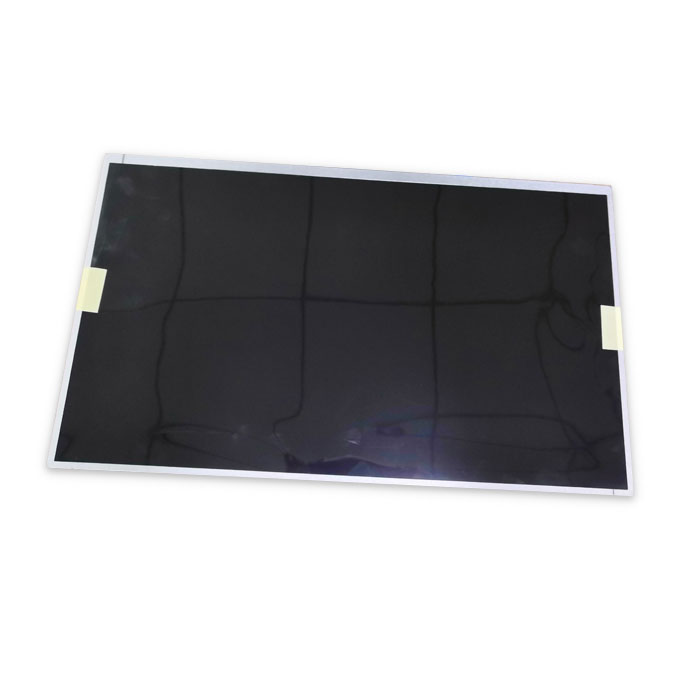
The G238HAN01.0 is a 23.8-inch a-Si TFT-LCD LCM module manufactured by AU Optronics (AUO), a leading global provider of display panels. With a native resolution of 1920(RGB)×1080 (Full HD), this panel sits at a critical intersection of industrial robustness and high-volume commercial demand. Unlike many consumer-grade displays, this LCM (Liquid Crystal Module) is engineered for reliability, optical consistency, and long-term availability—making it a staple in sectors ranging from medical imaging to industrial HMI (Human-Machine Interface) systems.
1. Optical Architecture and Performance Characteristics
At its core, the G238HAN01.0 employs a-Si (amorphous silicon) TFT technology. While newer technologies like LTPS and IGZO offer higher electron mobility, a-Si remains the most mature and cost-effective solution for production environments where absolute pixel response speed is not the primary driver. For a 23.8-inch diagonal, this technology provides sufficient pixel density (approximately 92 PPI) for clear text rendering and detailed graphical content.
Resolution & Aspect Ratio: 1920×1080 at 16:9. This standard allows for seamless scaling with modern video sources and embedded computer systems.
Color Depth & Gamut: Typically specified for 16.7M colors (8-bit via FRC). The color gamut usually aligns with NTSC 72% (CIE1931), which is effectively sRGB coverage. This is critical for applications requiring color consistency, such as patient monitoring in healthcare or status indicators in industrial control rooms.
Brightness & Contrast: Standard variants of the G238HAN01.0 offer a typical center luminance of approximately 250 cd/m² to 300 cd/m². The static contrast ratio typically reaches 1000:1, which is considered excellent for an a-Si LCD and ensures deep blacks and sharp text differentiation.
Viewing Angles: The panel uses VA (Vertical Alignment) technology, not TN. This provides a significant advantage: 178° horizontal and 178° vertical viewing angles with minimal color shift and contrast inversion. For multi-user environments (e.g., a factory floor panel viewed from different angles), this is a non-negotiable specification.
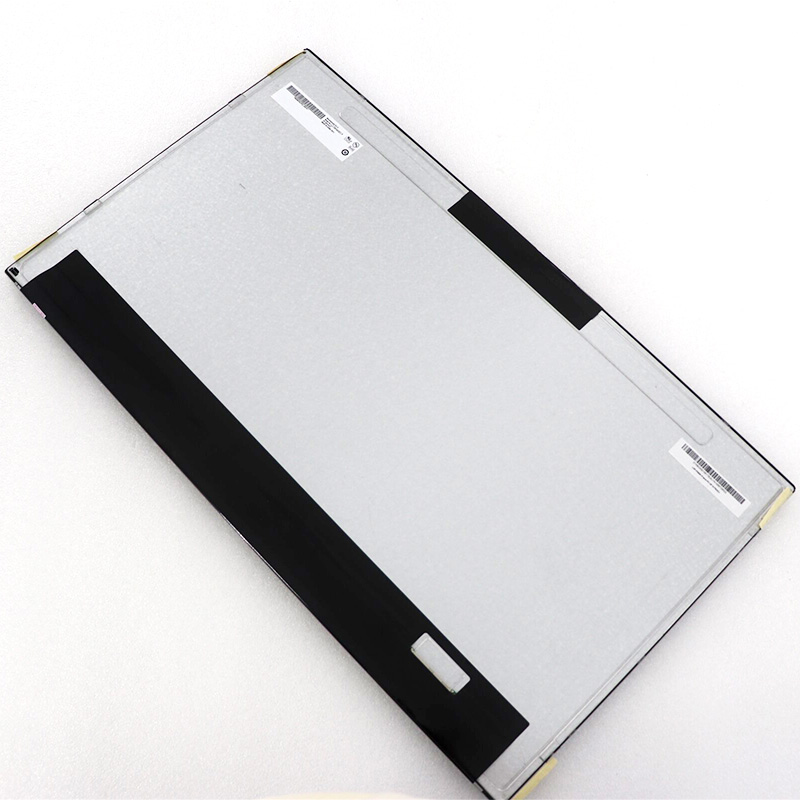
2. LCM Integration and Interface Specifics
The "LCM" designation is critical. This is not a bare glass cell; it is a complete module including the backlight, driver ICs, and timing controller (TCON). This integration simplifies system design for OEMs and integrators.
Interface: The panel typically utilizes a LVDS (Low-Voltage Differential Signaling) 2-ch, 8-bit interface. The specific connector is a standard 30-pin, but always verify the exact pinout from the AUO datasheet (which is available upon NDA or through authorized distributors). LVDS remains the industry standard for industrial panels due to its noise immunity over longer cable runs.
Backlight: The backlight is built with WLED (White Light-Emitting Diode) edge lighting. This is crucial for longevity (rated for 30,000 to 50,000 hours to half-brightness under standard operating conditions) and environmental compliance (RoHS, no mercury). The module does not typically include an inverter; an external driver is required unless the system board supplies the necessary current directly.
Electrical Requirements: Standard logic supply voltage is 3.3V, with a typical power consumption of approximately 12W to 15W (depending on backlight current setting). This makes it suitable for integration into systems with moderate thermal budgets.
3. Application Domains and Suitability
The G238HAN01.0 is not designed for curved gaming monitors or ultra-thin consumer TVs. Its design philosophy prioritizes durability, consistency, and interface compatibility over exotic form factors.
Industrial Automation (HMI): The panel’s wide operating temperature range (typically -10°C to +60°C for storage and 0°C to 50°C for operation) makes it viable in factory environments where temperature fluctuations are common.
Medical Equipment: The high contrast ratio (1000:1) and sRGB coverage support diagnostic imaging, patient monitoring displays, and medical cart workstations where grayscale consistency is paramount.
Gaming and Amusement Machines: Standard 23.8" FHD panels are widely used in slot machines, casino terminals, and arcade cabinets. The LVDS interface allows straightforward connection to embedded x86 or ARM-based game controllers.
Digital Signage (Indoor): For informational kiosks and menu boards, the panel’s anti-glare surface (typically Anti-Glare 3H or harder) reduces reflection under ambient store lighting.
4. Technical Considerations for Engineers and Buyers
When selecting the G238HAN01.0 for a project, there are specific technical factors that separate a successful integration from a field failure.
Backlight Control: The WLED backlight is controlled via PWM (Pulse Width Modulation). However, the operating frequency range must be chosen carefully (typically above 200Hz to avoid visible flicker, and ideally above 1kHz to prevent crosstalk with camera systems or sensitive medical sensors).
Mechanical Compatibility: The module has a specific housing outline and mounting holes. You must obtain the outline drawing (ODF) from AUO or an official distributor. Generic 23.8" open-frame monitors often use non-standard bezels, but the LCM itself has precise screw points for integration into a custom enclosure.
Flicker and Pixel Defect Policy: AUO typically specifies a Class B or Class A defect standard for this line. Understand the acceptable number of bright/dark dots per million pixels. For medical or avionics use, you may need to request a higher grade (Class A with zero dark dots in Zone A).
Longevity and Obsolescence: AUO actively supports its industrial line for a minimum of 3 to 5 years after launch, with some products continuing production for a decade. However, always check the product lifecycle status on the AUO e-service portal before locking in a design. The "G238HAN01.0" part number may have revisions (e.g., .1, .2) that change electrical or mechanical specifications, so correlate the exact revision with your system requirements.
5. Market Alternatives and Comparison
While the G238HAN01.0 is a strong contender, engineers often compare it to panels like the Innolux EJ238IA or the BOE MV238FHB-N20. Key differentiators are:
AUO Optical Tuning: AUO panels are often preferred for their tighter tolerance on gamma curves and white point consistency across the production batch. This is critical for multi-unit installations (e.g., video walls or medical arrays) where visual uniformity is mandatory.
Supply Chain Maturity: AUO has a well-established distribution network in Asia and the Americas, with better lead times for this specific model compared to some competitors during supply chain disruptions.
Cost vs. Performance: The G238HAN01.0 sits in the mid-to-upper price tier for 23.8" a-Si panels, justified by its superior contrast (VA vs. TN) and reliability history.
6. Conclusion
The G238HAN01.0 AUO 23.8 inch a-Si TFT-LCD LCM is not merely a component—it is a carefully engineered system designed for environments where failure is not an option. Its combination of VA technology for wide viewing angles, LVDS interface for industrial compatibility, and a robust a-Si backplane for longevity makes it a professional-grade choice for OEMs and integrators. Before purchasing, ensure you have reviewed the specific revision datasheet, validated the backlight driver compatibility, and confirmed the operating temperature range aligns with your end-use environment. This panel represents the convergence of reliability, optical performance, and long-term support that defines the best of the industrial LCD market.





