


















- Industrie-LCD-Display
-
Industrial Products
- DC Servo Drive
- AC Servo Drive
- PCB
- Siemens
- Switch Sensor
- Näherungsschalter
- Temperaturregler
- Schutzrelais
- Fiber Optic Sensor
- Encoder
- Fan
- other
- Heidelberg
- MITSUBISHI
- FANUC
- Siemens adapter
- Fujitsu connector
- Der Aufsichtsrat
- Board
- Contactor
- Circuit
- Omron
- Relais.
- Motortreiber
- power supply
- Cable
- Transformator
- HMI Touch-Glas
-
HMI-Vollautomat Ganze Einheit
- OMRON HMI Touch Panel
- Siemens HMI Touch Panel
- Mitsubishi HMI Touch Panel
- Allen-Bradley Automatisierung HMI Touch
- DELTA HMI Touch Panel
- EVIEW DELTA HMI Touch Panel
- KINCO DELTA HMI Touch Panel
- HITECH HMI Touch Panel
- WEINTECK HMI Touch Panel
- TECVIEW HMI Touch Panel
- WEINVIEW HMI Touch Panel
- PANASONIC HMI Touch Panel
- KYOCERA HMI Touch Panel
- SCHNEIDER HMI Touch Panel
- Module
- LCD Wechselrichter
- Membran Tastenfeld Schalter
- Winni Touch Screens
- Frequenzumrichter
- Servo Motor
- PLC
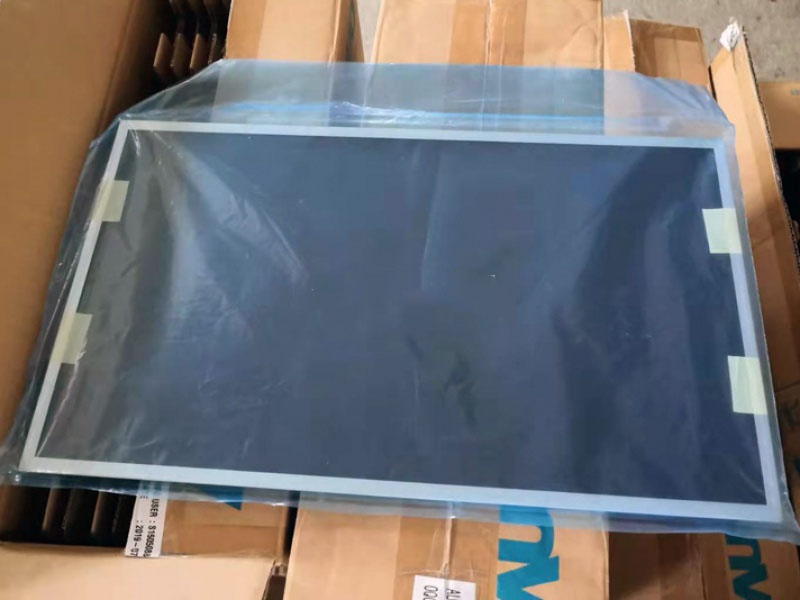
In the competitive landscape of industrial display technology, the G230HAN01.1 from AU Optronics (AUO) stands as a formidable 23-inch TFT LCD module. While many displays are designed for consumer electronics, the G230HAN01.1 is engineered specifically for demanding applications where reliability, optical performance, and durability are non-negotiable. This article provides an in-depth technical examination of this module, moving beyond superficial specifications to explore its architecture, performance characteristics, and strategic value for system integrators and OEMs.
Market Positioning and Target Applications
AUO positions the G230HAN01.1 within its high-end industrial and public information display portfolio. It is not a general-purpose monitor panel. Instead, it serves niche sectors where continuous operation, wide viewing angles, and color consistency are required. Primary applications include:
Medical Imaging Workstations: The high contrast ratio and color gamut make it suitable for PACS (Picture Archiving and Communication System) viewing stations, though it is not a specialized medical-grade diagnostic monitor, it serves admirably in clinical review environments.
Industrial Human-Machine Interfaces (HMIs): For factory automation and process control, the module’s robust construction and wide temperature range allow for integration into control panels on the shop floor.
Digital Signage and Kiosks: In retail or transportation hubs, where passive cooling and long operational hours (24/7) are often required, this module provides the necessary reliability.
Gaming and Simulators: The fast response time and high refresh rate capabilities, which we will detail later, also make it a viable candidate for high-end simulation equipment.
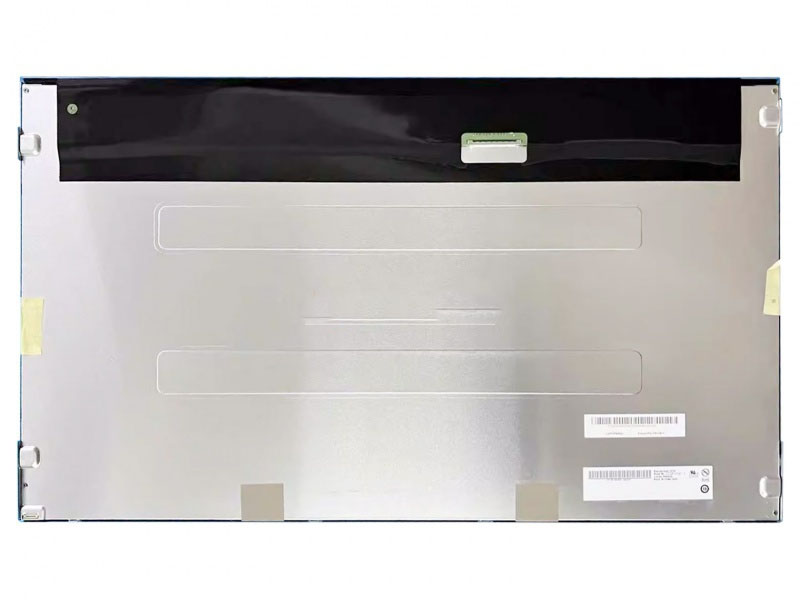
Optical Performance and Panel Technology Deep Dive
The G230HAN01.1 employs AHVA (Advanced Hyper-Viewing Angle) technology, which is AUO’s proprietary variant of In-Plane Switching (IPS). This is a critical distinction from VA or TN panels. While many 23-inch panels on the market are older TN models with narrow viewing angles and poor color reproduction, the AHVA technology ensures:
Superior Viewing Angles: The module specifies a typical viewing angle of 89/89/89/89 degrees (CR>=10). This symmetrical performance across all four axes means that image integrity is maintained even when the display is viewed from extreme positions – essential for public information displays where viewers are not seated directly in front of the screen.
Color Consistency: Unlike TN panels, which exhibit significant color shift at off-axis angles, the G230HAN01.1 maintains predictable color reproduction. The module is specified for 16.7M colors (8-bit) with a color gamut of typically 72% NTSC. While not a wide-gamut panel (like Adobe RGB or DCI-P3), this is sufficient for standard industrial and medical review applications, providing a balance between color accuracy and power consumption.
Contrast Ratio and Brightness: The module offers a typical contrast ratio of 1000:1. This is a true static contrast ratio, not a dynamic contrast ratio often used in consumer marketing. Combined with a brightness specification that typically ranges from 300 cd/m² to 400 cd/m² depending on the specific backing version, it delivers deep blacks and strong highlights even in brightly lit industrial environments.
Electrical and Interface Architecture
Understanding the interface is crucial for integration. The G230HAN01.1 utilizes a LVDS (Low-Voltage Differential Signaling) interface. This is a mature, differential transmission standard designed to minimize electromagnetic interference (EMI) and reduce noise coupling, which is critical in industrial environments with high electrical noise from motors and power supplies.
Key electrical considerations include:
Resolution: The native resolution is 1920 x 1080 (Full HD). This is a 16:9 aspect ratio, which has become the de facto standard for content creation, making it easy to drive with standard graphics hardware.
Connector: The module typically uses a 30-pin or 51-pin LVDS connector, depending on the specific variant. Engineers must verify the pin assignment for the exact AUO model number before design-in.
Power Consumption: A typical power consumption of around 15 to 18 watts (without backlight driver) makes it a relatively energy-efficient choice for a 23-inch panel. The backlight, typically an LED edge-lit design, requires a separate driver board that must be selected carefully to match the voltage and current requirements of the specific LED string configuration.
Timing: The module supports standard VESA timings for 1920x1080 at up to 60Hz. Some variants may support 75Hz, but the standard baseline is 60Hz, which is perfectly adequate for most industrial and signage use cases where flicker-free, static imagery is paramount.
Mechanical Considerations and Design-in Challenges
Integrating a commercial-grade display module requires attention to mechanical details that are often overlooked. The G230HAN01.1 has a typical active area of 509.184 x 286.416 mm and an overall module dimension of approximately 531.8 x 312.8 mm with a thickness of around 10.5 mm (depending on the bezel design).
Critical mechanical factors for designers include:
Mounting: The module is designed for front-flange mounting or rear mounting using the provided screw holes. Proper torque specification is critical to avoid distorting the panel, which can cause Newton’s rings or pressure-induced mura (brightness non-uniformity).
Thermal Management: The LED backlight generates heat. The module’s operating temperature range is typically 0°C to 50°C, with a storage range of -20°C to 60°C. For 24/7 operation, a cooling solution or chassis design that promotes airflow over the backlight driver area is recommended to prevent luminance degradation over time.
Front Bezel Design: The G230HAN01.1 typically features a bezel-less design on three or four sides (depending on the specific variant). This allows for seamless tiling in video walls or integration into bespoke enclosures. The front bezel must be designed to apply even pressure around the perimeter of the LCD cell to ensure environmental sealing without cracking the delicate glass.
Optical Bonding Readiness: Many system integrators choose to optically bond a touch sensor or cover glass to the front of the module. The G230HAN01.1 is a suitable candidate for direct bonding, but only if the module’s polarizer is compatible with the bonding adhesive. Consultation with an optical bonding specialist is recommended to avoid delamination or optical distortion.
Reliability, Longevity, and Lifecycle Management
For industrial buyers, the lifecycle of a display component is as important as its performance. AUO has a reputation for maintaining production of its industrial-grade modules for 5 to 7 years, significantly longer than consumer panels which are often discontinued within 12-18 months. The G230HAN01.1 benefits from this long-lifecycle policy.
Key reliability metrics include:
LED Backlight Lifetime: The LED backlight is rated for 50,000 hours (to half-brightness) at typical operating conditions. This is one of the most robust figures in its class, translating to over 5.7 years of continuous 24/7 operation before noticeable dimming occurs. The actual lifetime can be extended by dimming the backlight or reducing ambient temperature.
Shock and Vibration: While not a ruggedized military-grade unit, the module is tested for standard industrial shock and vibration profiles (e.g., 1G RMS, 10-200 Hz for vibration). It is not intended for mobile or field-deployed applications without additional protective housing.
E-Cap (Electrolytic Capacitor) Quality: A less-discussed but critical factor is the quality of the electrolytic capacitors on the internal timing control board (TCON). Low-cost panels use cheap capacitors that can bulge or leak within 2-3 years. AUO’s industrial modules typically use Japanese-sourced, long-life capacitors, contributing to the overall reliability.
Comparative Analysis: Why Choose the G230HAN01.1 Over Alternatives?
When comparing the G230HAN01.1 with other 23-inch or 21.5-inch panels, several factors differentiate it:
vs. Samsung LTM230HT01: The Samsung panel uses a PVA (Patterned Vertical Alignment) technology. While PVA offers superior contrast ratio (often 3000:1), it suffers from significant color shift at off-axis angles and a slower pixel response time, especially for gray-to-gray transitions. The AUO AHVA panel, while offering a standard 1000:1 contrast, provides vastly better viewing angle performance and faster response, making it more suitable for dynamic content or multi-viewer scenarios.
vs. Innolux M236HVR-L30: This is a direct competitor in the 23-inch AHVA space. The Innolux panel often offers a slightly wider color gamut (up to 78% NTSC). However, the AUO panel generally has better uniformity and a well-documented, stable timing controller, which simplifies design-in. The choice often comes down to specific availability and long-term supply agreements.
vs. Standard Desktop Monitors: A system integrator might consider repurposing a consumer 23-inch monitor. However, these monitors lack the mechanical mounting holes, the wide operating temperature range, the long-life backlight, and the robust EMC compliance of the bare AUO module. The module is designed for integration, not box-level use.
Future-Proofing and Integration Strategies
For OEMs and system integrators, a display module is a long-term investment. Here are actionable strategies when working with the G230HAN01.1:
Signal Conditioning: Use a shielded LVDS cable with the correct impedance (50 or 100 ohms differential). Keep the cable length shorter than 30 cm to prevent signal degradation. Plan for a controlled impedance PCB trace if the driver board is not mounted directly to the display.
Backlight Driver Selection: Do not use a generic LED driver. Request the exact current and voltage specifications from AUO or your distributor. The LED string configuration (series vs. parallel) is critical. An incorrectly matched driver can cause catastrophic failure, visible flicker, or drastically reduced lifetime.
Compliance and Certification: The G230HAN01.1 itself is usually not individually certified for FCC or CE. The final product (the enclosure containing the module) must pass EMC testing. The module’s construction and connector choices (e.g., grounding tabs) assist compliance, but additional filtering and shielding within the chassis are almost always required for Class B (residential) compliance.
Inventory Management: Given the 5-7 year lifecycle, it is prudent to negotiate a forward-looking supply agreement with your distributor. Maintain a buffer stock of 6-12 months of anticipated demand to protect against unexpected end-of-life announcements or allocation periods.
Conclusion
The G230HAN01.1 is more than just another 23-inch TFT LCD module. It is a carefully engineered component that balances optical performance, electrical reliability, and mechanical robustness for demanding environments. Its AHVA technology ensures wide viewing angles and consistent color, while its industrial-grade design specifications guarantee longevity. For system integrators requiring a dependable, high-performance display for medical, industrial, or public information applications, the G230HAN01.1 represents a proven, low-risk choice that combines the advantages of AUO’s manufacturing expertise with the practical requirements of embedded design. Proper attention to interface design, thermal management, and lifecycle planning will allow this module to perform reliably for years, providing a solid foundation for any high-value display system.





