
















- Industrie-LCD-Display
-
Industrial Products
- DC Servo Drive
- AC Servo Drive
- PCB
- Siemens
- Switch Sensor
- Näherungsschalter
- Temperaturregler
- Schutzrelais
- Fiber Optic Sensor
- Encoder
- Fan
- other
- Heidelberg
- MITSUBISHI
- FANUC
- Siemens adapter
- Fujitsu connector
- Der Aufsichtsrat
- Board
- Contactor
- Circuit
- Omron
- Relais.
- Motortreiber
- power supply
- Cable
- Transformator
- HMI Touch-Glas
-
HMI-Vollautomat Ganze Einheit
- OMRON HMI Touch Panel
- Siemens HMI Touch Panel
- Mitsubishi HMI Touch Panel
- Allen-Bradley Automatisierung HMI Touch
- DELTA HMI Touch Panel
- EVIEW DELTA HMI Touch Panel
- KINCO DELTA HMI Touch Panel
- HITECH HMI Touch Panel
- WEINTECK HMI Touch Panel
- TECVIEW HMI Touch Panel
- WEINVIEW HMI Touch Panel
- PANASONIC HMI Touch Panel
- KYOCERA HMI Touch Panel
- SCHNEIDER HMI Touch Panel
- Module
- LCD Wechselrichter
- Membran Tastenfeld Schalter
- Winni Touch Screens
- Frequenzumrichter
- Servo Motor
- PLC
In the rapidly evolving landscape of industrial display technology, the G229HAN01.0 has emerged as a significant offering from AU Optronics (AUO). This 22.9-inch LCD panel is not merely a generic screen; it is a precisely engineered component designed for demanding environments where reliability, optical performance, and longevity are non-negotiable. Unlike consumer-grade displays, the G229HAN01.0 targets specialized applications such as industrial human-machine interfaces, medical imaging, and digital signage in controlled lighting conditions. This deep-dive article explores the technical architecture, performance characteristics, and practical deployment considerations of this specific model, offering actionable insights for engineers, procurement specialists, and system integrators.
1. Core Technical Specifications and Panel Architecture
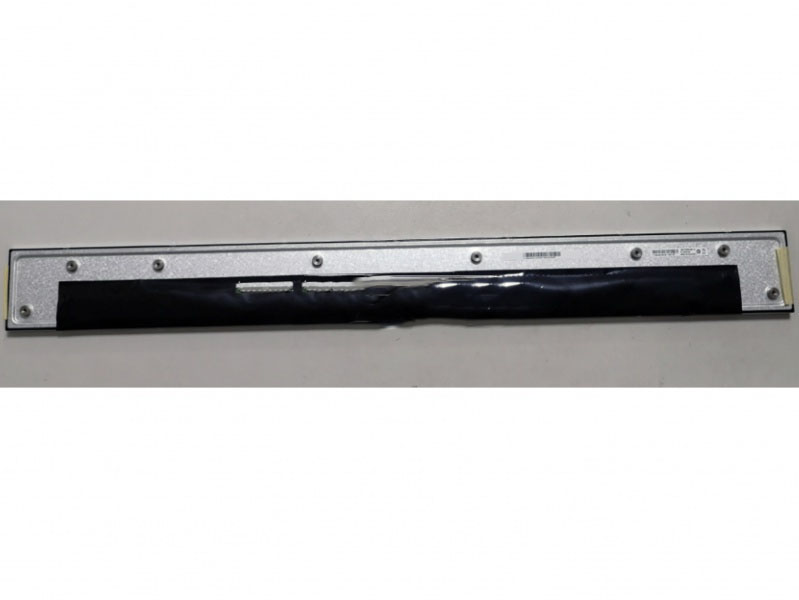
The G229HAN01.0 features a 22.9-inch diagonal active area, utilizing AUO's advanced a-Si TFT-LCD (amorphous silicon thin-film transistor) technology. This panel operates with a 1920 x 1080 (Full HD) resolution at a 16:9 aspect ratio, delivering a pixel density of approximately 96 PPI. While not ultra-high-definition, this resolution-to-size ratio strikes a balance between text readability and detailed graphical representation, critical for control room dashboards and diagnostic equipment.
Key electrical characteristics include:
Backlight Type: WLED (White LED) edge-lit system with a rated lifetime of 50,000 hours (typical) at half brightness.
Interface: LVDS (Low-Voltage Differential Signaling) with 2 channels, 8-bit support, allowing for up to 16.7 million colors.
Power Consumption: Approximately 15W to 18W depending on brightness settings, making it energy-efficient for 24/7 operation.
Operating Temperature Range: 0°C to +50°C (standard commercial grade), with storage capability from -20°C to +60°C.
It is crucial to note that the G229HAN01.0 is a TFT-only panel; it does not include an integrated touch sensor or a protective cover glass by default. System designers must plan for external touch integration, typically through projected capacitive (PCAP) or resistive technology overlay, depending on the use case.
2. Optical Performance: Brightness, Contrast, and Viewing Angles
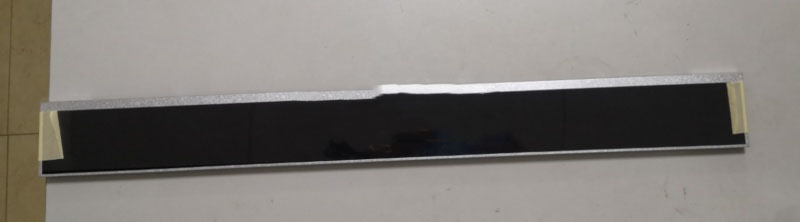
For industrial and medical environments, optical consistency is paramount. The G229HAN01.0 offers a typical brightness of 250 cd/m² (nits). While this level is adequate for indoor environments with controlled lighting—such as hospital wards, factory floors, or retail signage—it is not suitable for direct sunlight exposure. For outdoor or high-ambient-light deployments, subsequent iterations or higher-luminance variants should be considered.
The contrast ratio is specified at 1000:1 (typical), a strong figure that ensures deep blacks and clear differentiation between shadow details. This is supported by a response time of 8 ms (Tr/Tf), which prevents motion blur in dynamic content such as scrolling patient vitals or production line status updates.
Viewing angle performance is a critical differentiator for multi-user scenarios. The panel employs TN (Twisted Nematic) technology, which offers a wide horizontal viewing angle of 170 degrees but a narrower vertical angle of 160 degrees. The TN architecture provides fast response times and lower cost but exhibits color inversion and gamma shift when viewed from extreme vertical angles. For applications where operators view the screen from above or below the center line, an IPS (In-Plane Switching) alternative may be preferable, though the TN-based G229HAN01.0 excels in cost-sensitive, single-viewer installations.
3. Mechanical Design and Mounting Considerations
Physical integration is often where project delays occur. The G229HAN01.0 adheres to a standard 22.9-inch outline dimension of approximately 531.4 mm (W) x 305.0 mm (H) x 10.2 mm (D). Its active display area measures 509.18 mm x 286.42 mm. The panel weight is roughly 1.35 kg, making it suitable for cantilevered or VESA-mounted configurations.
Critical mechanical features include:
Mounting Holes: Pre-threaded holes on the rear chassis for standard bracket attachment; always verify the specific hole pattern against AUO's official datasheet revision.
Bezel Width: Left and right bezels are approximately 11.1 mm each; top bezel is 11.0 mm; bottom bezel is slightly larger at 12.4 mm.
Connector Location: LVDS connector is positioned on the lower-left edge (facing the display surface), a detail critical for cable routing in tight enclosures.
No Bonding: The panel is shipped without optical bonding. For applications prone to condensation or shock, custom optical bonding with anti-reflective coating is strongly recommended to reduce internal reflections.
4. Application Suitability: Where This Panel Excels
The G229HAN01.0 is not a "one-size-fits-all" component. Its design philosophy targets specific verticals:
Medical Monitors: Its consistent color reproduction and 50,000-hour backlight life align with the uptime demands of patient monitoring systems and PACS (Picture Archiving and Communication System) stations, provided ambient lighting is controlled.
Industrial HMIs: The 1920x1080 resolution is ideal for detailed SCADA (Supervisory Control and Data Acquisition) interfaces where multiple data windows must be visible simultaneously.
Self-Service Kiosks: With a long backlife and standard LVDS interface, the panel integrates smoothly into kiosk controller boards for ticketing or payment systems.
Digital Signage: For indoor ad displays or menu boards in retail environments, the 250-nit brightness is sufficient to overcome typical indoor glare.
It is not recommended for: outdoor signage, high-vibration environments (such as ship bridges or heavy machinery cabins) unless housed in a properly dampened and reinforced enclosure, or applications requiring constant multi-angle viewing from steep vertical angles.
5. Backlight Longevity and Reliability Engineering
A hallmark of AUO's industrial-grade panels is the emphasis on longevity engineering. The G229HAN01.0's WLED backlight is rated for 50,000 hours to half-brightness under typical operating conditions. This translates to approximately 5.7 years of continuous 24/7 operation. For most industrial deployments, this is an acceptable service interval, but for mission-critical systems, integrators should implement a scheduled replacement plan based on actual brightness degradation monitoring.
Thermal management is a practical concern. Because the panel is edge-lit, the LED heat is concentrated along the bottom edge. In enclosed kiosk environments, ambient temperatures above 35°C can accelerate LED lumen depreciation. Designers should include active airflow or a heat-sink backplate to ensure the backlight temperature stays below the rated maximum of 60°C.
6. Integration Challenges and Mitigation Strategies
Even a high-quality panel can fail in the field if integration is mishandled. Based on field experience, here are common pitfalls:
LVDS Cable Quality: The G229HAN01.0 uses a 30-pin LVDS connector. Cheap, unshielded cables can introduce flickering at higher refresh rates (60 Hz). Use only shielded, twisted-pair cables with proper impedance matching (100 ohms differential).
Backlight Driver Compatibility: The LED backlight requires a constant current driver that matches the panel's forward voltage (typically around 24V to 30V for the VLED string). Mismatched drivers cause immediate dimming or burn-out.
Optical Bonding vs. Air Gap: Without optical bonding, an air gap between the panel and any touch overlay causes internal reflections that reduce perceived contrast by up to 30%. For medical or glass-front kiosk designs, budget for optical bonding to maintain the 1000:1 nominal contrast.
Gamma Adjustment: Out-of-the-box, gamma may deviate from the standard 2.2 curve due to TN panel behavior. Calibration using a colorimeter is recommended for any application requiring color fidelity.
7. Competitive Positioning and Value Proposition
In the 22.9-inch segment, the G229HAN01.0 competes directly with similar panels from BOE, Innolux, and LG Display. Its primary advantage lies in lifecycle management. AUO typically guarantees production stability for industrial panels for 3 to 5 years, reducing the risk of last-time-buy (LCTB) scenarios that plague medical and industrial device manufacturers.
Compared to a generic 22-inch 1080p consumer monitor, this panel offers:
More robust thermal tolerance (0°C to 50°C operating, versus typical 10°C to 40°C for consumer monitors).
LVDS interface (standard for embedded systems, unlike HDMI/DP in consumer monitors).
Longer backlight lifetime (50,000 hours vs. 30,000 hours typical for consumer LED monitors).
However, it does not include built-in speakers, OSD controls, or multi-input switching, which are standard in consumer monitors. This trade-off is intentional for OEMs who need a raw panel for embedded designs.
8. Future-Proofing Your Design with G229HAN01.0
If you are currently evaluating the G229HAN01.0 for a new project, consider these forward-looking factors:
Migration Path: AUO has gradually migrated some of its industrial lines to eDP (Embedded DisplayPort) interfaces. Ensure your main controller board supports either LVDS or has a bridge chip for future panel upgrades.
Resolution Scaling: While 1080p is adequate today, upcoming HMI software updates may require higher-DPI assets. Design your enclosure mechanicals to accommodate a potential future panel with the same cutout but higher resolution (e.g., QHD or 4K).
Component Obsolescence: As of 2025, the G229HAN01.0 remains in active production with moderate lead times (4 to 8 weeks typical for volumes under 500 units). Secure a multi-year supply agreement if this panel becomes critical to your product line.
Conclusion
The G229HAN01.0 22.9-inch LCD display from AUO is a well-engineered, reliable industrial component that delivers consistent performance in controlled indoor environments. Its strengths lie in its robust backlight life, standard LVDS interface, and Full HD resolution. However, its TN panel technology and moderate brightness require careful consideration of viewing angles and ambient lighting conditions. By understanding its electrical, optical, and mechanical characteristics—and by planning for integration challenges such as cable quality and thermal management—system designers and procurement professionals can leverage this panel to build durable, cost-effective products for medical, industrial, and kiosk applications. Always consult the official AUO datasheet for the specific revision you are sourcing, as minor changes to connectors or mechanical tolerances may occur across production batches.





