














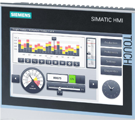






In the landscape of industrial displays, the G215HCJ-LH1 from Innolux represents a specific niche that demands careful technical evaluation. Unlike consumer-grade monitors designed for aesthetic appeal or high refresh rates, this 21.5-inch panel is engineered for reliability, optical clarity, and environmental resilience. To fully understand its value proposition, we must move beyond the basic specifications and analyze the engineering choices that define this module. This article examines the G215HCJ-LH1 through the lens of practical application, image quality performance, and system integration requirements.
Technical Specifications and Core ArchitectureAt its foundation, the G215HCJ-LH1 is a 21.5-inch a-Si TFT-LCD (amorphous silicon thin-film transistor liquid crystal display) module. The resolution is set at 1920 x 1080 pixels (Full HD), which at this screen size yields a pixel density of approximately 102 pixels per inch (PPI). While not exceptionally high by smartphone standards, this density is optimal for industrial HMIs (Human-Machine Interfaces) and medical equipment—it provides sharp text legibility without requiring the excessive backlight power needed for higher pixel densities. The active area measures 476.64 mm (W) x 268.11 mm (H), adhering to the standard 21.5-inch diagonal ratio of 16:9.
One of the most critical yet often overlooked parameters is the interface type. The G215HCJ-LH1 utilizes a 30-pin LVDS (Low-Voltage Differential Signaling) interface. This is a deliberate design choice. LVDS is highly resistant to electromagnetic interference (EMI) and allows for signal transmission over longer cable lengths compared to modern eDP (Embedded DisplayPort) interfaces. For system integrators, this means the controller board can be physically separated from the display panel—a necessity in vibration-prone or thermally constrained environments. The module supports 8-bit color depth, enabling 16.7 million colors, which is sufficient for accurate color representation in non-photographic critical applications.

Backlight Technology and Optical PerformanceThe backlight unit of the G215HCJ-LH1 employs a WLED (White Light Emitting Diode) array, configured as an edge-lit system. This choice balances uniformity with slim module depth, typically around 10-12 mm. The rated brightness is approximately 250 cd/m² (nits). While this may seem modest compared to outdoor-rated displays (often 1000+ nits), it is the standard for indoor industrial equipment. The contrast ratio is specified at 1000:1 (typical), which, combined with a normally black display mode (VA or TN variant depending on specific revision), ensures deep blacks and clear differentiation between dark grayscale values. This is critical for reading fine text on dark backgrounds or identifying subtle variations in medical imaging.
It is important to note that the G215HCJ-LH1 is not classified as a high-brightness or sunlight-readable panel. To achieve visibility in bright ambient light, integrators would need to pair this panel with an optical bonding service, adding a cover glass with an anti-reflective coating. The standard panel does not include an integrated touch sensor, but its LVDS interface and standard mechanical outline make it compatible with projected capacitive (PCAP) touch panels manufactured by third-party vendors.
Viewing Angle and Response Time: The Real-World Trade-offsA frequent point of confusion for buyers is the viewing angle specification. The G215HCJ-LH1 is typically built on a TN (Twisted Nematic) or VA (Vertical Alignment) technology base, depending on the specific production batch. If using TN technology, the viewing angles are specified at 85°/85°/75°/85° (CR≥10), meaning the horizontal viewing angle is wide, but vertical degradation is noticeable when looking from below. For vertical mounting in a kiosk, this is rarely an issue. However, for applications where the user may view the screen from an extreme angle (e.g., a medical cart or an overhead display), a VA-based version of this model is preferred, offering 89°/89°/89°/89°.
Response time is listed in the datasheet as 5 ms (Tr/Tf) or faster. This is a grey-to-grey (GTG) measurement sufficient for static industrial images, menu navigation, and video playback at 60 Hz. It is not designed for high-frame-rate gaming or dynamic digital signage with rapid motion. In environments with continuous scrolling or animation, the pixel overdrive circuitry is minimal, so some motion blur may be perceptible.
Mechanical Integration and Environmental DurabilityFrom an engineering perspective, the physical dimensions of the G215HCJ-LH1 are rigorously specified. The outline dimensions are roughly 495.6 mm (W) x 292.2 mm (H) x 10.5 mm (D), with the exact measurements varying by +/- 0.5 mm. The mounting structure uses a standard bezel-free design with mounting holes on the side. This is critical for integrators who need to design custom enclosures or use standardized VESA mounting brackets.
The operating temperature range is typically 0°C to 50°C, with storage from -20°C to 60°C. While this is not an extreme industrial temperature range (which would require heaters or active cooling), it is adequate for controlled indoor environments: factory floors, medical facilities, retail kiosks, and transportation hubs. The humidity specification (5% to 90% relative humidity, non-condensing) ensures the panel resists moisture-driven corrosion, but it is not waterproof without additional conformal coating.
Application Scenarios and Market PositioningThe G215HCJ-LH1 is not a commodity office monitor. It is a component designed for embedded systems. Its primary use cases include:
Industrial HMI (Human-Machine Interface): Factory automation panels where the display must operate 24/7 for years. The LVDS interface ensures compatibility with legacy microcontroller-based control boards.
Medical Diagnostic Equipment: Patient monitors or imaging stations where color accuracy and grayscale gradient reproduction (due to 1000:1 contrast) are required.
Point-of-Sale (POS) and Kiosk Systems: Self-service terminals where the display sits behind a resistive or capacitive touch layer. The 250-nit brightness is sufficient for indoor use.
Digital Signage (Lobby or Conference Room): Static or low-motion content delivery where reliability outweighs refresh rate.
Limitations and Integration ConsiderationsProfessionals planning to use the G215HCJ-LH1 should be aware of several constraints. First, the LVDS interface, while robust, is becoming less common. Most modern embedded controllers support LVDS, but it may require an additional adapter board if you are using a Raspberry Pi or a single-board computer without native LVDS output. Second, the panel does not include a backlight driver board. You must source a compatible inverter or LED driver that matches the voltage (typically 12V) and current requirements. Third, the TN version has limited vertical viewing, so careful installation angle is essential.
Conclusion: The Value of SpecializationThe G215HCJ-LH1 by Innolux is a testament to the principle of "right tool for the right job." It does not promise groundbreaking innovation in consumer metrics like HDR or ultra-fast refresh. Instead, it delivers robustness, optical consistency, and installation flexibility for the industrial and medical sectors. For system integrators, the key to successful deployment lies in understanding the LVDS timing requirements, verifying the operating temperature envelope, and ensuring proper mechanical tolerances for the bezel and touch overlay. When chosen within its intended context, the G215HCJ-LH1 provides a cost-effective, long-life solution that outperforms generic consumer displays in reliability and signal integrity.





