


















- Industrial display
-
Industrial Products
- DC Servo Drive
- AC Servo Drive
- Industrial board
- Siemens
- Switch Sensor
- Proximity Switch
- Temperature Controller
- Protection Relay
- Fiber Optic Sensor
- Encoder
- Fan
- other
- Heidelberg
- MITSUBISHI
- FANUC
- Siemens adapter
- Fujitsu connector
- Motherboard
- Board
- Contactor
- Circuit
- OMRON
- Relay
- Motor Driver
- power supply
- Cable
- Transformer
- HMI Touch Glass
-
HMI Full Machine Whole unit
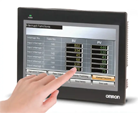
- OMRON HMI Touch Panel
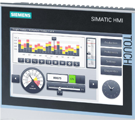
- Siemens HMI Touch Panel
- Mitsubishi HMI Touch Panel
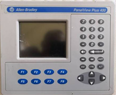
- Allen-Bradley automation HMI Touch Panel
- DELTA HMI Touch Panel
- Proface HMI Touch Panel
- KINCO DELTA HMI Touch Panel
- HITECH HMI Touch Panel
- WEINTEK HMI Touch Panel
- TECVIEW HMI Touch Panel
- WEINVIEW HMI Touch Panel
- PANASONIC HMI Touch Panel
- KYOCERA HMI Touch Panel
- SCHNEIDER HMI Touch Panel
- Module
- lcd inverter
- Membrane Keypad Switch
- Zhiyan Customized Touch Screens
- Frequency Inverter
- Servo Motor
- PLC
In the rapidly evolving landscape of industrial and commercial display technology, the G215HAN01.4 21.5-inch LCD panel from AU Optronics (AUO) has emerged as a benchmark for reliability and visual clarity. Designed for demanding environments such as medical imaging, gaming kiosks, and industrial automation, this panel represents a sophisticated convergence of high brightness, wide viewing angles, and robust construction. While many panels focus solely on consumer-grade performance, the G215HAN01.4 distinguishes itself through its adherence to the rigorous HAN (High-Resolution Advanced Narrow) specification, which prioritizes optical precision and durability. This article delves into the technical architecture, application suitability, and competitive advantages of this specific model. Whether you are an integrator evaluating components for a new project or a maintenance engineer seeking a replacement part, understanding the nuanced capabilities of the G215HAN01.4 is essential for making informed purchasing and design decisions. We will explore its core attributes, from panel technology to connectivity standards, offering a comprehensive guide for professionals.
The Anatomy of the HAN Specification
The G215HAN01.4 belongs to AUO’s distinguished HAN family, which stands for High Resolution Advanced Narrow. However, the term “narrow” here refers not to the bezel (though the design is slim) but to the optimized pixel architecture and backlight control. At its core, this is a 21.5-inch a-Si TFT LCD (amorphous silicon thin-film transistor) panel with a native resolution of 1920 x 1080 pixels (Full HD), achieving a crisp pixel density of approximately 102 PPI. This resolution ensures that fine text and intricate graphics remain sharp, even when viewed at close range. The panel utilizes IPS (In-Plane Switching) technology, which is critical for applications requiring color consistency across wide viewing angles—typically 89/89/89/89 degrees (CR≥10). Unlike TN panels, IPS prevents color shift and contrast degradation when operators view the screen from oblique positions. The backlight is an LED array (WLED, white LED), which not only provides uniform illumination but also contributes to a long operational lifespan, often rated above 50,000 hours at typical operating conditions. This combination of resolution, panel type, and backlight forms the foundational reliability of the module.
Brightness and Contrast: Engineering for Visibility
A defining characteristic of the G215HAN01.4 is its exceptional luminance. With a typical brightness rating of 1500 cd/m² (nits), this panel is squarely aimed at high-ambient-light environments. Standard monitors typically output 250-350 cd/m², which is insufficient for outdoor kiosks, hospital operating rooms with surgical lights, or factory floors with fluorescent overhead illumination. The 1500-nit rating ensures that the displayed content remains vivid and readable without needing to squint or shield the screen. This high brightness is achieved through a powerful LED backlight array, often coupled with an optical film stack optimized for light extraction. The contrast ratio is typically specified at 1000:1 (typical). While this might seem modest compared to OLED panels, the high brightness ensures that black levels are deep enough to maintain image depth, even in bright light. It is critical to note that operating the panel at maximum brightness will increase power draw and heat generation; however, AUO has engineered the thermal management to handle continuous operation. For integrators, this means the panel can be dimmed for indoor use and boosted for direct sunlight exposure, offering a flexible luminance range.
Interface and Signal Integrity
Connectivity on the G215HAN01.4 is based on the LVDS (Low-Voltage Differential Signaling) interface, specifically a 2-channel (2ch) LVDS configuration using a standard 30-pin connector. This is a mature, highly stable interface standard in the industrial sector, valued for its low electromagnetic interference and reliable signal transmission over short distances (typically less than 5 meters). The interface supports 8-bit color depth, enabling the display of 16.7 million colors. This is sufficient for most medical, gaming, and industrial HMI (Human-Machine Interface) applications. A notable technical detail is that this panel requires an LVDS timing controller (TCON) which is often embedded on the panel itself or provided on a separate control board. When sourcing this panel, integrators must ensure their system's LVDS output is configured for a resolution of 1920x1080 at a refresh rate of 60Hz. The panel does not natively support HDMI or DisplayPort; therefore, an external adapter board is required if the source is modern consumer electronics. These adapter boards are readily available from specialized industrial display suppliers. The simple, dedicated interface ensures long-term compatibility and ease of repair, as the connector is robust and standardized across many AUO HAN-series panels.
Operating Environment and Durability
Unlike consumer monitors designed for climate-controlled living rooms, the G215HAN01.4 is built to withstand harsh conditions. The operating temperature range extends from 0°C to 50°C (32°F to 122°F), with a storage range of -20°C to 60°C. This makes it suitable for semi-outdoor kiosks, automotive manufacturing lines, and medical carts that move between cool hallways and warm operating rooms. The panel also features a wide input voltage range (typically 10.8V to 13.2V) and includes built-in protection for voltage surges. For environments requiring physical resilience, many integrators pair this panel with a protective cover glass or an anti-reflective coating. The surface of the LCD itself is generally treated with an Anti-Glare (AG) coating with a haze value of ~25%, which diffuses direct light reflections. This is essential for readability under high ambient light. Furthermore, the panel’s construction uses a robust metal frame, preventing flex and failure in high-vibration settings. For medical applications (such as patient monitoring), the panel can be integrated into systems that meet IEC 60601 standards, though the panel itself is a component, not a certified final system.


Application Landscapes: Where Precision Matters
The specific attributes of the G215HAN01.4 make it an ideal candidate for three primary verticals. First, Medical Imaging: the high brightness and IPS technology are critical for displaying X-rays, CT scans, and ultrasound images. Radiologists and surgeons rely on consistent luminance for accurate tissue differentiation. The panel’s color stability ensures that subtle variations in grayscale are not washed out by room lighting. Second, Gaming and Casino Kiosks: Slot machines and electronic table games require a vibrant, non-glare display that can withstand 24/7 operation and eye-catching brightness. The 1500-nit panel ensures that games look enticing even in brightly lit casino floors. Third, Industrial HMI: Factory automation systems use this panel for machine control interfaces, where operators need to see critical data (alarms, process values) from a distance. The wide viewing angle allows multiple workers to monitor a single screen without distortion. Its operating temperature range means it can be installed near hot machinery or in cold warehouse environments. As an SEO and technical note, the G215HAN01.4 is often a drop-in replacement for older 21.5" medical monitors, making it a popular spare part for equipment refurbishment.
Competitive Landscape vs. Alternative Panels
When comparing the G215HAN01.4 to competing panels, such as the LM215WF3 from LG or the M215HAN01.0 (also AUO), several differentiators emerge. The primary advantage is the 1500-nit brightness rating. Many standard 21.5" IPS panels from competitors are limited to 300-500 nits. For instance, a typical LG LM215WF3 panel operates at ~250 nits, which is unsuitable for daylight viewing. The G215HAN01.4 also offers superior low-voltage operation stability, whereas some alternative panels may experience flicker when the input voltage drops below 11V. Another key differentiator is the compliance with strict medical standards for surface temperature and flicker. While the M215HAN01.0 is a close relative, it may have a slightly different bezel mounting hole pattern (VESA 100x75 vs. 100x100). The G215HAN01.4 typically uses a standard 100x100mm VESA mounting pattern, simplifying integration. However, it is worth noting that this panel is slightly thicker than ultra-slim consumer models due to the robust backlight housing. For projects where panel thickness is a critical constraint (e.g., slim profile kiosks), a lower-brightness alternative might be considered. However, for environments where visibility and durability are paramount, the G215HAN01.4 remains the superior choice.
FAQs
Q1: What is the exact resolution of the G215HAN01.4?A: It is 1920 x 1080 pixels (Full HD) with a 16:9 aspect ratio.
Q2: Can I connect this panel directly to a laptop via HDMI?A: No, it uses an LVDS interface. You will need a specific LVDS-to-HDMI controller board.
Q3: What is the typical power consumption of this panel?A: At maximum brightness (1500 nits), it typically consumes 25-30 watts. Consumption drops significantly at lower brightness.
Q4: Is this panel suitable for outdoor use in direct sunlight?A: Yes, the 1500-nit brightness is designed for high-ambient-light environments, though direct, prolonged sunlight may require additional UV filtering and thermal management.
Q5: What is the difference between this and a standard 21.5" monitor?A: This is a bare LCD panel (open frame). It does not include a housing, speakers, or OSD controls. It is intended for integration into a system.
Q6: Does the panel support touch functionality?A: No, this is a standard non-touch panel. However, it can be paired with an external touch overlay (e.g., capacitive or resistive).
Q7: What is the MTBF (Mean Time Between Failures) for the backlight?A: The LED backlight is rated for approximately 50,000 hours under normal operating conditions (25°C, 80% brightness).
Q8: Can I use this panel in a medical MRI room?A: No, standard LCD panels contain ferrous materials and are not MRI-compatible. Use specialized shielded displays for MRI environments.
Q9: What is the panel’s response time?A: Typical response time (Tr+Tf) is 20ms, which is suitable for static images and standard video, but not for high-speed gaming (e.g., e-sports).
Q10: Is the G215HAN01.4 RoHS compliant?A: Yes, it is manufactured in compliance with RoHS (Restriction of Hazardous Substances) regulations.
Conclusion
The AUO G215HAN01.4 21.5-inch LCD panel is not merely a display; it is a precision component engineered for environments where failure is not an option. From its 1500-nit high brightness to its robust IPS technology and wide operating temperature range, every specification addresses a real-world challenge faced by engineers in medical, industrial, and gaming sectors. While the LVDS interface requires an adapter for modern sources, this simplicity contributes to reliability and long-term repairability. This panel stands as a testament to AUO’s expertise in specialized display manufacturing, focusing on performance over consumer-driven fads. For any professional seeking a reliable, high-brightness 21.5-inch display that will perform consistently under demanding conditions, the G215HAN01.4 represents a proven, cost-effective choice. Before purchasing, verify your mounting requirements and interface controller compatibility. By investing in this panel, you are securing a display solution that prioritizes optical integrity and durability above all else.





