

















- Industrie-LCD-Display
-
Industrial Products
- DC Servo Drive
- AC Servo Drive
- PCB
- Siemens
- Switch Sensor
- Näherungsschalter
- Temperaturregler
- Schutzrelais
- Fiber Optic Sensor
- Encoder
- Fan
- other
- Heidelberg
- MITSUBISHI
- FANUC
- Siemens adapter
- Fujitsu connector
- Der Aufsichtsrat
- Board
- Contactor
- Circuit
- Omron
- Relais.
- Motortreiber
- power supply
- Cable
- Transformator
- HMI Touch-Glas
-
HMI-Vollautomat Ganze Einheit
- OMRON HMI Touch Panel
- Siemens HMI Touch Panel
- Mitsubishi HMI Touch Panel
- Allen-Bradley Automatisierung HMI Touch
- DELTA HMI Touch Panel
- EVIEW DELTA HMI Touch Panel
- KINCO DELTA HMI Touch Panel
- HITECH HMI Touch Panel
- WEINTECK HMI Touch Panel
- TECVIEW HMI Touch Panel
- WEINVIEW HMI Touch Panel
- PANASONIC HMI Touch Panel
- KYOCERA HMI Touch Panel
- SCHNEIDER HMI Touch Panel
- Module
- LCD Wechselrichter
- Membran Tastenfeld Schalter
- Winni Touch Screens
- Frequenzumrichter
- Servo Motor
- PLC
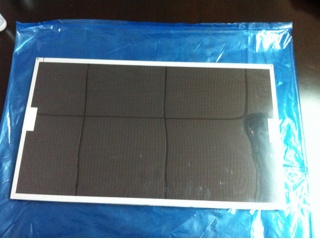
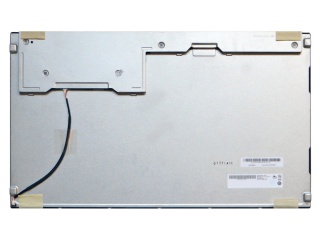
In the competitive landscape of industrial display technology, the selection of a panel is rarely a trivial choice. It is a decision that dictates system reliability, user interaction quality, and long-term operational cost. The G215HAN01.1 from AUO (AU Optronics) stands as a benchmark for industrial-grade 21.5-inch TFT LCD modules, offering a refined balance between optical performance and mechanical robustness. Unlike consumer-grade monitors, this module is engineered for environments that demand consistent, high-accuracy visual output. This article delves beyond the basic specifications, exploring the architectural nuances, application-specific advantages, and integration considerations of this specific panel. From its Full HD resolution and industrial temperature tolerance to its optical bonding potential and interface complexities, we will dissect what makes the G215HAN01.1 a preferred choice for engineers designing medical equipment, human-machine interfaces (HMIs), and automated kiosks. Our goal is to provide a comprehensive resource that aids in validating this component for mission-critical projects.
The Architectural Foundation: Resolution and Aspect Ratio
The G215HAN01.1 anchors its optical performance on a standard yet powerful Full HD (1920 x 1080) resolution. In the realm of 21.5-inch panels, this pixel density strikes a critical equilibrium. It provides sufficient clarity for displaying detailed graphical user interfaces (GUIs) in industrial control systems without the unnecessary computational overhead required by higher resolutions like 4K. The 16:9 aspect ratio is particularly strategic. While older industrial panels often used the 4:3 format, the 16:9 widescreen alignment of this AUO module allows for more efficient multi-window workflows, which is essential in modern HMI software. Operators can monitor a real-time data feed on one half of the screen while maintaining control panels on the other, significantly enhancing situational awareness. Furthermore, the adoption of the 16:9 standard reduces the need for custom software scaling or "black bar" compromises, making it directly compatible with the majority of modern video sources and embedded systems. This alignment ensures that the physical screen real estate is utilized with maximum efficiency, minimizing wasted pixels and ensuring that critical elements are always displayed at their native sharpness, a non-negotiable requirement for medical imaging preview stations or precision manufacturing oversight.
Optical Clarity: Luminance and Contrast in Harsh Environments
One of the defining characteristics of the G215HAN01.1 is its high luminance output, typically rated at 350 cd/m². This brightness level is significantly higher than a standard desktop monitor. It is a deliberate design choice to combat the challenges of ambient light in industrial settings, such as factory floors with overhead lighting or hospital corridors with large windows. This high luminosity ensures that the display remains legible without requiring the user to squint or adjust their posture. However, brightness alone does not define visual quality. The module boasts a high contrast ratio, often cited at 3000:1, due to its use of Vertical Alignment (VA) or similar advanced LCD technology. This deep native contrast is crucial because it maintains the distinction between black and white pixels, preserving the sharpness of text and the depth of color gradients even when the backlight is set to a higher intensity. In practical terms, this means that an HMI screen in a control room will show deep, true blacks alongside bright whites, reducing eye strain during long shifts. Engineers must consider that while 350 cd/m² is a baseline, the actual required brightness will depend on the specific anti-glare treatment and the final optical bonding used. For applications directly facing sunlight or strong LED lighting, this AUO panel provides an excellent starting point for further optical enhancement.
Mechanical Integrity: Design for Longevity and Heat Management
The structural design of the G215HAN01.1 sets it apart from commercial displays. The module features a standard mounting interface but is built with embedded systems in mind. A critical mechanical aspect is its operating temperature range, typically spanning from -20°C to +70°C. This specification is vital for outdoor kiosks, semi-outdoor digital signage, or unventilated enclosures in manufacturing plants. The panel's construction is optimized to handle the thermal expansion and contraction that would quickly degrade a home-use monitor. Another key feature is the narrow bezel design. While not bezel-less, its profile is engineered to allow for seamless tiling in video wall configurations or flush mounting into panel PCs. This design philosophy extends to the heat dissipation pathway. The module is designed to interface efficiently with a metal chassis or heat sink, conducting the heat generated by the backlight LEDs away from the LCD cell. Proper thermal management is directly correlated to the longevity of the polarizers and liquid crystal material. Without this robust mechanical foundation, a 24/7 operation scenario would lead to premature luminance degradation, color shift, and ultimately, dead pixels. For system integrators, the mechanical datasheet of this AUO module offers the predictability needed for enclosure design and thermal simulation.
Connectivity and Interface: LVDS and Electrical Integration
At the heart of the G215HAN01.1's integration complexity lies its interface: dual-channel LVDS (Low-Voltage Differential Signaling). This is not a plug-and-play USB-C or HDMI interface. LVDS is the industry standard for embedded panels, designed to carry high-bandwidth video data over a twisted-pair cable with low electromagnetic interference (EMI). The dual-channel configuration is essential for driving the 1920x1080 resolution at 60Hz or higher. System integrators must ensure that their graphics controller or embedded processor (like an ARM i.MX or Intel Atom) has an LVDS output that matches the pinout and voltage requirements of this specific panel. A common integration challenge is configuring the timing parameters (blanking, sync) in the display driver's timing controller (TCON). The G215HAN01.1's datasheet provides specific timing diagrams that must be followed precisely. A mismatch will result in a blank screen or distorted image. Furthermore, the module includes a backlight driver circuit input. Engineers must supply a constant current source with the correct voltage and current specification for the LED array. Careful attention to this power interface is critical to avoid flicker or damage. For projects requiring high reliability, using the correct LVDS cable with shielded twisted pairs is non-negotiable to prevent signal degradation over longer distances inside the system.
Reliability Standards: IP Ratings and Serviceability
A true industrial module like the G215HAN01.1 is distinguished by its compliance with rigorous reliability standards. While the raw LCD cell does not carry an IP rating (as it is designed to be integrated into a final enclosure), the module's construction is built to withstand shock and vibration per standards such as IEC 60068-2. This mechanical resilience is essential for transportation (in-vehicle displays) and heavy machinery applications. A crucial aspect of its reliability is the backlight lifespan, often rated for 50,000 hours or more to half-brightness. This specification allows system owners to predict maintenance cycles with high accuracy. For applications requiring continuous operation, such as a security monitoring station in a hospital, this longevity translates directly into lower total cost of ownership. Another factor is the module's compatibility with optical bonding. While the panel itself is high-quality, bonding an anti-reflective glass or a touch sensor directly to the front surface eliminates the air gap. This reduces reflections, improves contrast, and prevents condensation. AUO supports this process by providing modules with a clean, flat polarizer surface. The ability to service the panel—replacing it without replacing the entire system—is a design feature of this modular approach. Its standardized electrical and mechanical interface ensures that a failed unit can be swapped out in minutes, minimizing system downtime.
Application Viability: From Medical to Kiosk Environments
The true value proposition of the G215HAN01.1 becomes clear when examining its specific application niches. In the medical field, its high contrast and stable color reproduction make it suitable for patient monitoring, diagnostic imaging review, and surgical display terminals. The ability to maintain consistent gamma and white point over time is critical for accurate interpretation of grayscale medical images (DICOM). In industrial automation, the panel excels as the core of a Human-Machine Interface (HMI) on a factory PLC or robotic control station. Its wide viewing angle ensures that operators standing at various positions can read the status indicators without color inversion. For self-service kiosks (ticketing, check-in, information), the high brightness combats the ambient light of lobbies and train stations, while the long backlight life supports 24/7 operation. The 21.5-inch size is also the sweet spot for interactive digital whiteboards in education or collaborative workspaces, where it provides enough real estate for touch interaction without being overly cumbersome. However, it is less suitable for portable devices or applications requiring extreme sunlight readability without optical bonding. The module's design philosophy deliberately sacrifices extreme thinness for durability and thermal performance, making it an ideal component for stationary, professionally-installed systems where reliability, not portability, is the paramount requirement.
FAQs: Ten Critical Questions About the G215HAN01.1
What is the exact resolution of the G215HAN01.1?It is a Full HD panel with a native resolution of 1920 x 1080 pixels, providing a 16:9 aspect ratio.
What interface does this module use for video input?It utilizes a dual-channel 8-bit LVDS (Low-Voltage Differential Signaling) interface. It does not support HDMI or VGA directly.
Is the G215HAN01.1 suitable for outdoor use?Indirectly, yes. At 350 cd/m², it is bright but requires a high-brightness version or optical bonding for direct sunlight readability.
What is the operating temperature range?The standard industrial temperature range is typically -20°C to +70°C, making it suitable for harsh environments.
Can I use a standard desktop monitor controller with this panel?Unlikely. You need a controller board specifically designed for 21.5" AUO LVDS panels with the correct connector and timing settings.
How long is the backlight expected to last?LED backlight lifespan is typically rated at 50,000 hours to half-brightness (L50), ensuring years of reliable service.
Does this module come with a touch screen?No, it is a bare LCD module. It is designed to be integrated with aftermarket touch sensors (resistive, capacitive, or IR) by the system integrator.
What is the thickness of this module?It is a standard LCM (LCD Module) thickness, typically around 8-10mm, excluding the backlight driver board, but this must be verified against the specific mechanical drawing.
Is it compatible with optical bonding?Yes, the module's front polarizer is designed to be compatible with standard optical bonding processes for improved optical performance and durability.
What are common failure modes for this panel?The most common issues are backlight failure (though rare with LEDs), driver board IC failure, or physical damage from vibration or impact. Dead pixels are typically covered by a specific quality specification.
Conclusion: A Foundational Component for Professional Systems
The G215HAN01.1 from AUO is far more than a standard display; it is a calibrated instrument designed for the rigorous demands of professional and industrial environments. We have explored how its high luminance, deep contrast, and robust thermal design directly address the real-world challenges of 24/7 operation, variable lighting, and mechanical stress. Its reliance on the LVDS interface underscores that this is a component for engineers who prioritize system control and stability over consumer convenience. For anyone designing a medical monitor, an industrial HMI, or an interactive kiosk, this module provides a proven and predictable foundation. The key takeaway is that successful integration hinges on respecting its specifications: proper power supply design, correct LVDS timing configuration, and a robust mechanical enclosure. When these factors are addressed, the G215HAN01.1 delivers not just a picture, but a reliable window into the critical data and processes that drive modern industry and medicine. It is an investment in the longevity and clarity of your final product.





