


















- Industrie-LCD-Display
-
Industrial Products
- DC Servo Drive
- AC Servo Drive
- PCB
- Siemens
- Switch Sensor
- Näherungsschalter
- Temperaturregler
- Schutzrelais
- Fiber Optic Sensor
- Encoder
- Fan
- other
- Heidelberg
- MITSUBISHI
- FANUC
- Siemens adapter
- Fujitsu connector
- Der Aufsichtsrat
- Board
- Contactor
- Circuit
- Omron
- Relais.
- Motortreiber
- power supply
- Cable
- Transformator
- HMI Touch-Glas
-
HMI-Vollautomat Ganze Einheit
- OMRON HMI Touch Panel
- Siemens HMI Touch Panel
- Mitsubishi HMI Touch Panel
- Allen-Bradley Automatisierung HMI Touch
- DELTA HMI Touch Panel
- EVIEW DELTA HMI Touch Panel
- KINCO DELTA HMI Touch Panel
- HITECH HMI Touch Panel
- WEINTECK HMI Touch Panel
- TECVIEW HMI Touch Panel
- WEINVIEW HMI Touch Panel
- PANASONIC HMI Touch Panel
- KYOCERA HMI Touch Panel
- SCHNEIDER HMI Touch Panel
- Module
- LCD Wechselrichter
- Membran Tastenfeld Schalter
- Winni Touch Screens
- Frequenzumrichter
- Servo Motor
- PLC
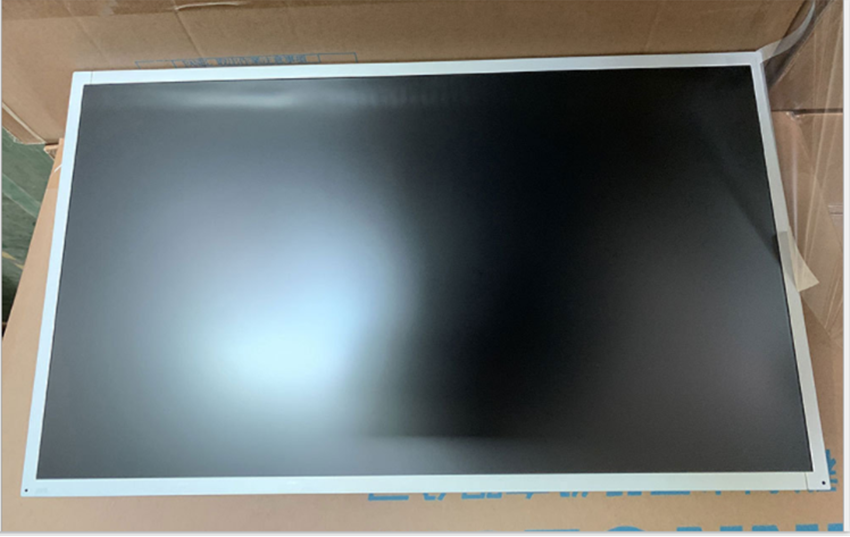
In the world of industrial LCD panels, few models balance performance, longevity, and cost-effectiveness as well as the G215HCJ-L02 from INNOLUX. This 21.5-inch display module is not a consumer-grade monitor; it is a dedicated industrial-grade panel designed for rugged environments, digital signage, kiosks, medical equipment, and human-machine interfaces (HMIs). Understanding the technical specifications, application constraints, and competitive advantages of this panel is essential for procurement managers, system integrators, and hardware engineers seeking reliable display solutions under demanding conditions.
This article provides a deep, evidence-based analysis of the G215HCJ-L02, covering its optical characteristics, mechanical design, electrical interface, and real-world applications. By the end, you will have a clear, actionable understanding of whether this panel fits your project requirements and how to maximize its value in product design.
1. Core Technical Specifications: Beyond the Datasheet Surface
The G215HCJ-L02 is a 21.5-inch a-Si TFT-LCD (amorphous silicon thin-film transistor liquid crystal display) module. While many cursory reviews simply list diagonal size and resolution, a deeper technical evaluation reveals distinct design choices that define its performance envelope.
Resolution and Aspect Ratio: The panel features a native resolution of 1920 x 1080 pixels (Full HD) with a 16:9 aspect ratio. This standard resolution ensures compatibility with ubiquitous video sources and operating systems, reducing integration complexity. Pixel pitch is approximately 0.24795 mm x 0.24795 mm, delivering sharp text and detailed graphics for user interfaces.
Brightness and Luminance: One of the most critical parameters for industrial use is brightness. The G215HCJ-L02 typically offers a luminance of 250 cd/m² (typical) to 300 cd/m² (maximum), depending on backlight configuration and operating current. This level is suitable for indoor environments with controlled ambient light. For direct sunlight or high-ambient applications, additional optical bonding or a higher-brightness variant should be considered.
Contrast Ratio and Viewing Angles: The panel delivers a typical contrast ratio of 3000:1 (with VA or similar technology variants). This deep contrast is crucial for displaying black levels in medical imaging or dark-themed user interfaces. Viewing angles are specified at 89°/89°/89°/89° (typical) for left, right, up, and down directions—achieving a wide 178° total cone. This ensures consistent color and brightness even when the display is viewed from off-center positions, a requirement for public kiosks and multi-viewer scenarios.
Response Time: With a typical response time of 8 ms (Tr+Tf), the G215HCJ-L02 is adequate for static and slow-moving content. It is not optimized for fast-paced video or gaming, but for industrial data visualization, menu navigation, and real-time status displays, this response time is more than sufficient.
2. Mechanical and Environmental Design: Built for Reliability
An often-overlooked aspect of industrial panels is their mechanical robustness and environmental tolerance. The G215HCJ-L02 is engineered with these factors in mind.
Outline Dimensions and Mounting: The module measures approximately 497.6 mm x 292.2 mm x 10.5 mm (width x height x depth), with a active area of 476.64 mm x 268.11 mm. It supports VESA mount patterns (typically 75x75 mm or 100x100 mm, depending on bracket design) and includes mounting holes for secure integration into enclosures. The slim profile (10.5 mm) allows for space-efficient system design.
Operating Temperature Range: The panel is rated for an operating temperature of 0°C to +50°C, with a storage range of -20°C to +60°C. While this is not an extreme-temperature range (e.g., -30°C to +80°C found in some ruggedized panels), it covers standard indoor industrial environments, climate-controlled kiosks, and most healthcare facilities. For outdoor or unheated installations, additional thermal management or a wider-temperature variant is recommended.
Backlight and Lifetime: The LED backlight is designed for a typical lifetime of 50,000 hours (at 25°C ambient temperature). This translates to approximately 5.7 years of continuous 24/7 operation. The backlight is non-replaceable in the module, so system designers should factor in the expected product lifespan and consider the panel as a consumable component in long-life applications.
Interface and Connectivity: The panel uses a LVDS (Low-Voltage Differential Signaling) interface, specifically a 2-channel, 30-pin connector. This is a mature, standardized interface in industrial computing. The electrical design requires a single 3.3V power supply, simplifying power management. The interface supports 6-bit + FRC (Frame Rate Control) for color depth, achieving up to 16.2M colors.

3. Application Scenarios: Where Does This Panel Excel?
The G215HCJ-L02 is not a general-purpose monitor. Its design targets specific verticals where reliability, optical consistency, and form factor flexibility are paramount.
Self-Service Kiosks: In ticketing machines, check-in kiosks, and information terminals, the panel’s wide viewing angles ensure readability from various user heights and angles. The 21.5-inch size is a sweet spot for touchscreen overlays, balancing screen real estate with user reach.
Medical Monitoring and Diagnostic Equipment: The 3000:1 contrast ratio and Full HD resolution make it suitable for displaying patient vitals, X-ray images (with proper calibration), and clinical dashboards. The wide temperature range covers typical hospital environments, though additional enclosure ventilation may be needed near heat-generating equipment.
Industrial HMIs (Human-Machine Interfaces): Factory floor panels, CNC machine controls, and PLC interfaces benefit from the panel’s reliable LVDS interface and robust build. The slim profile allows for integration into operator consoles and control cabinets without excessive bulk.
Digital Signage (Indoor): For retail displays, wayfinding boards, and corporate communication screens, the brightness and contrast deliver vibrant graphics. However, direct sunlight exposure should be avoided; the panel is strictly an indoor solution.
4. Competitive Analysis: How Does It Compare to Similar Panels?
To appreciate the G215HCJ-L02’s value, it is useful to compare it against alternatives from AUO (AU Optronics), BOE, and LG Display.
vs. AUO G215HCE-L02: AUO’s equivalent panel often offers similar brightness (250-300 cd/m²) and contrast, but the INNOLUX panel frequently has a slight edge in viewing angle uniformity and lower power consumption (typically 10-12W versus the AUO’s 12-14W). This power saving can be critical in battery-backed or heat-sensitive designs.
vs. BOE DV215FBM-N10: BOE panels sometimes provide a higher native brightness (350 cd/m²) but at the cost of reduced contrast (typically 1000:1). The G215HCJ-L02’s 3000:1 contrast is a significant advantage for applications requiring deep blacks or high dynamic range.
vs. LG Display LM215WF3-SSA1: LG’s panel is often found in medical-grade monitors with stricter color accuracy standards. While LG may deliver superior color gamut, the INNOLUX panel is generally more cost-effective and easier to source for high-volume industrial runs, making it a practical choice for value-driven projects.
5. Procurement Considerations and Best Practices
When sourcing the G215HCJ-L02, engineers and buyers should pay attention to several details that can impact product success.
Version and Revision: INNOLUX releases panel revisions (e.g., Rev. A, Rev. B). Always verify the latest datasheet from authorized distributors to ensure compatibility with your driver board and connector pinout. Backward compatibility is common but not guaranteed.
Touchscreen Integration: The panel is typically supplied without a touch sensor. If you require touch functionality, choose an open-frame design with a projected capacitive (PCAP) or resistive overlay. Ensure the touch controller’s firmware is compatible with the panel’s LVDS timing.
Driver Board and Cabling: You will need a compatible LVDS driver board (e.g., M.NT68676 or similar) that supports 1920x1080 at 60 Hz. Use shielded LVDS cables to minimize electromagnetic interference (EMI), especially in industrial environments with motors or RF sources.
Backlight Inverter (if applicable): Some versions of the panel may require an external LED driver. Verify the voltage and current requirements—typically 21-27V at 120mA per string. Matching the driver accurately extends backlight lifespan.
6. Common Pitfalls and How to Avoid Them
Even experienced integrators can face issues with industrial panels. Here are the most frequent problems with the G215HCJ-L02 and their solutions.
Incorrect LVDS Pin Mapping: The 30-pin LVDS connector is standard, but pin 1 orientation varies between manufacturers. Always double-check the datasheet pin assignment against your driver board. Reversing the connector can damage the panel.
Thermal Overload: While the panel operates at up to 50°C, the backlight itself generates heat. In an enclosed kiosk, this can lead to premature degradation. Add ventilation slots or a small fan to maintain airflow over the back of the panel.
Static Discharge (ESD): The panel’s control board is sensitive to ESD. Use grounded workstations and handle the panel by its edges. In final product design, incorporate ESD protection on the interface lines (TVS diodes) and ensure the enclosure is properly grounded.
7. Future-Proofing and End-of-Life Considerations
Industrial products have longer lifecycles than consumer electronics, but panel discontinuation is inevitable. The G215HCJ-L02 has been in production for several years and is widely available in 2025, but engineers should always plan for obsolescence.
Design with Alternate Sourcing: Use a driver board that supports multiple panel models (e.g., from INNOLUX, AUO, or BOE) with the same resolution and interface. This allows switching to an alternative panel without a complete redesign.
Stock Planning: For long-running projects (e.g., medical equipment with 7-10 year lifecycle), consider purchasing a lifetime buy of panels or partnering with a distributor that holds buffer inventory. Confirm minimum order quantities (MOQ) and lead times.
Compliance Certifications: The panel typically meets RoHS and REACH standards. If your product needs additional certifications (UL, FCC, CE), check whether the panel’s compliance documentation can support your application’s conformance testing.
Conclusion: Is the G215HCJ-L02 Right for Your Project?
The G215HCJ-L02 is a well-engineered, cost-effective industrial LCD panel that excels in indoor environments requiring solid optical performance, wide viewing angles, and reliable Long-term operation. Its 3000:1 contrast, Full HD resolution, and robust mechanical design make it a strong candidate for medical, kiosk, and HMI applications.
However, it is not suitable for direct sunlight, extreme temperatures, or applications demanding ultra-high brightness (>500 cd/m²). In those cases, engineers should evaluate enhanced versions or alternative technologies like sunlight-readable bonded panels.
By understanding the panel’s specifications deeply, respecting its environmental limits, and planning for integration challenges, you can leverage the G215HCJ-L02 to build products that are both dependable and cost-efficient. As with any industrial component, thorough testing with your specific driver board and enclosure design is non-negotiable—but when done correctly, this INNOLUX panel delivers exceptional value for a wide range of professional display systems.





