























In the highly specialized realm of industrial display technology, the selection of a liquid crystal display (LCD) module is a critical decision that directly impacts system reliability, user interaction, and operational longevity. Among the myriad of options available, the G213UAN01.0 21.3" TFT LCD module from AU Optronics (AUO) stands as a distinctive solution tailored for demanding professional environments. This article delves deep into the technical architecture, application-specific advantages, and market positioning of this particular display.
Unlike consumer-grade monitors, the G213UAN01.0 is engineered for precision, offering a unique combination of a 4:3 aspect ratio, superior color accuracy, and high luminance stability. This module is not merely a screen; it is a critical interface for medical imaging, air traffic control, and industrial process monitoring. The following analysis will dissect its core specifications, explore its engineering compromises, compare its performance against contemporary alternatives, and provide actionable insights for engineers and procurement specialists. By examining this specific module, we gain a broader understanding of how specialized display technology solves real-world constraints in fields where failure is not an option.
Decoding the Specifications: More Than Just Numbers
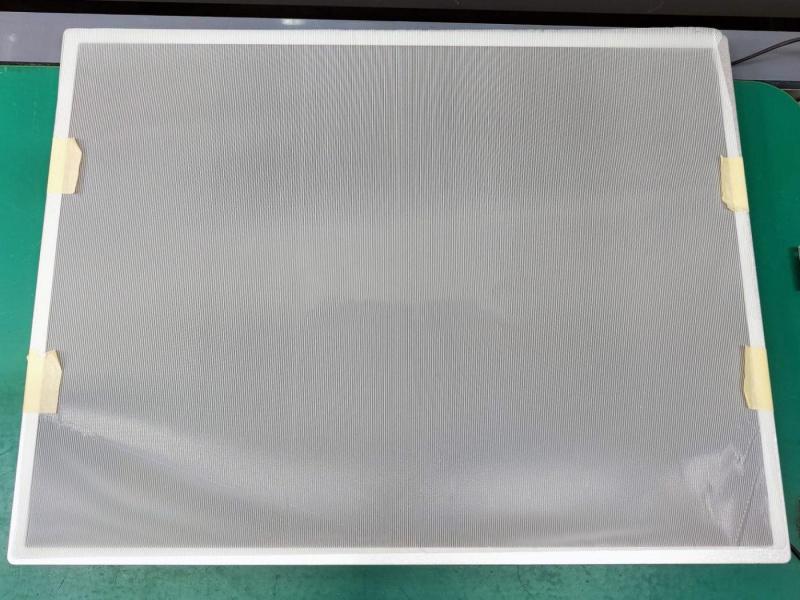
To appreciate the G213UAN01.0, one must first move beyond simple resolution figures and examine the engineering philosophy behind its design. This 21.3-inch module operates at a resolution of 1600 x 1200 pixels (UXGA), maintaining the classic 4:3 aspect ratio. While the market has largely shifted to widescreen formats, the 4:3 ratio is deliberately retained for specific vertical applications. In medical diagnostic workstations, for example, this ratio allows for the display of two full-sized A4 medical images side-by-side without cropping, a critical feature for accurate diagnosis.
The module utilizes IPS (In-Plane Switching) technology, ensuring wide viewing angles of 89 degrees in all directions. This consistency is vital for multi-user environments like a control room, where operators must view the screen from various positions without color shift or contrast degradation. Furthermore, the specified brightness of 800 cd/m² and a contrast ratio of 1000:1 are not arbitrary figures. The high brightness level is essential for overcoming ambient light in brightly lit surgical theatres or sunlit cockpits, while the contrast ensures clear differentiation between subtle shades of gray in a radiographic image.
The Critical Role of Color Depth and Gamut in Professional Use
Transitioning from basic luminance to color science, the G213UAN01.0 exhibits a commitment to visual fidelity that separates it from general-purpose displays. The module supports 8-bit color depth, capable of displaying 16.7 million colors. However, its most significant advantage lies in its color gamut coverage. Specifically designed to cover a high percentage of the sRGB color space, and often tailored to meet the stringent DICOM (Digital Imaging and Communications in Medicine) Part 14 standard, this LCD ensures that grayscale tones are rendered with linear precision.
In a medical PACS (Picture Archiving and Communication System) workstation, a non-linear grayscale could cause a radiologist to miss a subtle fracture or lesion. The G213UAN01.0's backlight system and color filter array are calibrated at the factory to maintain consistent luminance and chromaticity over the entire screen area. This uniformity is paramount. For graphic design and printing pre-press work, the accurate reproduction of specific Pantone colors is impossible without this level of gamut coverage. The module therefore acts as a trusted intermediary between digital data and human perception, reducing eye fatigue and diagnostic errors associated with inaccurate color rendering.
Interfacing and Connectivity: Ensuring Data Integrity
Moving inward from the screen's surface, the electrical interface of the G213UAN01.0 is a crucial determinant of its system compatibility and performance stability. This module commonly utilizes the LVDS (Low-Voltage Differential Signaling) interface, a standard favored in industrial applications for its resistance to electromagnetic interference (EMI) and its ability to transmit high-bandwidth video signals over longer distances than older standards like VGA.
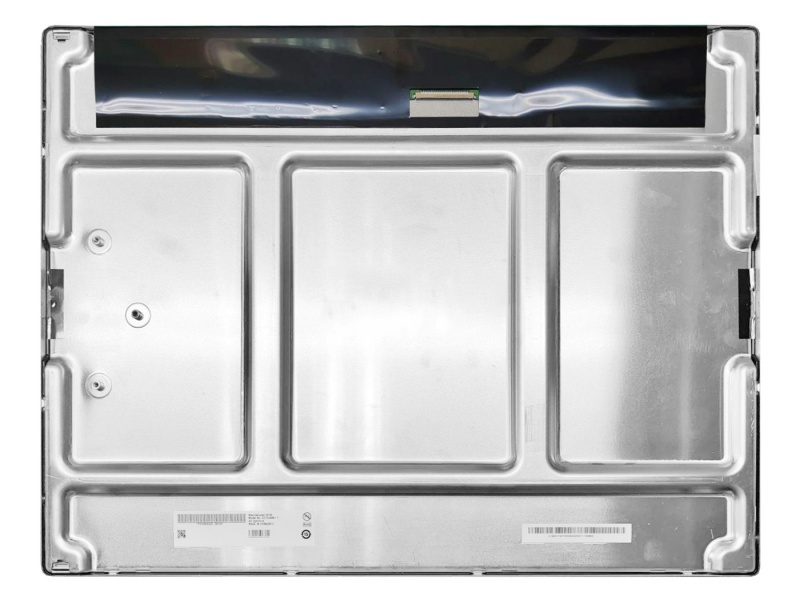
The specific pin configuration and signal timing of this AUO module require careful consideration by system integrators. Unlike plug-and-play consumer monitors, the G213UAN01.0 is typically sold as an open-frame unit or a panel-only component, demanding a custom controller board or timing controller (TCON) that matches its exact specifications. Engineers must ensure the power supply delivers the correct voltage (typically 5V or 12V for the logic and backlight sections separately) and that the LED driver meets the precise current requirements for the CCFL or LED backlight. A mismatched interface can lead to flickering, image tearing, or permanent damage to the delicate driver ICs on the panel. Understanding the electrical load at startup is also critical for designing a reliable embedded system.
Longevity, Reliability, and the Industrial Lifecycle
Shifting focus from immediate performance to long-term value, the G213UAN01.0 is engineered for a specific lifecycle that differs dramatically from consumer electronics. AUO designs this module for a 5-7 year production life and an operational lifespan of 50,000 hours or more. This durability is achieved through the use of industrial-grade components, including robust capacitors, high-temperature tolerant polarizers, and a thermally managed LED backlight system.
For industries like aviation ground control or nuclear plant monitoring, a display failure is not a mere inconvenience; it is a safety hazard. The module's ability to withstand vibration, humidity, and temperature fluctuations is specified in its datasheet under rigorous environmental testing. Its wide operating temperature range (often -10°C to +60°C) allows it to function in unventilated enclosures or harsh factory floors. Furthermore, the long-term availability of the module provides OEMs with the confidence that their product design will not become obsolete within a short period, avoiding costly re-certification processes for medical devices or military hardware. This supply chain stability is a non-negotiable requirement for mission-critical systems.
Comparative Analysis: Why Choose This Module Over Alternatives?
To contextualize the G213UAN01.0, a direct comparison with potential substitutes is necessary. When placed against standard 21.5-inch wide 1080p panels, the AUO module's 4:3 ratio offers 11% more vertical pixels, which translates to 11% more rows of data in a spreadsheet or 11% more lines in a medical scan. Against higher-resolution 4K panels, the G213UAN01.0 benefits from lower power consumption and a simpler, more reliable driver architecture, making it suitable for battery-backed or harsh-embedded systems where pushing 8 megapixels is unnecessary.
Another key differentiator is backlight technology. While newer edge-lit LED panels are thin, they often suffer from poor uniformity. The G213UAN01.0 frequently utilizes a higher-grade direct-lit or edge-lit design with better diffusers, providing superior luminance uniformity. For application environments like a financial trading floor, where operators stare at screens for 12 hours, the reduction in eye strain from consistent brightness is a tangible productivity benefit. Ultimately, the choice for this module is a strategic decision for applications where accuracy, reliability, and form factor compatibility outweigh the allure of the latest consumer video features or lower initial cost.
FAQs
Q1: What is the native resolution of the G213UAN01.0?It is 1600 x 1200 pixels (UXGA) with a 4:3 aspect ratio.
Q2: What panel technology does this AUO module use?It uses IPS (In-Plane Switching) technology for wide viewing angles and consistent color.
Q3: Is this module suitable for medical imaging?Yes, its high brightness and DICOM-compliant grayscale reproduction make it ideal for PACS workstations.
Q4: What interface does the G213UAN01.0 use?It typically uses a 2-channel LVDS interface for signal transmission.
Q5: What is the typical operating temperature range?It is designed for industrial use, often ranging from -10°C to +60°C.
Q6: Does the module include a touch screen?The standard model is a display-only panel, but it can often be paired with third-party touch sensors.
Q7: What is the typical brightness level of this module?Standard brightness is approximately 800 cd/m², suitable for bright environments.
Q8: Is this module still in active production?AUO typically guarantees a 5-7 year production lifecycle for industrial modules, but verify current status with a supplier.
Q9: Can this panel be used with a standard desktop computer?Yes, but it requires a specialized controller board that converts HDMI or DisplayPort signals to LVDS.
Q10: Why choose 4:3 over widescreen for professional use?The 4:3 ratio provides more vertical space, which is critical for reading documents, coding, and viewing medical images without scrolling.
Conclusion
The G213UAN01.0 21.3" TFT LCD module from AUO is a testament to the power of specialized engineering. It is not a display for the mass market, but rather a precision instrument designed for the demanding worlds of medical imaging, industrial control, professional graphics, and critical infrastructure. Its 4:3 aspect ratio, robust IPS technology, high luminance, and industrial-grade reliability address specific needs that general-purpose monitors simply cannot satisfy. For the systems integrator or procurement manager, choosing this module represents a commitment to long-term stability, visual accuracy, and operational safety. While it comes with a higher upfront cost and requires careful integration, the return on investment is measured in reduced errors, lower total cost of ownership, and a display that performs flawlessly for years in the most unforgiving environments. In a market driven by consumer trends, the G213UAN01.0 stands as a reminder that sometimes, the best technology is not the newest, but the most reliable and precisely fit for purpose.





