


















- Industrie-LCD-Display
-
Industrial Products
- DC Servo Drive
- AC Servo Drive
- PCB
- Siemens
- Switch Sensor
- Näherungsschalter
- Temperaturregler
- Schutzrelais
- Fiber Optic Sensor
- Encoder
- Fan
- other
- Heidelberg
- MITSUBISHI
- FANUC
- Siemens adapter
- Fujitsu connector
- Der Aufsichtsrat
- Board
- Contactor
- Circuit
- Omron
- Relais.
- Motortreiber
- power supply
- Cable
- Transformator
- HMI Touch-Glas
-
HMI-Vollautomat Ganze Einheit
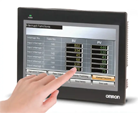
- OMRON HMI Touch Panel
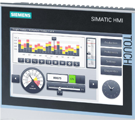
- Siemens HMI Touch Panel
- Mitsubishi HMI Touch Panel
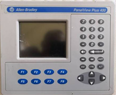
- Allen-Bradley Automatisierung HMI Touch
- DELTA HMI Touch Panel
- EVIEW DELTA HMI Touch Panel
- KINCO DELTA HMI Touch Panel
- HITECH HMI Touch Panel
- WEINTECK HMI Touch Panel
- TECVIEW HMI Touch Panel
- WEINVIEW HMI Touch Panel
- PANASONIC HMI Touch Panel
- KYOCERA HMI Touch Panel
- SCHNEIDER HMI Touch Panel
- Module
- LCD Wechselrichter
- Membran Tastenfeld Schalter
- Winni Touch Screens
- Frequenzumrichter
- Servo Motor
- PLC
In the rapidly evolving landscape of industrial and commercial display technology, specific models often define the standard for reliability, performance, and cost-efficiency. The G200HJJ-L01, a 19.5-inch LCD module manufactured by Innolux, stands as a prime example of a specialized component designed to bridge the gap between legacy system requirements and modern visual demands. Unlike consumer-grade monitors that prioritize marketing specs, this display is engineered for continuous operation in demanding environments such as digital signage, point-of-sale terminals, and medical instrumentation. This article delves beyond the surface-level specifications to explore the architectural design, interface compatibility, optical performance, and strategic value of this specific panel. We will examine why this particular model remains relevant in a market shifting toward larger, higher-resolution panels. Our analysis covers its unique timing controller (TCON) requirements, backlight longevity, viewing angle limitations, and replacement market dynamics, providing OEMs, integrators, and procurement specialists with actionable insights for leveraging this component effectively in current and future projects.

Architectural Precision and Panel Composition
The G200HJJ-L01 is fundamentally a a-Si TFT-LCD (Amorphous Silicon Thin-Film Transistor Liquid Crystal Display) module, adhering to Innolux's rigorous manufacturing standards for industrial-grade components. Its structure consists of several precisely aligned layers: a polarizer, a color filter substrate, a liquid crystal layer, a TFT array substrate, and a second polarizer, all sandwiched between a robust metal bezel. The pixel format is typically 1600 x 900 (HD+) resolution, which offers a 16:9 aspect ratio, providing sufficient pixel density for text readability and image clarity without the computational overhead of a full 1080p panel. This resolution is a strategic sweet spot for applications requiring crisp text, such as POS systems and medical patient monitors, where excessive pixel count can lead to driver complexity and cost. The module's thickness is optimized for panel-mounted installations, typically featuring a slim profile (excluding the driver board) to fit into compact chassis designs. Key to its industrial reliability is the operating temperature range, often specified from 0°C to 50°C, ensuring stable performance in controlled indoor environments but not in extreme cold or heat.
Interface and Signal Integrity Protocols
A critical factor distinguishing this panel from consumer alternatives is its interface standard. The G200HJJ-L01 typically employs an LVDS (Low-Voltage Differential Signaling) interface, specifically a 2-channel, 8-bit configuration. This interface is industry-standard for embedded systems and industrial controllers, providing robust signal integrity over short distances (up to several meters) while minimizing electromagnetic interference (EMI). The 8-bit depth enables the display of 16.7 million colors, which is adequate for most graphical user interfaces and basic imaging applications. However, it is crucial for integrators to note that the pinout and timing specifications for this panel are proprietary to Innolux's design. Using a generic LVDS cable without verifing the exact pin assignment (e.g., power, ground, odd/even pixel data pairs, and clock) can result in no display, garbled imagery, or physical damage to the panel or controller. The standard operating voltage for the logic section is typically 3.3V, while the backlight (LED or CCFL) requires a separate, higher-voltage driver circuit. Careful attention must be paid to the backlight voltage and current ratings to avoid premature LED degradation or flickering.
Optical Performance Metrics and Viewing Angle Characteristics
Optically, the G200HJJ-L01 delivers a balanced performance profile for its intended applications. The typical luminance is rated at around 250-300 cd/m², making it suitable for indoor environments with controlled ambient lighting. This brightness level, combined with a contrast ratio typically in the range of 1000:1 to 3000:1 (depending on production batch and temperature), provides decent black depth and dynamic range for text-heavy content. A significant limitation, however, is the viewing angle. This panel is most commonly produced with a 6 o'clock viewing direction (optimal from below, as per the standard clock orientation) and typical viewing angles of 85°/85°/75°/85° (left/right/up/down). The vertical up direction is often the weakest, meaning that if the monitor is viewed from above (e.g., mounted high on a wall without tilting downward), the image may appear slightly washed out or have color inversion. This is a common characteristic of many TN (Twisted Nematic) panels used in this size and cost bracket, and is less of an issue for front-facing transactional displays where the user is directly in front of the screen at eye level.

Backlight Technology and Longevity Engineering
The backlight system is a critical component dictating the panel's operational lifespan and maintenance cycle. The G200HJJ-L01 uses LED (Light Emitting Diode) backlighting in most recent revisions, replacing older CCFL (Cold Cathode Fluorescent Lamp) versions. This transition offers significant advantages: lower power consumption (typically < 20W for the backlight alone), thinner module depth, mercury-free construction, and faster turn-on times. The LED array is typically edge-lit, positioned along one side of the panel, and coupled with a light guide plate to distribute light evenly across the screen. The rated lifespan of these LEDs is often specified at 30,000 to 50,000 hours to half-brightness (L50) under standard operating conditions. This translates to roughly 5-7 years of continuous 24/7 operation before the display becomes noticeably dimmer. For applications requiring even longer reliability, such as public information kiosks, it is wise to operate the backlight at a lower brightness level (e.g., 70-80%) to extend its life. The LED driver circuitry is integrated onto the panel's PCB or provided as a separate board, requiring careful matching with the main power supply to avoid over-voltage or under-current conditions that can damage the LEDs.
Market Positioning and Application Ecosystem
Understanding the market positioning of the G200HJJ-L01 is crucial for procurement and replacement strategies. This panel is a mid-range industrial component, not a premium medical or aviation-grade display, nor a low-cost consumer monitor panel. It occupies a specific niche: price-sensitive commercial and light-industrial applications where 19.5” is the required form factor. Key application sectors include:
Point-of-Sale (POS) Terminals: Its size and resolution are ideal for customer-facing displays and operator workstations in retail and hospitality, providing a clear view of transaction data.
Digital Signage (Indoor): Used for menu boards in quick-service restaurants or informational displays in lobbies and waiting rooms, where the viewing angle limitations are manageable.
Medical Instrumentation: Found in patient monitoring systems, ultrasound machines (secondary screens), and diagnostic workstations where reliability is paramount but color-critical diagnosis is not the primary function.
Industrial Control Panels: Used as HMI (Human-Machine Interface) panels in factory automation, process control, and machinery, where the rugged construction is valued.
Its replacement market is also robust, as many older 19” monitors and all-in-one systems are phased out, requiring drop-in replacements that maintain the exact mounting holes, connectors, and timing specifications.
Procurement, Sourcing, and Compatibility Verification
Sourcing the G200HJJ-L01 requires a strategic approach due to its niche status. It is not a mass-market item stocked by general electronics retailers. Primary sourcing channels include specialized industrial LCD distributors and surplus electronics suppliers. When sourcing, it is critical to verify the exact model number and revision (e.g., Rev.A, Rev.B), as Innolux may have made slight changes to the backlight connector, timing controller firmware, or mounting bracket holes over product lifetimes. Incompatibility between revisions can cause physical mounting issues or electrical mismatches. Before purchasing, confirm the following:
Interface Compatibility: Ensure your controller board outputs 2-channel LVDS at the correct voltage (typically 3.3V).
Backlight Connector Type and Pinout: The LED backlight cable is often a JST or Hirose connector, with specific voltage and current ratings (e.g., 28V/80mA per string).
Physical Dimensions: The panel's outline dimensions, active area, and mounting hole patterns must match your enclosure or chassis.
EDID/Timing Data: The display's EDID (Extended Display Identification Data) must be programmed into the controller board to ensure proper resolution detection and timing.
Using a generic controller board without proper EDID programming can lead to unstable sync, flickering, or incorrect aspect ratio scaling.
FAQS: Expert Answers to Common Questions
Q: What is the native resolution of the G200HJJ-L01?A: It is 1600 x 900 pixels (HD+), providing a 16:9 aspect ratio with 90% of the vertical content of 1080p.
Q: Is this panel compatible with a Raspberry Pi?A: Yes, but only if the Raspberry Pi is connected to an LVDS controller board that supports the required resolution and 2-channel 8-bit LVDS signal.
Q: What is the typical power consumption of this LCD module?A: Total system consumption is typically under 25 Watts (panel + LED backlight), depending on brightness settings.
Q: Can I use a CCFL-backlit controller with an LED-backlit G200HJJ-L01?A: No. The CCFL and LED backlights require entirely different voltage and current circuits. Using the wrong driver will damage the panel.
Q: What is the difference between the G200HJJ-L01 and a standard 19.5" computer monitor?A: The Innolux panel is an OEM component without a built-in power supply, USB hub, or user controls. It is designed for integration into custom systems.
Q: How do I clean the surface of this LCD screen?A: Use a microfiber cloth lightly dampened with water or a specialized LCD cleaner. Never use ammonia-based cleaners, paper towels, or abrasive materials.
Q: What does "6 o'clock viewing direction" mean for installation?A: The image is optimized for viewing when the screen is tilted slightly backward or when the viewer is below the center of the screen (e.g., looking down at a countertop terminal).
Q: Is a separate controller board required to run this panel?A: Yes, unless it is part of a complete monitor assembly. The panel requires an LVDS controller board that provides the timing signal and power.
Q: What is the lifespan of the backlight LEDs in this panel?A: Typically 30,000 to 50,000 hours before reaching 50% of original brightness, under standard operating conditions.
Q: Where can I find the exact datasheet and pinout for this model?A: Obtain the official Innolux datasheet from the manufacturer's website or an authorized distributor. The document contains critical electrical, optical, and mechanical specifications.
Conclusion: The Enduring Value of a Specialized Component
The G200HJJ-L01 19.5" LCD display from Innolux represents a mature, highly optimized solution for a specific class of industrial and commercial applications. Its strengths lie not in cutting-edge resolution or wide viewing angles, but in robust construction, reliable 1600x900 resolution, efficient LED backlighting, and established LVDS interface compatibility. For system integrators and OEMs, understanding its precise interface requirements, backlight specifications, and physical mounting constraints is essential for successful deployment. While the market continues to gravitate toward larger screens and higher pixel densities, this panel maintains its relevance where cost, form factor, and proven reliability are paramount. It is a testament to the idea that optimal display selection is not about choosing the newest technology, but the most appropriate one. By carefully evaluating the G200HJJ-L01 against your application's operational conditions, viewing angle needs, and power budget, you can leverage a component that offers a predictable, long-term performance lifecycle, ultimately reducing support costs and ensuring user satisfaction in environments where consistent, clear visual output is a necessity, not a luxury.





