















In the demanding world of industrial automation, medical imaging, and high-end gaming interfaces, not all displays are created equal. The AUO G190ETN03.1 is a 19-inch LCD panel that has carved out a niche as a reliable workhorse in environments where commercial-grade monitors fail. This article provides a deep technical and practical analysis of this specific model, moving beyond simple datasheet repetition. We will explore its core specifications, the significance of its LVDS interface, how its optical performance compares to modern counterparts, and its strategic role in long-lifecycle industrial projects. Whether you are an engineer sourcing a replacement, an integrator building a kiosk, or a technician troubleshooting a legacy system, understanding the nuances of this panel is critical. We will dissect why this particular LCD remains relevant in a market flooded with newer technologies, focusing on its durability, reliability, and the trade-offs that define its application.
The Industrial Pedigree: More Than Just a Standard Size
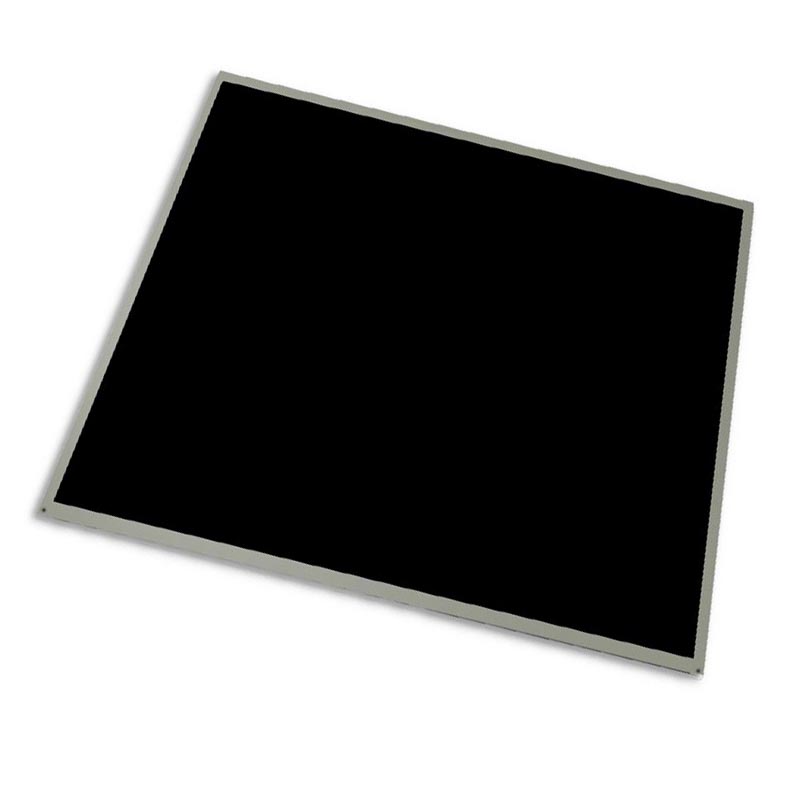
At first glance, the AUO G190ETN03.1 appears to be a standard 19-inch display with a 1280x1024 (SXGA) resolution. However, its design philosophy is fundamentally different from consumer monitors. This panel belongs to AUO’s industrial-grade “ET” series, which prioritizes extended temperature range and high luminance over pixel density or color vibrancy. The “19-inch” designation refers to the diagonal of the active area, which measures 376.32mm x 301.06mm, maintaining a classic 5:4 aspect ratio.
The true value lies in its construction. The G190ETN03.1 is built to operate in temperatures from -20°C to +70°C, a specification that immediately disqualifies most commercial panels for use in outdoor kiosks or factory floors. It features a CCFL backlight (Cold Cathode Fluorescent Lamp), which, while older than modern LED backlights, offers a specific color spectrum that some industrial vision systems still calibrate for. The module’s mechanical design includes robust mounting brackets and a stiff metal bezel, ensuring physical integrity under constant vibration. This is not a display designed for a home office; it is a component engineered for sensors, CNC machines, and medical patient monitors where failure is not an option. Its 1000:1 contrast ratio and 350 cd/m² brightness ensure readability under ambient lighting conditions that would wash out a standard laptop screen.
Optical Performance and Viewing Angles: The TN Trade-Off
One of the most critical aspects of the AUO G190ETN03.1 is its TN (Twisted Nematic) panel technology. In an era where IPS and VA panels dominate consumer devices, TN might seem like a downgrade. However, for industrial applications, TN offers decisive advantages. The panel provides a typical response time of 3.5 ms (G to G), which is essential for displaying fast-moving data or video feeds without ghosting. This is particularly crucial in applications like railway signaling displays or real-time industrial inspection cameras.
The viewing angle is the obvious trade-off. With a standard contrast ratio of 10:1 at extreme angles, the G190ETN03.1 offers horizontal angles of 170 degrees and vertical angles of 160 degrees under ideal conditions. In practice, this means color shifting and contrast inversion occur quickly when viewed from above or below. This is by design. Industrial displays are typically mounted at a fixed, perpendicular orientation to an operator. The narrow vertical viewing angle actually acts as a privacy filter in operator cabins, preventing glare from overhead lights and ensuring that the data is only visible to the person directly in front of the screen. The anti-glare coating (Haze 25%) further diffuses reflections, making the display far more usable under direct sunlight than a glossy finish would allow.

Interface and Signal Integrity: Mastering the LVDS Connection
A distinguishing technical feature of the AUO G190ETN03.1 is its reliance on LVDS (Low-Voltage Differential Signaling). This is a mature, highly noise-immune transmission standard. Unlike newer eDP (embedded DisplayPort) or MIPI interfaces, LVDS is simple to route over longer distances on a PCB without specialized high-speed design considerations. The panel uses a dual-channel 8-bit LVDS interface, configured with a 30-pin connector (typically JAE or compatible).
Understanding this interface is vital for replacements. The “dual-channel” designation means the panel can receive data on two independent data streams, allowing for a stable 1280x1024 resolution at 60Hz refresh rate. A failing cable or a weak pin connection on one channel will result in a split screen or corrupted half of the image, a classic LVDS fault symptom. The panel operates on a 3.3V logic supply, with a separate backlight driver requiring higher voltage (typically around 600V startup for CCFL). This separation of power domains necessitates careful power supply design. When sourcing a replacement controller board, ensuring it supports dual-channel 6-bit or 8-bit LVDS output is non-negotiable. This specific interface makes the G190ETN03.1 widely compatible with generic LVDS controllers, but incompatible with modern single-channel eDP systems without a converter.
Longevity and Supply Chain: The Challenge of CCFL Backlights
The most significant challenge for the AUO G190ETN03.1 in 2024 is its CCFL backlight. While LED backlights offer longer lifespans (50,000 to 100,000 hours), the CCFL in this panel is rated for 50,000 hours to half-brightness (at 25°C). In a 24/7 operation, this translates to approximately 5.7 years before noticeable dimming occurs. Replacing the CCFL tubes is a delicate, high-voltage procedure that requires disassembling the optical stack, a task that few technicians are willing to perform.
This creates a paradoxical situation: the LCD panel itself is incredibly reliable, but the backlight is a consumable. For systems requiring ten-year lifespans, users must either stockpile spare CCFL inverters and tubes, or plan for a retrofit to an LED backlight kit. Several aftermarket vendors offer LED conversion kits specifically for this model, replacing the fragile CCFL tubes with a LED lightbar. This modification restores brightness, extends lifespan, and eliminates the high-voltage inverter, but it alters the white point and color temperature, which can be problematic for applications requiring strict color consistency (e.g., medical diagnostics). Therefore, any transition from CCFL to LED must be accompanied by recalibration of the entire display system.
Strategic Applications: Where the G190ETN03.1 Excels
The specific characteristics of the AUO G190ETN03.1 make it the preferred choice in three distinct environments. First is Medical Patient Monitoring. The 5:4 aspect ratio perfectly fits waveform displays (ECG, SpO2) and vital signs lists. The high luminance and robust casing allow for repeated cleaning with harsh disinfectants without damaging the LCD surface. Its stable color reproduction over temperature is crucial for displaying patient trends.
Second is Industrial HMI (Human-Machine Interface). In factory automation, the 12 millisecond total response time (from black to white) ensures that machine status updates appear without delay. The anti-glare coating is highly effective at reducing reflections from overhead high-bay lighting, which is a constant struggle for plant floor operators. The 5:4 aspect ratio provides more vertical screen real estate for control lists and parameter graphs than a widescreen 16:9 panel of the same diagonal size.
Third is Gaming and Arcade Kiosks. Surprisingly, this panel is prized by arcade enthusiasts replicating classic late-1990s and early-2000s cabinets. Many PC games from that era were designed specifically for 1280x1024 resolution. The G190ETN03.1’s fast pixel response and accurate 8-bit color depth (16.7 million colors) reproduce the intended visual experience better than a modern stretched interpolation would. Its robust build withstands the pounding of buttons and joysticks better than a flimsy consumer monitor.
FAQS: Ten Critical Questions About the AUO G190ETN03.1
Can I replace a G190ETN03.1 with a newer LED-backlit version? Yes, but you must verify the LVDS signal compatibility. The G190ETN01.0 or G190ETN02.0 are LED backlit versions with identical mechanical and electrical interfaces, making them direct drop-in replacements.
What is the power consumption of this panel? Typical power consumption is 18.8W for the LCD itself, plus the CCFL backlight consumption of approximately 16W, totaling roughly 35W.
Is this a touch screen panel? No, the G190ETN03.1 is a standard LCD module without touch functionality. It can be paired with an external touch screen overlay or an integrated touch panel variant (e.g., G190ETN03.1 with a different suffix).
What happens when the CCFL backlight dies? You will typically see a dark image with a faint glow. The screen is repairable by replacing the CCFL tubes or performing an LED retrofit, but the high voltage involved requires professional handling.
Does it support 1920x1080 resolution? No. The native resolution is 1280x1024. Scaling a 1080p signal to this panel will result in either stretching or black bars. It cannot physically drive more pixels.
Can I use this panel outdoors? Yes, but only with a high-brightness addition. The stock 350 cd/m² is adequate for shaded outdoor use. For direct sunlight, a 1000+ cd/m² backlight upgrade is necessary.
What is the pinout for the LVDS connector? It is a standard 30-pin dual-channel LVDS connector. Pin 1 is typically VCC, with data pairs on pins 6-15 and 21-30. Always refer to the official AUO datasheet for the exact pin mapping.
Is the CCFL backlight mercury-free? No. CCFL tubes contain a small amount of mercury. Disposal must comply with local hazardous waste regulations. LED conversion eliminates this concern.
How do I clean the panel surface? Use a soft, lint-free cloth slightly dampened with isopropyl alcohol or water. Do not use ammonia-based cleaners, as they can damage the anti-glare coating. Gently wipe in one direction.
What is the typical lifespan of the panel itself (excluding backlight)? The LCD cell has an extremely long lifespan, often exceeding 100,000 hours. The limiting factor is always the CCFL backlight or the driver electronics on the control board.
Conclusion: A Legacy of Reliability in a Disposable World
The AUO G190ETN03.1 represents a bridge between the era of fragile consumer electronics and the need for robust, maintainable industrial hardware. While its TN panel may not win awards for color accuracy from a side angle, its performance in the frontal field of view, where it matters most for operators, is exceptional. Its reliance on the LVDS interface makes it a durable, repairable component in a world that increasingly prefers sealed, throw-away modules. For any engineer tasked with maintaining a critical system that relies on this display, the key takeaway is preparation: stock a spare inverter module and understand the limitations of the CCFL backlight. If you are building a new system, consider the LED-backlit variants (G190ETN01.0 or 02.0) for longer service life. Ultimately, the G190ETN03.1 is not just a screen; it is a testament to the philosophy that in the industrial world, reliability is the most important specification of all.





