



















- Industrie-LCD-Display
-
Industrial Products
- DC Servo Drive
- AC Servo Drive
- PCB
- Siemens
- Switch Sensor
- Näherungsschalter
- Temperaturregler
- Schutzrelais
- Fiber Optic Sensor
- Encoder
- Fan
- other
- Heidelberg
- MITSUBISHI
- FANUC
- Siemens adapter
- Fujitsu connector
- Der Aufsichtsrat
- Board
- Contactor
- Circuit
- Omron
- Relais.
- Motortreiber
- power supply
- Cable
- Transformator
- HMI Touch-Glas
-
HMI-Vollautomat Ganze Einheit
- OMRON HMI Touch Panel
- Siemens HMI Touch Panel
- Mitsubishi HMI Touch Panel
- Allen-Bradley Automatisierung HMI Touch
- DELTA HMI Touch Panel
- EVIEW DELTA HMI Touch Panel
- KINCO DELTA HMI Touch Panel
- HITECH HMI Touch Panel
- WEINTECK HMI Touch Panel
- TECVIEW HMI Touch Panel
- WEINVIEW HMI Touch Panel
- PANASONIC HMI Touch Panel
- KYOCERA HMI Touch Panel
- SCHNEIDER HMI Touch Panel
- Module
- LCD Wechselrichter
- Membran Tastenfeld Schalter
- Winni Touch Screens
- Frequenzumrichter
- Servo Motor
- PLC
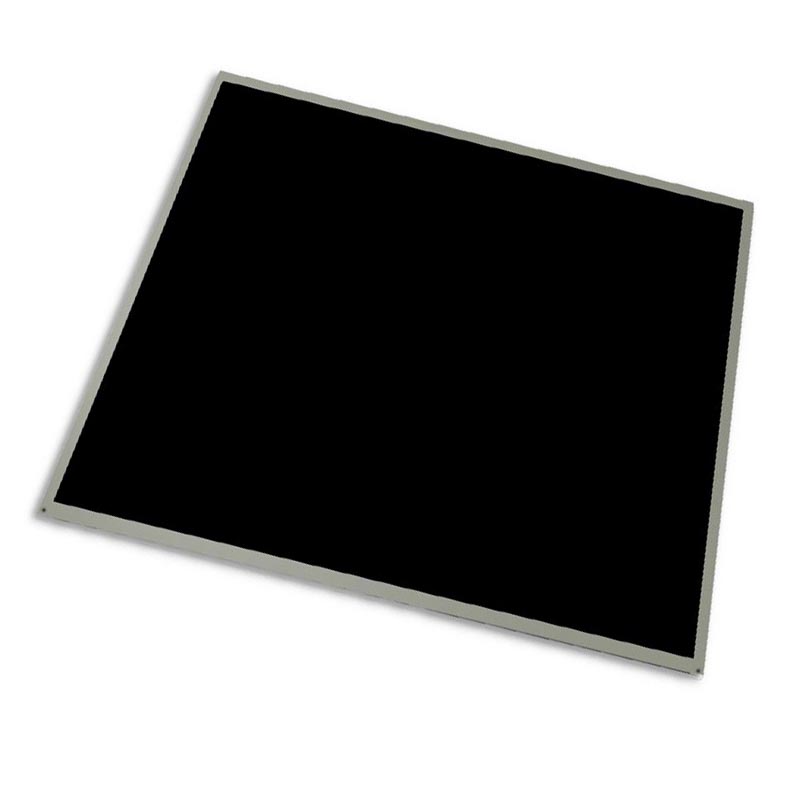
In the rapidly evolving landscape of display technology, the demand for high-performance, durable, and cost-effective solutions remains constant. Among the myriad of options available, the G190ETN03.0, a 19-inch display module manufactured by AU Optronics (AUO), stands out as a significant player in the professional and industrial sector. This article delves deep into the specific attributes, engineering decisions, and practical applications of this particular model. We move beyond surface-level specifications to explore why the G190ETN03.0 is more than just a screen; it is a robust interface designed for reliability and clarity in mission-critical environments.
From automated teller machines (ATMs) to medical imaging stations and factory floor control panels, the need for a consistent, high-quality visual output is non-negotiable. The G190ETN03.0 addresses these requirements with a specific balance of resolution, brightness, and operating temperature range. This analysis will also compare it to its contemporaries, such as the G190ETN01.0 and G190EAN01.0, highlighting the subtle but crucial differences that make the 03.0 version a preferred choice for certain integrations. For procurement managers, system integrators, and hardware engineers, understanding this module is essential for making informed, long-term investment decisions in display technology.
The pixel pitch of approximately 0.294 mm offers a crisp viewing experience for text and detailed graphics at standard viewing distances. This is critical for applications like medical chart reviews or financial dashboards where clarity prevents eye strain over long shifts. Furthermore, the TN technology, while offering narrower viewing angles compared to IPS or VA panels, provides faster response times. For the G190ETN03.0, this translates to lower ghosting and motion blur in dynamic content, a beneficial feature if the display is used for touch-based interactions where rapid visual feedback is required. The active area measures 337.92 mm by 270.336 mm, providing a substantial canvas for interface design while maintaining a physical footprint that fits standard 19-inch rack mount or panel mount enclosures.
Where this module particularly excels is in its anti-glare surface treatment. The panel uses a Haze coating that diffuses reflected light. In a factory setting with overhead lighting or a sunlit lobby near large windows, a glossy screen would render the image nearly invisible. The G190ETN03.0’s surface treatment significantly mitigates this issue, ensuring that the display remains functional and readable. It is important to note that this is not a high-brightness panel for direct sunlight, but for indoor and shade-controlled environments, its balance of luminance and surface finish provides superior viewability compared to standard office monitors. The operating temperature range of 0°C to 50°C and storage range of -20°C to 60°C further confirms its suitability for environments without rigorous climate control.
For the integrator, the specific pinout of the G190ETN03.0 is well-documented, which simplifies the process of creating a custom cabling harness or selecting an off-the-shelf LVDS cable. The interface operates at a voltage of 3.3V for the logic circuitry, while the backlight, which is a CCFL (Cold Cathode Fluorescent Lamp) type, requires a separate inverter. This is a crucial technical point: the CCFL backlight is a distinguishing characteristic of this model (compared to the G190EAN01.0 which uses LED). While CCFL technology is older and has a comparatively shorter lifespan (typically 30,000-50,000 hours vs. 70,000+ for LED), it often provides a more uniform white light with less color shifting over its life. This makes the module a preferred choice for replacement and repair scenarios within existing CCFL-compatible systems.

In contrast, the G190EAN01.0 represents a newer generation of technology, primarily defined by its switch from CCFL to a direct-lit LED backlight. This gives the EAN01.0 a slimmer profile, lower power consumption, and longer lifespan. However, the ETN03.0 offers a distinct price advantage and ensures compatibility with legacy power supply designs that were engineered for CCFL inverters. If an existing piece of medical equipment or a ruggedized terminal was designed for the thermal profile and power draw of a CCFL backlight, the G190ETN03.0 is the safer, more energy-predictable choice. The ETN03.0 also possesses a slightly different mechanical bezel and mounting tab structure, which in some enclosure designs provides a more secure fit than the EAN01.0.
Its primary market remains the replacement and service sector. When a bank's ATM display fails, the motherboard and power supply are often still perfectly functional. Replacing a compatible CCFL module like the G190ETN03.0 is significantly more cost-effective than redesigning the entire system around an LED-based panel. Furthermore, it is a top-tier choice for low- to medium-volume manufacturing runs of specialized equipment, such as building automation controllers, CNC machine interfaces, and marine navigation consoles. The module’s robust build quality, combined with AUO's reputation for reliable manufacturing, means it has a low field failure rate, justifying its continued use in environments where downtime is expensive. The availability of its detailed datasheet and CAD drawings further simplifies the design-in process for new projects that require proven reliability.
What is the native resolution of the G190ETN03.0?Its native resolution is 1280 x 1024 (SXGA), with a 5:4 aspect ratio.
What type of backlight does this module use?It uses a CCFL (Cold Cathode Fluorescent Lamp) backlight, requiring an external inverter.
Is the G190ETN03.0 a direct replacement for the G190ETN01.0?Generally yes, but always verify the connector pinout and mechanical dimensions for your specific enclosure, as minor revisions exist.
What is the typical brightness of this display?The typical brightness is 250 nits (cd/m²).
What interface does it use to connect to a motherboard?It uses a standard 30-pin, single-channel 8-bit LVDS interface.
Can this display be used outdoors?It is best suited for shaded or indoor environments. Its 250-nit brightness is not sufficient for direct sunlight readability.
Does the screen have a glare or anti-glare surface?It features an anti-glare (Haze) surface treatment, which is ideal for areas with overhead or reflected light.
What is the expected lifespan of the CCFL backlight?The typical lifespan is 30,000 to 50,000 hours, depending on the operating environment and current settings.
What is the resolution of this display?The resolution is 1280 x 1024 pixels.
Is a touchscreen available for this module?Not directly from AUO. This is a bare display module, but third-party touch overlays (resistive or capacitive) can be added during integration.
For the engineer and decision-maker, selecting the G190ETN03.0 is a vote for practicality over novelty. It ensures that a critical system will have a consistent, readable interface for years to come, without the headaches of driver incompatibility or sudden obsolescence. In a world where technology is frequently replaced, choosing a proven workhorse like this module is a strategic investment in uptime and operational efficiency. It remains a solid foundation upon which reliable human-machine interfaces are built.
Related Product Links:AA084XB01--T2 Mitsubishi 1024*768 a-Si TFT-LCD LCM





