

















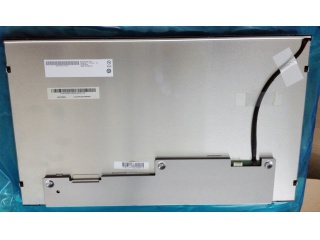
In the realm of industrial and embedded display solutions, the 17.3-inch 1920x1080 display module occupies a specific yet critical niche. Among these, the model G173HW01 V0, manufactured by a leading panel maker, stands as a reference point for high-brightness, full-HD performance. This article delves deep into the technical architecture and practical relevance of this particular module. Rather than a simple product listing, we will explore its core specifications—from its LVDS interface and typical backlight longevity to its edge-lit LED configuration. We will analyze why a display of this size and resolution remains a staple in medical imaging, industrial Human-Machine Interfaces (HMIs), and aviation simulations. This piece is designed for engineers, procurement specialists, and hobbyists who require a nuanced understanding of how this specific panel performs under real-world constraints, including thermal management and optical clarity.
Decoding the Panel: Resolution, Size, and Pixel Architecture
At the heart of the G173HW01 V0 lies a 1920 x 1080 Full HD resolution mapped onto a 17.3-inch diagonal. This pixel density, approximately 127 PPI, strikes a deliberate balance between clarity and readability. For industrial operators, this density ensures that intricate schematics or multi-window software remain legible without requiring microscopic zoom levels. The module utilizes Twisted Nematic (TN) technology, a choice dictated by cost-efficiency and response time rather than color gamut breadth.
The active area measures roughly 381.9 mm by 214.8 mm, providing a standard 16:9 aspect ratio. Each pixel is composed of three vertical stripes of red, green, and blue. This RGB vertical stripe arrangement improves the sharpness of text and fine lines, which is critical for reading patient data or control system logs. The pixel pitch of 0.1989 mm creates a seamless image grid, minimizing the "screen door" effect at typical viewing distances of 50-70 cm. This architecture, while standard, is optimized here for continuous duty cycles rather than consumer-grade color vibrancy.


Interface and Signal Integrity: The LVDS Connection
The G173HW01 V0 employs a dual-channel LVDS (Low-Voltage Differential Signaling) interface, a crucial detail for system integration. LVDS is the backbone of industrial display communication due to its immunity to electromagnetic interference (EMI) and ability to transmit high-bandwidth data over long cable runs—often up to several meters without signal degradation. The module uses a 30-pin connector, typically a JAE or compatible type, which carries data for both odd and even pixels.
This dual-channel configuration is not arbitrary. At 1920x1080 resolution with 8-bit color depth (16.7 million colors), the pixel clock frequency hovers around 120 MHz. A single channel would struggle with this bandwidth, leading to flicker or ghosting. By splitting the data across two channels, the module maintains signal stability even in electrically noisy environments like factory floors. For engineers, this means simpler cable management and lower susceptibility to interference from nearby motors or radio transmitters. This interface also supports a 60Hz refresh rate as standard, ensuring smooth cursor movements and video playback for diagnostic imaging review.

Backlight Technology: LED Longevity and Luminance Control
A defining characteristic of the G173HW01 V0 is its White LED edge-lit backlight system, rated for a typical lifespan of 50,000 hours at half-brightness (50,000 hours to half-brightness is a common metric for backlight degradation). This longevity is essential for installations where the display is left on 24/7, such as in server racks or production line terminals. The edge-lit configuration allows for an exceptionally slim module depth, typically less than 6 mm, enabling integration into shallow chassis.
The backlight uses constant current regulation, delivering a typical luminance of 400 cd/m². While not as bright as high-brightness sunlight-readable panels (800-1000 cd/m²), this value is optimized for indoor ambient lighting up to 500 lux. The module allows for PWM (Pulse Width Modulation) dimming, providing linear brightness control from 0% to 100%. However, care must be taken to avoid PWM frequencies below 200 Hz, which can cause visible flicker or eye strain for operators. Many industrial controllers pair this panel with a frequency of 1 kHz to eliminate this issue. The CCFL-less design also eliminates mercury, making the module RoHS compliant and easier to recycle at end-of-life.
Viewing Angles and Optical Performance in Industrial Contexts
Optical performance in the G173HW01 V0 is a study in engineering trade-offs. With a typical viewing angle of 80/80/80/60 degrees (Left/Right/Up/Down), the module exhibits significant asymmetry. The downward viewing angle (60°) is notably narrower, a characteristic of TN technology. This is rarely a problem in fixed-mount industrial panels, which are typically positioned at eye level or slightly below, but it becomes a limitation in collaborative or multi-user scenarios where a single operator must see the screen from a sharp upward angle.
The contrast ratio is specified at 1000:1, typical for TN panels. This ratio provides adequate black depth for data and UIs, though it cannot match the deep blacks of IPS or VA screens. The response time (Tr+Tf) is typically 5 ms, which prevents motion blur in dynamic CCTV playback or basic GUI animations. Importantly, the panel comes with an anti-glare coating (typically AG25 - AG40), which diffuses ambient light reflections. In bright warehouse environments with overhead lighting, this coating is more critical than raw contrast, as it preserves readability by eliminating specular glare.
Thermal Management and Environmental Resilience
Reliability in harsh environments is often dictated by thermal design. The G173HW01 V0 operates within a standard temperature range of -10°C to +60°C (ambient), with a storage range of -20°C to +70°C. The LED backlight generates significantly less heat than traditional CCFL, which simplifies thermal management. However, the edge-lit design means that heat concentrates at the LED strips along the bottom edge. In enclosures without airflow, this can create a temperature gradient, potentially causing luminance drift or color shift over time.
Engineers must consider that at the maximum operating temperature (60°C), the liquid crystal material can begin to degrade, leading to slower response times and possible burn-in. Active cooling, such as a small 40x40 mm fan or heatsinking on the rear chassis, is recommended for enclosures exceeding 50°C internal ambient. Conversely, at low temperatures (-10°C), the material thickens, causing sluggish response and temporary ghosting. A warm-up period of 10 minutes is typically required before the module reaches full optical performance in cold starts. The module's power consumption is modest, typically 12-15W including backlight, making it efficient for battery-backed or uninterruptible power supply (UPS) systems.
Frequently Asked Questions (FAQs)
Q: What is the exact backlight type of the G173HW01 V0? A: It uses a White LED edge-lit system, containing no mercury.
Q: Can this module be used for direct sunlight readability? A: Not natively. Its 400 cd/m² brightness is for indoor use. It would require a bonded transflective film or a higher-brightness custom backlight.
Q: Is the G173HW01 V0 a touch screen? A: No, it is a pure display module (cell + backlight). A touch panel must be bonded separately by an integrator.
Q: What is the recommended PWM frequency for dimming? A: A frequency above 1 kHz is recommended to avoid flicker; below 200 Hz causes visible strobing.
Q: What is the weight of this module? A: Typically around 900 to 1000 grams, varying slightly by version.
Q: What connector does it use? A: A 30-pin LVDS connector, usually a JAE FI-RE30S series or equivalent, with a 0.5mm pitch.
Q: Is it compatible with single-channel LVDS sources? A: No, it requires a dual-channel 8-bit interface. A single-channel source will not drive 1080p at 60Hz.
Q: What is the typical lifespan of this panel? A: The backlight is rated for 50,000 hours to half-brightness. The LCD panel itself has a lifespan exceeding 100,000 hours.
Q: Can it replace a CCFL-based 17-inch model? A: Yes, but only if the new panel matches the exact mounting dimensions and electrical interface. The G173HW01 V0 is thinner, so shims may be needed.
Q: Does this panel support 1080p 30Hz? A: Yes, it can operate at lower refresh rates, but it is optimized for 60Hz. Running at 30Hz may cause visible flicker without proper frame rate doubling.
Conclusion: A Workhorse for Specialized Visual Systems
The G173HW01 V0 17.3-inch display module exemplifies the principle that optimal performance is a function of context. It is not a flagship for color accuracy or wide viewing angles, but it excels where robust signal handling, thermal stability, and long operational life are prioritized. Its dual-channel LVDS interface and 50,000-hour LED backlight make it a reliable backbone for medical monitors, industrial terminals, and avionics training devices. For engineers, the key takeaway is to pair this panel with a clean power supply and adequate cooling, respecting its TN viewing angle limitations. For procurement teams, it represents a mature, cost-effective solution for applications that value uptime and readability over aesthetic flair. When deployed correctly, the G173HW01 V0 remains a silent, faithful component in systems where "always on" is not a feature, but a requirement.
Related Product Links:LQ104V1DG61 Sharp 10.4" LCD display modules





