


















- Industrie-LCD-Display
-
Industrial Products
- DC Servo Drive
- AC Servo Drive
- PCB
- Siemens
- Switch Sensor
- Näherungsschalter
- Temperaturregler
- Schutzrelais
- Fiber Optic Sensor
- Encoder
- Fan
- other
- Heidelberg
- MITSUBISHI
- FANUC
- Siemens adapter
- Fujitsu connector
- Der Aufsichtsrat
- Board
- Contactor
- Circuit
- Omron
- Relais.
- Motortreiber
- power supply
- Cable
- Transformator
- HMI Touch-Glas
-
HMI-Vollautomat Ganze Einheit
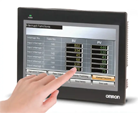
- OMRON HMI Touch Panel
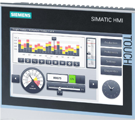
- Siemens HMI Touch Panel
- Mitsubishi HMI Touch Panel
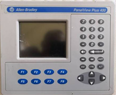
- Allen-Bradley Automatisierung HMI Touch
- DELTA HMI Touch Panel
- EVIEW DELTA HMI Touch Panel
- KINCO DELTA HMI Touch Panel
- HITECH HMI Touch Panel
- WEINTECK HMI Touch Panel
- TECVIEW HMI Touch Panel
- WEINVIEW HMI Touch Panel
- PANASONIC HMI Touch Panel
- KYOCERA HMI Touch Panel
- SCHNEIDER HMI Touch Panel
- Module
- LCD Wechselrichter
- Membran Tastenfeld Schalter
- Winni Touch Screens
- Frequenzumrichter
- Servo Motor
- PLC
In the demanding world of industrial automation, medical equipment, and ruggedized computing, the display is often the most critical human-machine interface. While consumer-grade panels focus on vivid colors and fast refresh rates for entertainment, the industrial sector demands reliability, longevity, and consistent performance under harsh conditions. The AUO G170ETN02.0 is a prime example of such engineering. This 17.0-inch LCD panel, manufactured by AU Optronics (AUO), is a key component in a wide array of professional applications. This article will explore the technical specifications, core competencies, and market relevance of the G170ETN02.0 model. We will dissect its architecture, from its specific resolution and brightness levels to its suitability for touch interfaces and long operational cycles. The goal is to provide engineers, system integrators, and procurement specialists with a comprehensive understanding of why this specific panel remains a benchmark in its category, moving beyond superficial specs to discuss real-world applications and integration challenges.
Decoding the Specifications: Resolution, Brightness, and Contrast
The G170ETN02.0 is distinguished by its adherence to the SXGA (Super eXtended Graphics Array) standard, offering a native resolution of 1280 x 1024 pixels. With a 5:4 aspect ratio, this panel is a direct successor to the older 4:3 standards, providing a slightly wider workspace without transitioning to the 16:9 widescreen format, which is often less practical for vertical information display in industrial settings. A standout feature is its high brightness rating, typically around 300 to 400 cd/m². This level of luminance is crucial for readability in brightly lit factory floors or sun-exposed kiosk enclosures. Additionally, the panel boasts a high contrast ratio of 1000:1 (typically), ensuring deep blacks and strong color separation, which enhances the legibility of text and fine lines in schematics or medical imaging. The viewing angles, specified at 85/85/85/85 (CR>10), utilize TN (Twisted Nematic) technology but with wide-viewing-angle compensation films, making it suitable for single operator viewing from different positions. Understanding these specifications is not just about numbers; it’s about matching the panel to the ambient lighting and user distance requirements of the final application.
Interface and Power: LVDS Connectivity and Thermal Management
A critical aspect of any industrial panel is its electrical interface. The G170ETN02.0 utilizes a dual-channel LVDS (Low-Voltage Differential Signaling) interface, a mature and robust standard for high-speed data transmission. This 20-pin or 30-pin connector setup allows the panel to handle high-bandwidth video signals with low electromagnetic interference (EMI), a key requirement for medical and measurement equipment. The panel operates on a standard 3.3V for logic and 12.0V for backlight power. A notable feature is its LED backlighting, replacing older CCFL technology. This provides several advantages: longer lifespan (rated at 50,000 hours or more), lower power consumption, and a thinner overall module profile. For integrators, the LED backlight often requires a dedicated constant current driver circuit. The panel's power dissipation is roughly 12W typical, necessitating basic but effective thermal management. In enclosed touch-screen kiosks, heatsinking or airflow considerations are necessary to prevent thermal throttling or premature backlight degradation. The LVDS signal must be carefully routed on the system controller board to maintain signal integrity over longer cables, a common challenge in industrial rack-mounted systems.
Mechanical Design: Form Factor, Mounting, and Touch Integration
Physical integration is often a greater challenge than electrical design. The G170ETN02.0 measures a precise 358.5 mm (W) x 296.5 mm (H) x 12.5 mm (D), conforming to a standard 17-inch form factor. Its active area is exactly 337.92 mm x 270.336 mm. The panel is designed for VESA (Video Electronics Standards Association) compatible mounting, typically using a 75 mm x 75 mm or 100 mm x 100 mm pattern, simplifying chassis integration. A significant feature is its Compatibility with resistive and capacitive touch screens. The front bezel is designed to accept an overlay, and the panel's construction includes a flat, robust surface for bonding. For integrators, this means either purchasing a standard touch kit or bonding their own. The panel's thickness is slightly more than consumer units, allowing for a sturdier metal frame that protects the glass from vibration and shock. The bezel width is moderate, around 8-10 mm on the sides and top, with a slightly larger bottom bezel to accommodate the mounting ears. Weight is approximately 1.2 kg, requiring robust chassis support in mobile or portable equipment.
Reliability and Longevity: The Industrial Grade Factor
What truly separates the G170ETN02.0 from a desktop monitor is its industrial grade reliability. This is quantified by its operating temperature range, typically from 0°C to +60°C, and a storage range of -20°C to +70°C. This allows the panel to function in environments like outdoor kiosks in mild climates, factory floors near machinery, or transport vehicles. The panel also undergoes rigorous testing for vibration and shock resistance, meeting standards like IEC 60068-2. Backlight lifespan is a critical metric; the LED array is designed to maintain 70% brightness (L70) for at least 50,000 hours of continuous use. For 24/7 operation, this translates to approximately 5.7 years before replacement is considered. Furthermore, AUO panels typically feature a low-brightness deterioration curve. The panel is also designed for a high MTBF (Mean Time Between Failures), often exceeding 50,000 hours for the entire module, excluding the backlight. This reliability is paramount in medical diagnostic devices, security monitoring walls, and industrial control rooms where a display failure can halt operations or compromise patient safety.

Application Specifics: Where This Panel Excels
The G170ETN02.0 is not a jack-of-all-trades; it excels in specific verticals. In medical imaging (PACS workstations), the 1280x1024 resolution and high contrast are suitable for viewing radiology images like X-rays and CT scans, provided proper calibration software is used. It is also widely deployed in Human Machine Interfaces (HMIs) on factory production lines. Operators rely on the panel’s brightness to read complex process control diagrams. Another major application is in gaming and amusement machines, particularly slot machines and video lottery terminals, where reliability over many years of continuous operation is crucial. Other common uses include point-of-sale (POS) systems for retail environments, automated teller machines (ATMs), and vending machines. In recent years, it has also found a home in digital signage for transportation hubs (train station displays) where reliability and sunlight readability are prioritized over high-resolution video playback. The panel’s 5:4 aspect ratio is ideal for displaying lists, timetables, and data tables, making it a logical choice for information displays in public spaces.


Market Trends and Replacement Considerations
As technology advances, the G170ETN02.0 faces competition from higher-resolution panels (e.g., 1920x1080 in the same 17-inch format) and newer interface standards like eDP (embedded DisplayPort). However, its longevity is due to its established ecosystem. Many older systems were designed specifically around the LVDS pins and the physical dimensions of this panel. Therefore, the aftermarket and replacement market is very active. Companies maintaining legacy equipment often must source these panels to replace damaged units. A key trend is the availability of "compatible" or "replacement" panels from other manufacturers (e.g., Innolux, BOE) that pin-match with the G170ETN02.0. However, these may differ in brightness, viewing angles, or backlight driver requirements. For new designs, while some integrators are moving to widescreen 1080p panels, many industrial applications still demand the 5:4 aspect ratio for specific software interfaces. The panel's continued availability ensures that long-life products can be supported for a decade or more. The cost-to-performance ratio remains attractive for high-volume, medium-cost equipment where reliability and supply chain stability are more important than cutting-edge resolution.
FAQS: Common Questions About the AUO G170ETN02.0
Q1: What is the exact resolution and aspect ratio?A1: It is SXGA resolution at 1280 x 1024 pixels, with a 5:4 aspect ratio.
Q2: What is the operating temperature range?A2: The typical operating range is 0°C to +60°C.
Q3: Can this panel be used with a touchscreen?A3: Yes, it is designed to be compatible with both resistive and capacitive touch overlays.
Q4: What is the backlight lifespan?A4: The LED backlight is typically rated for 50,000 hours before reaching 70% brightness (L70).
Q5: Does it require an external inverter for the backlight?A5: No, because it uses an LED backlight, it requires a constant current LED driver, not a traditional CCFL inverter.
Q6: What is the interface type?A6: It uses a dual-channel LVDS interface (30-pin typically, but verify connector spec).
Q7: Is this panel suitable for outdoor use?A7: It can be used in outdoor kiosks if it is in a sheltered area, as its brightness (300-400 cd/m²) is not high enough for direct sunlight without a high-brightness upgrade.
Q8: Can I replace a CCFL-backlit panel with this LED version?A8: Usually yes, but you must ensure the physical dimensions match and you have the correct LED driver circuit on your controller board.
Q9: What is the weight of the panel?A9: It typically weighs around 1.2 kg (2.6 lbs).
Q10: Is this panel obsolete?A10: It is not obsolete; it remains in active production for the industrial and aftermarket replacement sectors.
Conclusion: A Steadfast Workhorse for Professional Applications





