













































- Industrie-LCD-Display
-
Industrial Products
- DC Servo Drive
- AC Servo Drive
- PCB
- Siemens
- Switch Sensor
- Näherungsschalter
- Temperaturregler
- Schutzrelais
- Fiber Optic Sensor
- Encoder
- Fan
- other
- Heidelberg
- MITSUBISHI
- FANUC
- Siemens adapter
- Fujitsu connector
- Der Aufsichtsrat
- Board
- Contactor
- Circuit
- Omron
- Relais.
- Motortreiber
- power supply
- Cable
- Transformator
- HMI Touch-Glas
-
HMI-Vollautomat Ganze Einheit
- OMRON HMI Touch Panel
- Siemens HMI Touch Panel
- Mitsubishi HMI Touch Panel
- Allen-Bradley Automatisierung HMI Touch
- DELTA HMI Touch Panel
- EVIEW DELTA HMI Touch Panel
- KINCO DELTA HMI Touch Panel
- HITECH HMI Touch Panel
- WEINTECK HMI Touch Panel
- TECVIEW HMI Touch Panel
- WEINVIEW HMI Touch Panel
- PANASONIC HMI Touch Panel
- KYOCERA HMI Touch Panel
- SCHNEIDER HMI Touch Panel
- Module
- LCD Wechselrichter
- Membran Tastenfeld Schalter
- Winni Touch Screens
- Frequenzumrichter
- Servo Motor
- PLC
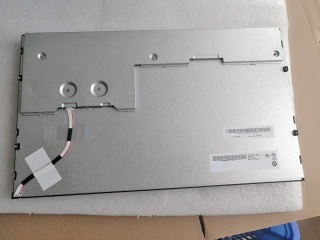
The G156XTT01.1, manufactured by AU Optronics (AUO), represents a significant benchmark in the 15.6-inch LCD panel market, a segment dominated by laptops, industrial monitors, and medical displays. While many consumers focus solely on resolution or brand names, the underlying panel technology dictates real-world performance in color accuracy, viewing angles, and longevity. This article dissects the G156XTT01.1 not as a mere component, but as a critical interface between human perception and machine logic. We will explore its technical architecture, from the intricacies of its Twisted Nematic (TN) matrix to its specialized application environments that demand reliability over aesthetics. By moving beyond surface-level specifications, this analysis aims to provide engineers, procurement specialists, and industrial integrators with a deeper understanding of why this specific model remains relevant in a market flooded with newer, often misleadingly marketed alternatives.
Decoding the Specification Sheet: Beyond Resolution and Brightness
A cursory glance at the datasheet reveals a standard 1920x1080 Full HD resolution and a 220 cd/m² brightness rating. However, the true value of the G156XTT01.1 lies in its operational boundaries. It employs a TN (Twisted Nematic) mode with a typical response time of 8-12ms (Tr/Tf), which is notably faster than many modern IPS panels that sacrifice speed for color saturation. This makes it a prime candidate for industrial automation interfaces where cursor lag or ghosting during fast-moving diagnostic charts can lead to operator error. The panel's contrast ratio, rated at 500:1 (typical), is modest by consumer media standards but is deliberately engineered for high ambient light environments. The use of an Anti-Glare (AG) treatment with a haze value of 25% ensures that specular reflections from overhead factory lighting or surgical lamps are diffused, maintaining legibility where glossy consumer panels would fail. Furthermore, the electrical interface is LVDS (Low-Voltage Differential Signaling) with 2 channels, 8-bit per color, supporting a 16.7M color palette. This standardization simplifies integration into legacy embedded systems that may not support the newer eDP (embedded DisplayPort) protocols, ensuring backward compatibility for long-lifecycle industrial equipment.
Thermal and Mechanical Endurance: The Unseen Engineering
The G156XTT01.1 is not designed for the controlled climate of a living room. Its robust mechanical construction includes a reinforced metal bezel that withstands higher levels of torsional stress compared to consumer-grade plastic frames. Critically, the panel operates reliably across a temperature range of 0°C to 50°C for normal operation, with a storage range extending to -20°C to 60°C. This thermal resilience is achieved through careful selection of liquid crystal fluid viscosity and backlight inverter circuitry that avoids thermal runaway. The LED backlight, with a lifespan rated at 50,000 hours (to half-brightness), uses a parallel configuration of LED strings. This design is crucial in medical or kiosk applications where a single point of failure cannot be tolerated. If one LED fails, the system does not go dark; instead, the remaining LEDs compensate, allowing for scheduled maintenance rather than immediate, catastrophic failure. The physical outline dimensions (363.8 x 215.9 x 9.8 mm) and weight (approximately 1.2kg) are optimized for VESA mount compatibility, ensuring it can be seamlessly integrated into existing enclosure designs without extensive retooling of mounting brackets.
Optical Behavior in Critical Environments: Contrast and Viewing Angle Analysis
While TN panels are often criticized for narrow viewing angles, the G156XTT01.1 has been optimized for specific use cases. Its best viewing angle is 6 o'clock (i.e., optimal performance when viewed from slightly below center), which is typical for devices placed horizontally on a desk or embedded in a dashboard. The horizontal viewing angle reaches 70 degrees left and right, while vertical extends to 50 degrees upward and 60 degrees downward (CR>10). For a medical patient monitor or a point-of-sale terminal where the operator is positioned directly in front, this is entirely sufficient. The trade-off is superior gray-to-gray response times, which prevents motion blur in dynamic data displays like vital sign waveforms. In environments where high ambient light is present, the panel's matte surface ensures that the black level (0.44 cd/m² typical) remains deep enough to provide adequate contrast for reading text and numerals. This focus on functional legibility over cinematic color vibrancy marks this panel as an instrument rather than a consumer toy.

Longevity and Supply Chain Considerations for Industrial Adoption
One of the most critical, yet often overlooked, attributes of the G156XTT01.1 is its product lifecycle management. AUO actively supports this panel with a "long-term supply" commitment, typically guaranteeing production availability for 5 to 7 years from initial launch. This is a stark contrast to consumer panels that may be discontinued within 18 months. For original equipment manufacturers (OEMs) in the medical or defense sectors, where product certifications and field validation cost millions of dollars, changing a display mid-cycle is a logistical and regulatory nightmare. The G156XTT01.1 also benefits from a wide availability of compatible LCD controllers and timing boards (TCONs). The LVDS interface specification is a known commodity, allowing engineers to source replacement boards easily without needing to redesign their driver circuitry. Furthermore, the panel's electrical characteristics (3.3V for logic, 12V for backlight) align with common industrial power supplies, reducing the need for complex DC-DC converters. This standardization reduces total cost of ownership (TCO) over the life of the equipment.
Practical Integration: Connecting Legacy Systems with Modern Demands
Integrating the G156XTT01.1 into a modern system requires understanding its pin-out and signal timing. The 30-pin LVDS connector (JAE-FI-SE30P-HFE) is a standard interface, but the panel requires a specific data mapping for 2-channel 8-bit mode. Engineers must ensure their host controller outputs the correct pixel clock (typically around 74.25 MHz for 1080p at 60Hz). A common pitfall is assuming all 15.6-inch panels are compatible; however, the G156XTT01.1’s specific EDID (Extended Display Identification Data) must be correctly programmed to avoid resolution mismatches. For retrofitting older machines with CRT displays, the panel's flat profile and low power consumption (8.5W typical) make it an excellent replacement option. Adapter boards are readily available to convert VGA or DVI signals to LVDS, allowing the G156XTT01.1 to breathe new life into decades-old CNC machines or medical cart systems. The key to successful integration is paying close attention to the backlight inverter startup sequence and the panel's enable pin timing, as improper sequencing can cause a flickering screen or immediate damage to the LED driver.
FAQs
1. Is the G156XTT01.1 compatible with Raspberry Pi? Yes, but only through a dedicated LVDS-to-HDMI adapter board, as the Pi outputs HDMI/eDP signals.
2. What type of backlight does it use? It uses a direct-lit white LED backlight with a parallel string configuration for redundancy.
3. Can this panel be used outdoors? It has an anti-glare surface, but its 220 cd/m² brightness is not sufficient for direct sunlight; it is better suited for shaded or indoor industrial environments.
4. What is the maximum supported resolution? The native resolution is 1920x1080 (Full HD). It may accept lower resolutions via scaling, but with potential quality loss.
5. Is touchscreen functionality included? No, the base model G156XTT01.1 is a standard LCD without touch support. Touch sensors must be added via an overlay.
6. What is the recommended operating humidity? Typical specs require 20% to 80% relative humidity (non-condensing).
7. Does it support 10-bit color input? No, the LVDS interface is 8-bit per channel, supporting 16.7 million colors. It does not accept 10-bit signals.
8. Is the panel EOL (End of Life)? It is not officially discontinued; AUO supports it under long-term supply agreements for industrial clients.
9. What is the typical power consumption? The panel consumes approximately 8.5W for the display and backlight combined.
10. Can I replace a G156XTT01.1 with a similar AUO panel? Only if the connector orientation, pin-out, and LVDS timing are identical. Always check the datasheet for compatibility.
Conclusion
The G156XTT01.1 AUO 15.6 LCD is a testament to the philosophy that reliability and specificity often outweigh raw performance metrics in mission-critical applications. It is not a panel for the consumer seeking cinematic colors or ultra-thin profiles. Instead, it is engineered for the engineer, the system integrator, and the hospital technician who need a display that will function predictably for a decade. Its strengths lie in its robust thermal management, straightforward LVDS interface for legacy integration, and deliberately chosen TN technology that prioritizes speed and legibility over wide viewing angles. Understanding this panel requires reframing our expectations: it is a tool, not a canvas. For any project requiring a 15.6-inch display that must endure harsh environments, long product cycles, and demanding read-and-react interfaces, the G156XTT01.1 remains a highly competent, if unglamorous, workhorse. The key takeaway is to match the display’s specific engineering compromises to the unique demands of your operational context.





