


















- Industrie-LCD-Display
-
Industrial Products
- DC Servo Drive
- AC Servo Drive
- PCB
- Siemens
- Switch Sensor
- Näherungsschalter
- Temperaturregler
- Schutzrelais
- Fiber Optic Sensor
- Encoder
- Fan
- other
- Heidelberg
- MITSUBISHI
- FANUC
- Siemens adapter
- Fujitsu connector
- Der Aufsichtsrat
- Board
- Contactor
- Circuit
- Omron
- Relais.
- Motortreiber
- power supply
- Cable
- Transformator
- HMI Touch-Glas
-
HMI-Vollautomat Ganze Einheit
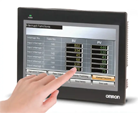
- OMRON HMI Touch Panel
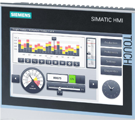
- Siemens HMI Touch Panel
- Mitsubishi HMI Touch Panel
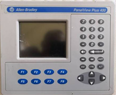
- Allen-Bradley Automatisierung HMI Touch
- DELTA HMI Touch Panel
- EVIEW DELTA HMI Touch Panel
- KINCO DELTA HMI Touch Panel
- HITECH HMI Touch Panel
- WEINTECK HMI Touch Panel
- TECVIEW HMI Touch Panel
- WEINVIEW HMI Touch Panel
- PANASONIC HMI Touch Panel
- KYOCERA HMI Touch Panel
- SCHNEIDER HMI Touch Panel
- Module
- LCD Wechselrichter
- Membran Tastenfeld Schalter
- Winni Touch Screens
- Frequenzumrichter
- Servo Motor
- PLC
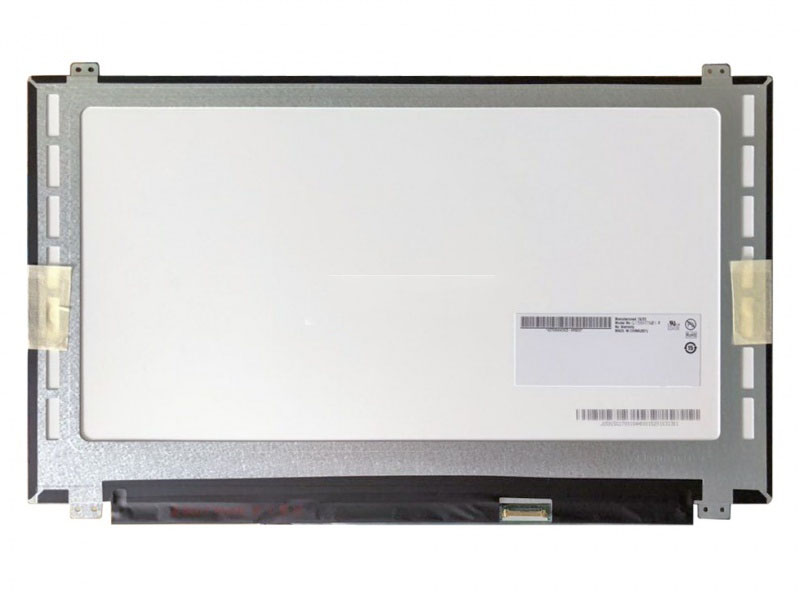
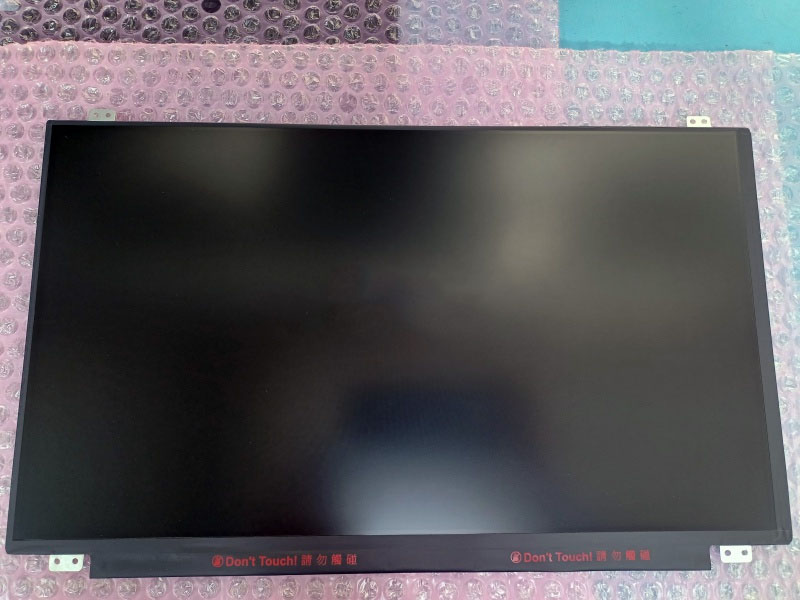
The landscape of industrial and commercial display technology is defined by reliability, clarity, and adaptability. Among the myriad of components that power modern interfaces, the 15.6-inch LCD display screen occupies a crucial role, bridging the gap between compact mobile devices and large-format monitors. Specifically, the AUO G156HTN01.0 model represents a significant benchmark in this category. Developed by AU Optronics (AUO), a titan in the global display panel industry, this module is engineered not for casual consumer use, but for demanding environments where performance cannot be compromised. This article delves deep into the architecture, technical specifications, and operational nuances of the G156HTN01.0. We will explore why this particular panel is favored in applications ranging from medical imaging to industrial automation, moving beyond surface-level specs to understand its engineering philosophy. We will dissect its optical characteristics, interface compatibility, mechanical design, and the practical considerations for sourcing and integration, providing a comprehensive guide for engineers, procurement specialists, and technology enthusiasts who require more than just a screen.
The Engineering Backbone: Technology and Resolution
At its core, the G156HTN01.0 is a testament to AUO’s commitment to Twisted Nematic (TN) technology, a choice that deserves scrutiny. While In-Plane Switching (IPS) panels are often celebrated for wide viewing angles, TN technology offers distinct advantages in specific contexts. This panel employs TN+Film, which enhances the standard TN viewing angle characteristics. The primary trade-off is deliberate: ultra-fast response times. With a typical response time of 3.8 milliseconds (Tr+Tf), this screen eliminates motion blur in dynamic content, making it ideal for real-time data monitoring and interactive kiosks where lag is unacceptable.
Resolution-wise, the display adheres to the industry standard for 15.6-inch professional panels: WXGA (1366 x 768 pixels). While Full HD (1920x1080) variants exist, the 1366x768 resolution on this model is optimized for specific use cases. It balances pixel density with signal processing efficiency, reducing the load on embedded systems that may not have powerful graphics processors. The 16:9 aspect ratio aligns perfectly with standard video content and operating system interfaces, ensuring that software developers do not need to scale or distort their user interfaces. The active area measures precisely 344.232 x 193.536 mm, providing a generous canvas for detailed information display without the pixel density overhead that can complicate font rendering in industrial software.
Luminosity and Environmental Resilience
One of the most critical differentiators of the G156HTN01.0 is its luminance performance. This panel is designed as a high-brightness solution, typically rated at 450 cd/m² (nits). This is not a casual specification; it is a deliberate engineering choice for environments with significant ambient light, such as factory floors, hospital emergency rooms, or outdoor ticketing terminals. Standard consumer laptop screens hover around 200-300 nits, which would be unreadable under strong lighting. The 450-nit capability ensures that content remains crisp and legible even when the screen is competing with sunlight filtering through a window.
Furthermore, the contrast ratio of 1000:1 is exemplary for a TN panel of this era. It provides deep blacks and vibrant whites, crucial for distinguishing subtle gradations in medical X-rays or identifying defective items in quality control processes. The panel also supports 16.2 million colors (6-bit + Hi-FRC), which, while not true 8-bit color, provides sufficient color depth for most industrial and informational applications, avoiding the banding issues seen in older 6-bit only panels. The viewing angle, typically 80/80/70/70 (L/R/U/D) with CR≥10, is sufficient for single-operator or directly facing installations, reinforcing that this display is built for focused, professional interaction rather than social viewing.
Interface Architecture and Power Management
Understanding the connectivity of the G156HTN01.0 is crucial for successful system integration. The panel utilizes a single-channel LVDS (Low-Voltage Differential Signaling) interface, a robust and widely adopted standard in embedded and industrial computing. Specifically, it operates on a 2-channel, 8-bit LVDS interface, which allows for high-speed data transmission over long distances with excellent noise immunity—a critical feature in electrically noisy industrial environments. The signal interface connector is a 30-pin JAE FI-XB30SRL-HF11 (or equivalent), a common and durable connector design.
Power management is another area of engineering focus. The display operates on a standard 3.3V power supply for logic and a separate voltage for the backlight. The backlight unit utilizes LED (White LED) technology, which offers significant advantages over older CCFL (Cold Cathode Fluorescent Lamp) backlights. The LED backlight provides lower power consumption, instant-on performance, and a longer operational lifespan (typically 50,000 hours or more). This is particularly valuable for systems that are left on 24/7. The drive board must supply the correct current to the LED string, usually integrated into the LVDS cable or a separate small inverter board. This separation of power rails allows system designers to optimize power supply selection for the entire embedded device.
Mechanical Integration and Thermal Design
From a physical integration perspective, the G156HTN01.0 presents a set of parameters that define its mounting and cooling requirements. The panel dimensions are precisely 363.8 x 215.9 mm for the screen body, with a thickness of approximately 9.8 mm (excluding the interface board). This slim profile, combined with a weight of roughly 1.1 kg, makes it suitable for stationary installations like medical carts, ATMs, and industrial control panels. The bezel area is designed with mounting holes for standard VESA or custom bracket attachment, typically using 4 screws.
The thermal design is another aspect that demands attention. The LED backlight generates heat, and in a sealed enclosure, heat dissipation becomes critical. The panel is designed to operate within a temperature range of 0°C to 70°C (Storage: -20°C to 80°C). For systems running in high-temperature environments, such as near ovens or in direct sunlight, engineers must ensure adequate airflow across the back case of the display. The panel itself can tolerate some heat, but sustained operation above 70°C can degrade the liquid crystal material and lead to polarization failure. Therefore, when integrating this screen, thermal simulation or active cooling (a small fan) should be considered for closed-cabinet applications to maintain reliability.
Supply Chain and Quality Assurance Considerations
For procurement professionals, the G156HTN01.0 is a mature product, which brings both advantages and subtle risks. As a model that has been in production for several years, it is widely available from distributors like Digi-Key, Mouser, and specialized display suppliers. However, buyers must be vigilant about counterfeit or reworked panels. In the secondary market, panels may have been harvested from defunct equipment or improperly stored, leading to issues like stuck pixels, backlight bleeding, or connector damage. Relying on authorized AUO partners or reputable distributors is essential to guarantee original, defect-free inventory.
Furthermore, the lifecycle of the panel is a consideration. While not end-of-life (EOL), it is prudent to check with suppliers for the last-time buy (LTB) status. Some distributors offer long-term supply agreements to secure stock for multi-year production runs. The AUO part number (G156HTN01.0) must be verified against the datasheet revision. There are minor variations (e.g., G156HTN01.1, V0) that may have subtle differences in backlight brightness or connector orientation. Always request the physical datasheet and compare the connector pinout and physical dimensions against the system design to avoid costly re-engineering during the build phase. Proper handling during assembly (anti-static wrist straps, clean-room conditions) is also non-negotiable to prevent electrostatic discharge (ESD) damage to the driver ICs.
FAQs: Common Queries About the AUO G156HTN01.0
Is the G156HTN01.0 a touch screen?No, it is a standard LCD panel without touch functionality. It can be used with an external touch overlay or touch controller board if needed.
Can this panel be used for gaming?While the 3.8ms response time is excellent, the 1366x768 resolution and TN viewing angles are not optimized for modern gaming. It is designed for industrial/professional use, not high-performance gaming.
What are the dimensions of the active display area?The active area is 344.232 mm (W) x 193.536 mm (H), which is standard for a 15.6-inch diagonal screen.
Does it require an external power supply for the backlight?Yes, the LED backlight requires a specific constant-current supply (usually 12V or 3.3V depending on the variant) separate from the logic 3.3V supply.
What is the connector part number for the LVDS cable?The mating connector is typically a JAE FI-X30SS-HF or similar 30-pin, 1.0mm pitch connector. Confirm with the datasheet for exact model.
Is this panel compatible with Raspberry Pi or Arduino?Directly, no. It requires an LVDS driver board that converts HDMI or DVI to LVDS, as single-board computers typically output HDMI.
What is the typical lifespan of the LED backlight?The rated life is typically 50,000 hours to 70% brightness retention under normal operating conditions (25°C).
How can I mount this screen into my project?It has a 9.8mm thick metal frame with standard mounting holes. Use VESA (100x100mm) or custom brackets through those holes for secure attachment.
Is the screen polarized and does it need an additional polarizer?No. The LCD cell includes integrated polarizers. The panel is ready to display once connected to the correct interface and power.
Can I use this panel in direct sunlight?Its 450-nit brightness is excellent for shaded or indoor sunlight, but for full direct outdoor sun (like an outdoor kiosk), a higher brightness (>1000 nits) panel would be required.
Conclusion: A Workhorse for the Modern Interface
The AUO G156HTN01.0 is far more than a simple computer screen; it is a precisely engineered component that serves as the visual anchor for critical systems. Through our exploration, we have uncovered that its choice of TN technology is not a compromise but a tactical advantage for applications demanding rapid response and high brightness within a cost-effective package. The balance of 1366x768 resolution, robust LVDS interface, and meticulous thermal design makes it a versatile tool for engineers. While it is not a universal display (lacking wide viewing angles or ultra-high resolution), its strengths in luminance, durability, and interface simplicity directly address the real-world needs of industrial control, medical diagnostics, and commercial kiosks. For any project manager or system architect seeking a reliable, proven, and easily integrable 15.6-inch solution, the G156HTN01.0 stands as a compelling option. It is a testament to AUO’s philosophy that the best display is not always the flashiest, but the one that consistently delivers its core promise: clear, reliable, and instant visual information, day after day.





