













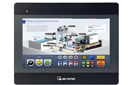
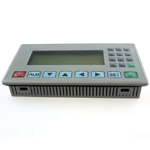
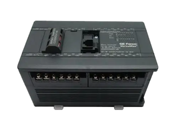
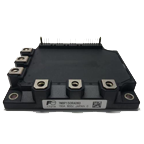




- Industrie-LCD-Display
-
Industrial Products
- DC Servo Drive
- AC Servo Drive
- PCB
- Siemens
- Switch Sensor
- Näherungsschalter
- Temperaturregler
- Schutzrelais
- Fiber Optic Sensor
- Encoder
- Fan
- other
- Heidelberg
- MITSUBISHI
- FANUC
- Siemens adapter
- Fujitsu connector
- Der Aufsichtsrat
- Board
- Contactor
- Circuit
- Omron
- Relais.
- Motortreiber
- power supply
- Cable
- Transformator
- HMI Touch-Glas
-
HMI-Vollautomat Ganze Einheit
- OMRON HMI Touch Panel
- Siemens HMI Touch Panel
- Mitsubishi HMI Touch Panel
- Allen-Bradley Automatisierung HMI Touch
- DELTA HMI Touch Panel
- EVIEW DELTA HMI Touch Panel
- KINCO DELTA HMI Touch Panel
- HITECH HMI Touch Panel
- WEINTECK HMI Touch Panel
- TECVIEW HMI Touch Panel
- WEINVIEW HMI Touch Panel
- PANASONIC HMI Touch Panel
- KYOCERA HMI Touch Panel
- SCHNEIDER HMI Touch Panel
- Module
- LCD Wechselrichter
- Membran Tastenfeld Schalter
- Winni Touch Screens
- Frequenzumrichter
- Servo Motor
- PLC
The industrial display market has long been a crucible for technological endurance, demanding components that can withstand harsh environments while delivering uncompromised visual clarity. Within this demanding landscape, the G156HCE-P01 from Innolux Corporation emerges not merely as a generic LCD panel, but as a cornerstone solution for mission-critical applications. This 15.6-inch module is engineered for sectors where failure is not an option — from medical imaging and human-machine interfaces (HMI) to digital signage and marine navigation.
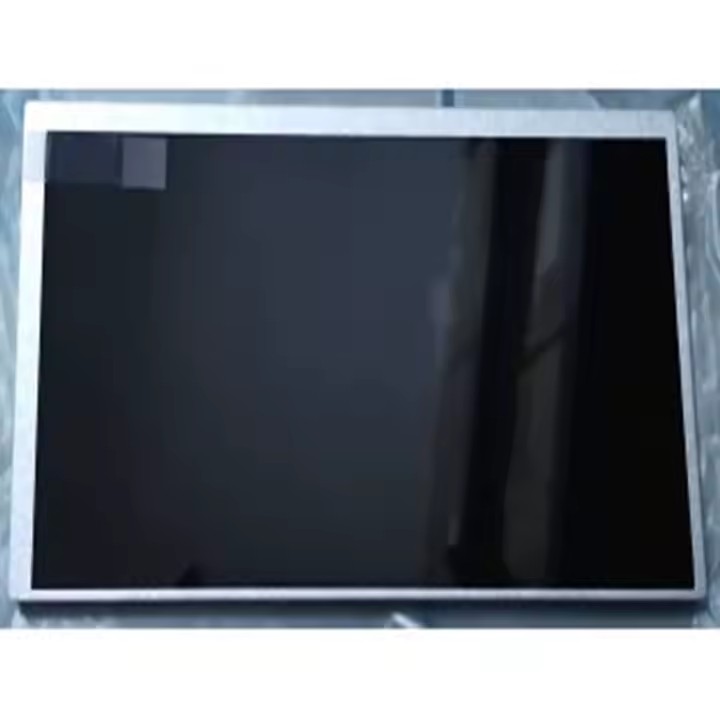
However, its technical specifications tell only half the story. To truly understand the value of the G156HCE-P01, we must dissect its engineering philosophy, optical performance, and its specific role within the broader ecosystem of industrial automation and safety. This article aims to move beyond the datasheet, offering a deep, analytical exploration of why this particular panel is more than just a screen; it is a reliability contract. We will examine its unique balance of brightness, contrast, and thermal resilience, revealing how Innolux has addressed the subtle pain points of system integrators and end-users alike.
Optical Endurance: High Brightness and Contrast in Unforgiving Light
The first defining attribute of the G156HCE-P01 is its optical architecture, specifically tailored for high-ambient-light environments. With a typical brightness rating of 700 cd/m², this panel is categorized as a "high bright" solution. While many consumer-grade displays plateau at 250-300 cd/m², the G156HCE-P01 is designed to be legible in direct sunlight or brightly lit factory floors. This is not merely a matter of turning up the backlight; it involves a meticulous engineering balance between LED driver efficiency and heat dissipation.
Furthermore, its native 1000:1 contrast ratio ensures that shadows remain deep and text remains sharp, preventing the "washed out" effect common in lower-grade panels when brightness is pushed to its limit. The use of an S-IPS (Super In-Plane Switching) technology is critical here. It guarantees wide viewing angles of 89/89/89/89 degrees (CR≥10), ensuring that operators viewing the screen from off-centric positions still perceive accurate color and luminance. For medical carts or control room consoles, this uniformity prevents visual misinterpretation of data. The anti-glare surface treatment (Haze 25%) further mitigates reflections, turning the display into a readable instrument rather than a mirror.
Interface Logic: The LVDS Advantage for Industrial Longevity
In a consumer world rapidly shifting toward eDP (Embedded DisplayPort) and MIPI interfaces, the G156HCE-P01 steadfastly employs LVDS (Low-Voltage Differential Signaling). This is not a sign of technological stagnation, but rather a deliberate choice for industrial robustness. LVDS offers superior noise immunity over long cable runs — a critical factor in industrial machinery where electrical interference from motors and power supplies is rampant.
The specific implementation here is a 2-channel, 8-bit LVDS interface, supporting a resolution of 1920x1080 (Full HD). This dual-channel design provides a redundancy of signal paths, which is an inherent advantage for reliability. If one channel experiences minor interference, the secondary path can often maintain data integrity. Additionally, the panel's power requirement of a single 12V DC input simplifies the integration process for hardware designers. By standardizing on a legacy interface that is proven, well-understood, and easily sourced, Innolux ensures that the G156HCE-P01 remains compatible with industrial motherboards and embedded controllers that have lifecycles measured in decades, not years. This alignment with the industrial ecosystem reduces the total cost of ownership (TCO) for system integrators who cannot afford frequent redesigns.

Thermal Management: The Unsung Hero of Panel Reliability
For a panel pushing 700 cd/m² of brightness, heat is the primary enemy. The G156HCE-P01 addresses this through a sophisticated thermal design that extends far beyond simple venting. The backlight unit utilizes a specific arrangement of high-efficiency LEDs that generate less heat per lumen than standard solutions. However, the true engineering feat lies in how the panel dissipates the residual thermal energy.
The module is designed with a specific operating temperature range of 0°C to 60°C and a storage range of -20°C to 60°C. While these figures are standard, the panel's ability to maintain consistent luminance and color accuracy at the upper end of this range is where it differentiates itself. The chassis and internal heat sinks are constructed to draw heat away from the LCD cell itself. If the cell overheats, the liquid crystal can become isotropic (losing its alignment), causing permanent black spots or image retention. The G156HCE-P01’s thermal margin ensures that the panel can run at full brightness for extended shifts without entering thermal shutdown or suffering from accelerated luminance decay. For integrators building kiosks in tropical climates or ovenside HMIs, this thermal resilience translates directly to lower warranty returns and longer service intervals.
Mechanical Architecture: Slim Profile, Wide Compatibility
The physical dimensions of the G156HCE-P01 reveal a careful balance between ruggedness and design flexibility. At a slim profile thickness of approximately 11.7 mm (for the panel only), it is remarkably slender for an industrial-grade unit. This allows it to be integrated into modern, sleek enclosures without requiring excessive bezel depth.
The active area measures 344.16 mm (W) x 193.59 mm (H), adhering to the standard 15.6-inch diagonal. The outline dimension of 363.8 mm x 215.9 mm ensures that it can be fitted into standard VESA mountings or custom chassis with minimal modification. Crucially, the display is available in both a Matte (anti-glare) and a Glare (Clear) version, although the G156HCE-P01 standard is the matte variant for most industrial use cases. The weight, at roughly 1.34 kg, is moderate, allowing for stable mounting on articulated arms in medical theaters. The design also incorporates specific mounting hole patterns for secure fastening, preventing micro-vibrations that can cause pixel flicker over time. These mechanical details may seem mundane, but they are the primary factors in successful first-pass system assembly and long-term structural integrity.
Application Ecosystems: Beyond the Generic Display
The true value of the G156HCE-P01 is realized not in isolation, but as a component within complex systems. Its primary application suites are deeply tied to its technical characteristics. In the medical sector, the high brightness and IPS viewing angles are non-negotiable for patient monitoring systems and surgical video displays, where multiple clinicians must view the screen from different positions simultaneously. The anti-glare treatment reduces eye strain during long procedures.
In industrial automation, this panel powers the HMIs that control robotic assembly lines and process controls. The LVDS interface and thermal tolerance allow it to operate next to hot machinery without signal degradation. Furthermore, it is a prime candidate for outdoor kiosks and marine terminals, where sunlight readability is paramount. Another niche, yet vital, application is in gaming and simulation systems, where the high refresh rate and low latency (common to IPS panels) provide a fluid, responsive experience for flight simulators and racing rigs. By serving these distinct verticals, the G156HCE-P01 demonstrates that a well-engineered industrial panel can be a versatile platform, adaptable through firmware and cabling to a diverse range of mission-critical tasks.
Procurement and Lifecycle Strategy for System Integrators
For the professional purchaser or engineer, the decision to source the G156HCE-P01 often rests on its product lifecycle guarantee. Innolux is known for supporting industrial panels for 5 to 7 years or more, which is a critical factor in industries like medical or military electronics, where equipment must be certified and recertified over long periods. Changing a display midway through a product's life can trigger expensive re-qualification processes.
When sourcing this panel, integrators must pay attention to the revision level of the panel. Innolux occasionally introduces minor revisions (e.g., Rev.C2) that may alter the connector pin-out or backlight voltage slightly. A diligent integrator will lock in the exact revision during the design phase and secure a last-time-buy (LTB) agreement if necessary. Furthermore, sourcing from authorized distributors is paramount to avoid counterfeit or re-worked units that lack the original thermal pad specifications. The firmware compatibility between the panel's timing controller (TCON) and the host system must also be verified early. A deep procurement strategy here is not just about price, but about securing supply chain continuity.
FAQs
What is the typical power consumption of the G156HCE-P01?At maximum brightness, the panel typically consumes around 18.5W. Power consumption scales down significantly with reduced backlight levels.
Can the G156HCE-P01 be used outdoors in direct sunlight?Yes, its 700 cd/m² brightness and anti-glare surface make it suitable for shaded or partially shaded outdoor use, though full direct sunlight may require a brightness booster or optical bonding for optimal readability.
Does this panel support touch screen integration?Yes, it is often paired with capacitive or resistive touch panels. Many distributors offer this panel with a compatible touch overlay, but the bare module itself requires an external touch controller.
What is the physical connector type for the LVDS interface?The standard connector is a 30-pin JAE FI-RE series or equivalent connector, specifically designed for high-speed LVDS signals.
Is the G156HCE-P01 suitable for medical FDA certification?While not certified itself, its optical consistency and reliability make it a preferred choice for medical equipment manufacturers who then perform the necessary system-level certifications.
How does the 1000:1 contrast ratio compare to VA panels?VA panels can achieve higher native contrast (3000:1), but the G156HCE-P01’s IPS contrast is excellent for its class and offers significantly better color stability at wide viewing angles.
What is the expected MTBF (Mean Time Between Failures) for this display?The backlight MTBF is typically rated at 50,000 hours, though overall panel MTBF depends heavily on operating temperature and voltage stability.
Can the display run at 60Hz and 30Hz?Yes, it supports both 60Hz and 30Hz refresh rates. 60Hz is standard, while 30Hz can be used for low-power or low-bandwidth applications.
Is there a risk of image burn-in with this panel?As an IPS panel, it is highly resistant to image retention compared to older TN or some AMOLED technologies, though static images shown for extremely long periods may cause temporary ghosting.
What is the recommended storage humidity for this module?The recommended storage humidity is 5% to 95% RH (non-condensing) to prevent moisture damage to the polarizer and electronic components.
Conclusion
The Innolux G156HCE-P01 is a testament to the fact that in the industrial world, a display is never just a display. It is a critical node of human-machine interaction, a data relay, and a reliability anchor. We have explored its high-brightness optical design, which conquers ambient light, and its strategic use of LVDS, which ensures noise immunity in electrically hostile environments. We highlighted the thermal engineering that prevents premature failure and the mechanical precision that eases integration into complex systems.
For the system integrator, the G156HCE-P01 represents a low-risk, high-reward component. Its deep application ecosystem—spanning medical, automation, and kiosk sectors—proves its versatility. However, success with this panel requires more than just reading its datasheet. It demands an understanding of its revision history, a partnership with reliable distributors, and a thermal management strategy within the host system. When these elements align, the G156HCE-P01 ceases to be a commodity part and becomes a silent, unwavering partner in delivering mission-critical performance. It is a panel built not just for today's requirements, but for the longevity demands of tomorrow's industries.





