
















- Industrial display
-
Industrial Products
- DC Servo Drive
- AC Servo Drive
- Industrial board
- Siemens
- Switch Sensor
- Proximity Switch
- Temperature Controller
- Protection Relay
- Fiber Optic Sensor
- Encoder
- Fan
- other
- Heidelberg
- MITSUBISHI
- FANUC
- Siemens adapter
- Fujitsu connector
- Motherboard
- Board
- Contactor
- Circuit
- OMRON
- Relay
- Motor Driver
- power supply
- Cable
- Transformer
- HMI Touch Glass
-
HMI Full Machine Whole unit
- OMRON HMI Touch Panel
- Siemens HMI Touch Panel
- Mitsubishi HMI Touch Panel
- Allen-Bradley automation HMI Touch Panel
- DELTA HMI Touch Panel
- Proface HMI Touch Panel
- KINCO DELTA HMI Touch Panel
- HITECH HMI Touch Panel
- WEINTEK HMI Touch Panel
- TECVIEW HMI Touch Panel
- WEINVIEW HMI Touch Panel
- PANASONIC HMI Touch Panel
- KYOCERA HMI Touch Panel
- SCHNEIDER HMI Touch Panel
- Module
- lcd inverter
- Membrane Keypad Switch
- Zhiyan Customized Touch Screens
- Frequency Inverter
- Servo Motor
- PLC
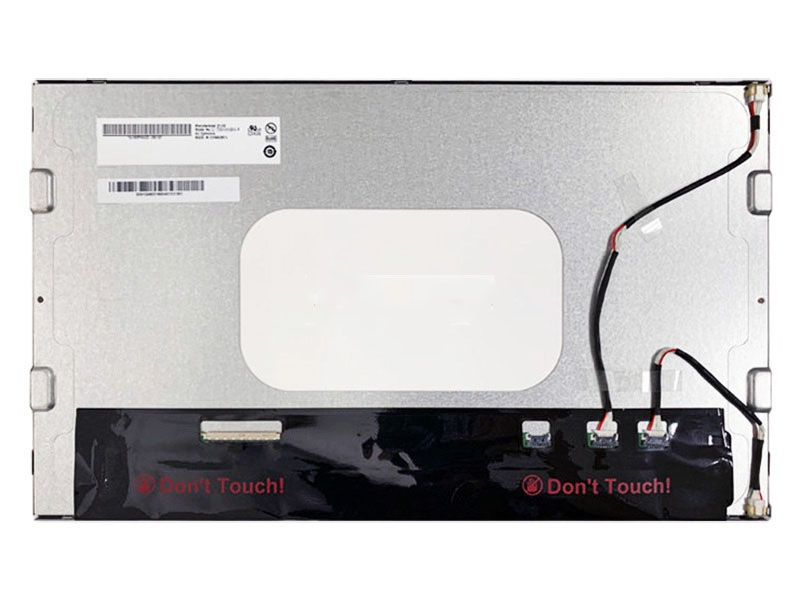
The landscape of industrial and commercial display technology is defined by a demand for reliability, precision, and longevity. Within this specialized sector, the G156HAN04.0 manufactured by AU Optronics (AUO) stands as a benchmark for 15.6-inch LCD solutions. This article provides a comprehensive technical and market analysis of this specific model. We will move beyond basic specifications to explore the engineering decisions behind its construction, its suitability for harsh environments, and its role in bridging the gap between consumer-grade clarity and industrial-grade durability. Understanding the G156HAN04.0 is not merely about recognizing a part number; it is about appreciating how a single component can dictate the performance of medical equipment, automation interfaces, and high-traffic commercial kiosks. This deep dive aims to equip engineers, procurement specialists, and system integrators with the critical knowledge needed to evaluate this display for their specific applications.
Architecture and Visual Performance Standards
The G156HAN04.0 employs a standard a-Si TFT-LCD architecture, but its visual performance is far from standard for its generation. It utilizes a Vertical Alignment (VA) mode, which is a critical differentiator from the more common Twisted Nematic (TN) panels. The VA technology provides superior contrast ratios, typically rated at 3000:1 for this model. This deep native contrast eliminates the need for aggressive dynamic backlight adjustments, ensuring stable black levels crucial for medical imaging or data visualization where grayscale accuracy is paramount.
The panel delivers a resolution of 1920 x 1080 (Full HD) at a pixel density of approximately 141 PPI. While not ultra-high definition, this density is optimal for a 15.6-inch diagonal, providing sharp text and clear image details without the excessive power consumption and heat generation of higher resolutions. Furthermore, the 300 cd/m² typical brightness is strategically calibrated. It is bright enough to overcome moderate ambient light in indoor industrial or clinical settings, yet it is not so high as to cause premature LED backlight degradation—a trade-off that prioritizes long operational life over peak marketing specifications.
Optical Engineering: Viewing Angles and Anti-Glare Technology
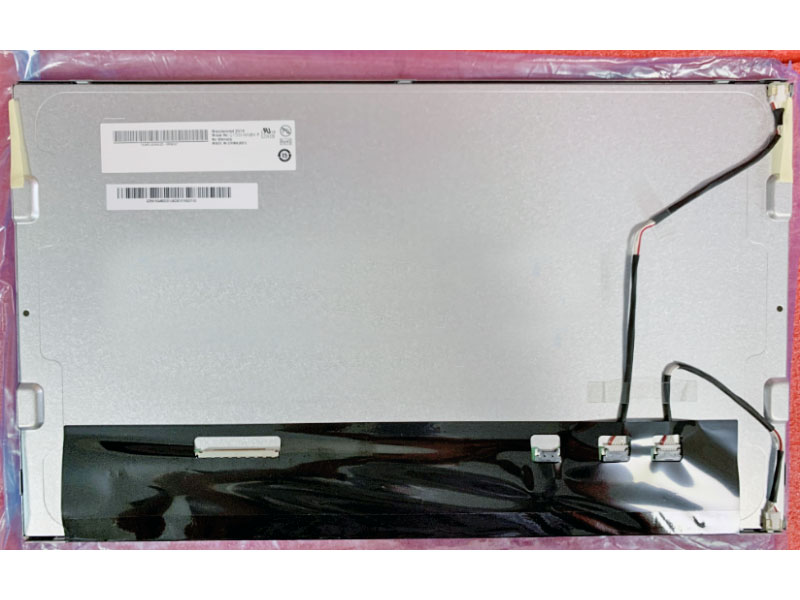
One of the most significant challenges in public-facing or collaborative displays is maintaining color integrity from off-center positions. The VA technology of the G156HAN04.0 provides 178° wide viewing angles in all directions, both horizontally and vertically (CR≥10). This prevents the color shift and contrast inversion common in TN panels when viewed from above or below. For a diagnostic monitor or a factory floor interface, this ensures that the data is legible regardless of the operator's angle.
Equally important is the surface treatment. AUO has applied a hard coating (3H) with an Anti-Glare (AG) property. The AG layer uses a physical diffusion process to scatter reflected light, preventing specular reflections that create hot spots and eye strain under overhead lighting. The 3H hardness rating provides a practical resistance to minor scratches during touch interactions or cleaning, a necessity for devices that are sanitized multiple times daily in medical or food processing environments. This combination of wide viewing angles and diffuse reflection control makes the panel optically robust in uncontrolled lighting.
Interface, Power Management, and System Integration
Connectivity for the G156HAN04.0 is standardized through a LVDS (Low-Voltage Differential Signaling) interface, specifically a 2-channel, 8-bit system. This is a deliberate choice for industrial applications. LVDS is known for its robustness against electromagnetic interference (EMI) over short distances, its low power consumption, and its widespread compatibility with embedded controllers from manufacturers like NXP, TI, and Intel. The 8-bit interface allows for 16.7 million colors, avoiding the banding artifacts of 6-bit + FRC panels in smooth gradients.
From a power perspective, the LED driver is designed for efficiency. The typical power consumption for the backlight is kept under 16W, and the logic power is under 4W. This low total draw, combined with an operating voltage of 12V, simplifies power supply design and reduces thermal stress inside a sealed enclosure. The LVDS signal transmission also reduces the number of conductors in the cable, simplifying cable management and improving reliability in high-vibration environments like marine navigation or heavy machinery.
Environmental Durability and Operational Longevity
The G156HAN04.0 is engineered for extended operation. Its specified operating temperature range of 0°C to 50°C and storage range of -20°C to 60°C are indicative of its industrial intent. While not extended to wide-temperature extremes, this range covers the vast majority of indoor and sheltered applications. More critically, the display is designed for a 50,000-hour lifetime at typical brightness, based on LED backlight degradation to 50% luminance. This translates to over 5 years of continuous 24/7 operation, a metric that surpasses many consumer monitors by a factor of two or three.
Durability is further enhanced by the panel's physical construction. The use of a robust metal frame and secure mounting points reduces the risk of damage from vibration. The Anti-Glare hard coating not only protects against scratches but also resists the accumulation of dust and fingerprints. For integrators, this longevity translates into a lower total cost of ownership (TCO), as the display is less likely to fail during the warranty period or require replacement in a remote kiosk, thereby reducing service call costs and downtime.
Market Positioning and Application Suitability
The G156HAN04.0 occupies a distinct niche between low-cost consumer panels and expensive, specialized medical monitors. Its primary competitors are other industrial-grade panels from BOE, Innolux, and LG Display. However, AUO’s strength lies in balancing VA contrast with proven reliability and availability. This panel is not optimized for gaming response times (< 30ms typical) but for image stability and accuracy.
Its ideal applications are diverse but specific. It is a premier choice for Point-of-Care (POC) medical monitors used in ultrasound, patient vitals, and anesthesia machines due to its contrast and viewing angles. In the industrial sector, it serves as the display for Human-Machine Interfaces (HMIs) in factory automation, where long life and readability under fluorescent lights are critical. It is also found in interactive kiosks and digital signage for corporate lobbies and retail environments, where the AG surface ensures the screen remains usable and professional-looking under direct track lighting.
FAQs
Q: Is the G156HAN04.0 a touch screen?A: No, it is a standard LCD module without touch functionality. It is designed to be integrated with a separate touch sensor (e.g., capacitive or resistive) if needed.
Q: What is the backlight type?A: It uses a WLED (White Light Emitting Diode) edge-lit backlight, which provides uniform brightness and a thin profile.
Q: Can this display be used outdoors?A: It is not recommended for direct sunlight due to its 300 cd/m² brightness. It is designed for indoor or sheltered use. For sunlight readability, you would need a high-brightness panel (1000+ cd/m²).
Q: What is the pin count and connector type for the LVDS interface?A: The interface typically uses a 30-pin connector, specifically a JAE FI-X30SSL-HF or equivalent.
Q: Is this panel compatible with a Raspberry Pi?A: Yes, but requires an LVDS driver board. A standard Raspberry Pi cannot drive LVDS directly; you need a board that converts HDMI or DSI to LVDS signals.
Q: What is the response time of this display?A: The typical response time (Tr+Tf) is usually around 30 ms, which is acceptable for static images and video playback but not for high-speed gaming.
Q: What does '2-channel, 8-bit' mean for the interface?A: It means the display receives data from two parallel data transmission channels, allowing for higher resolution and refresh rates, and it can display 16.7 million colors natively without dithering.
Q: Does the display have a built-in power supply?A: No. It requires two separate input voltages: +12V for the backlight and +3.3V for the logic board. These must be supplied by the system integrator.
Q: How does the Anti-Glare coating affect image sharpness?A: It slightly diffuses the image, which reduces perceived micro-sharpness but eliminates distracting reflections. This trade-off is generally preferred for usability in bright rooms.
Q: Is this display RoHS compliant?A: Yes, the G156HAN04.0 is manufactured in compliance with the Restriction of Hazardous Substances (RoHS) directive.
Conclusion
The G156HAN04.0 from AUO is more than just a screen; it is a well-architected solution for the demanding world of industrial and medical computing. By prioritizing VA technology for superior contrast, a robust Anti-Glare surface for workplace usability, and a standardized LVDS interface for easy integration, AUO has crafted a panel that delivers reliable performance over a long lifespan. Its 50,000-hour backlife and wide operating temperatures provide the longevity that system integrators require, while its precise color and viewing angles meet the visual needs of professionals.
When evaluating displays for your next project, remember that the lowest upfront cost often conceals the highest lifetime cost due to failures and poor user experience. The G156HAN04.0 represents a value-driven choice, offering a proven balance of optical quality, durability, and compatibility that reliably meets the needs of critical applications. It stands as a testament to the principle that in professional environments, a display is not merely an output device, but a long-term investment in operational clarity and reliability.





