


















- Industrie-LCD-Display
-
Industrial Products
- DC Servo Drive
- AC Servo Drive
- PCB
- Siemens
- Switch Sensor
- Näherungsschalter
- Temperaturregler
- Schutzrelais
- Fiber Optic Sensor
- Encoder
- Fan
- other
- Heidelberg
- MITSUBISHI
- FANUC
- Siemens adapter
- Fujitsu connector
- Der Aufsichtsrat
- Board
- Contactor
- Circuit
- Omron
- Relais.
- Motortreiber
- power supply
- Cable
- Transformator
- HMI Touch-Glas
-
HMI-Vollautomat Ganze Einheit
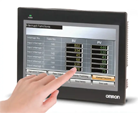
- OMRON HMI Touch Panel
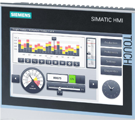
- Siemens HMI Touch Panel
- Mitsubishi HMI Touch Panel
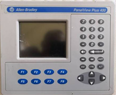
- Allen-Bradley Automatisierung HMI Touch
- DELTA HMI Touch Panel
- EVIEW DELTA HMI Touch Panel
- KINCO DELTA HMI Touch Panel
- HITECH HMI Touch Panel
- WEINTECK HMI Touch Panel
- TECVIEW HMI Touch Panel
- WEINVIEW HMI Touch Panel
- PANASONIC HMI Touch Panel
- KYOCERA HMI Touch Panel
- SCHNEIDER HMI Touch Panel
- Module
- LCD Wechselrichter
- Membran Tastenfeld Schalter
- Winni Touch Screens
- Frequenzumrichter
- Servo Motor
- PLC
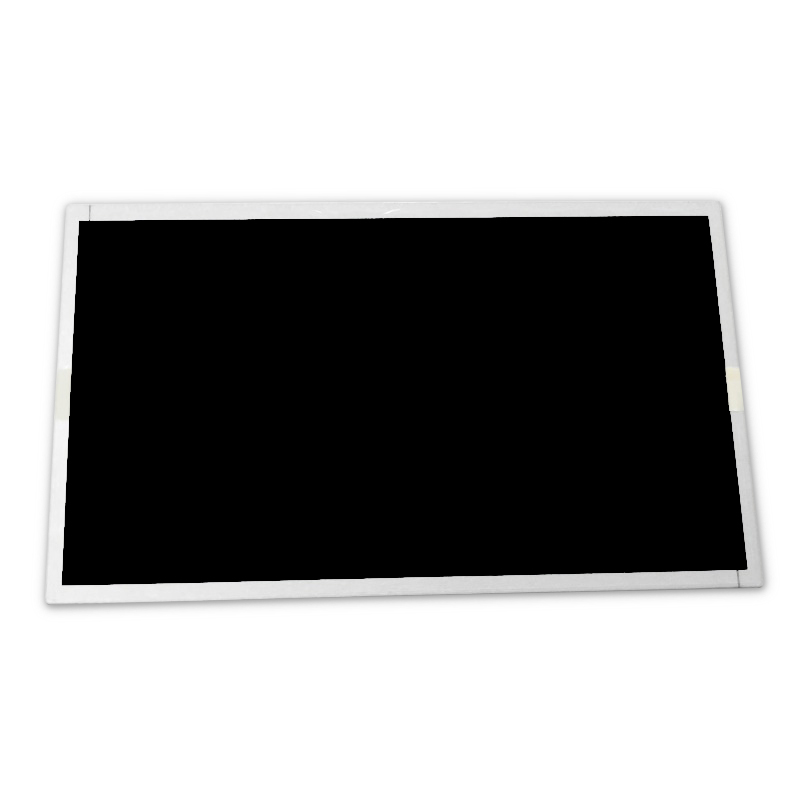
In the rapidly evolving landscape of industrial and medical display technology, the choice of a touch screen monitor is far from trivial. It is a decision that impacts user interaction, operational reliability, and long-term maintenance costs. Among the myriad of options available, the 15.6 inch G156HAN02.3 model has emerged as a benchmark for high-performance applications. This article delves deep into the specifics of this particular display, moving beyond superficial specifications to explore its engineering, its indispensable pre-shipment testing protocol, and its strategic advantages. We will examine why a 100% testing guarantee is not merely a marketing claim but a critical quality assurance standard. From its optical characteristics to its industrial-grade durability, we aim to provide a comprehensive understanding of what makes this touch screen solution a superior choice for integrators, system designers, and end-users who demand unwavering performance in demanding environments.
The Engineering DNA of the G156HAN02.3
To fully appreciate the value of the 15.6 inch G156HAN02.3, one must first understand its core design philosophy. This is not a standard consumer-grade laptop screen; it is an industrial-grade LCD module engineered for longevity and precision. Manufactured by Innolux, a leading display powerhouse, this model typically features an IPS (In-Plane Switching) panel, which is crucial for applications requiring wide viewing angles—often up to 178 degrees both horizontally and vertically. This ensures that operators viewing the screen from off-center positions still perceive accurate colors and contrast without washout. The native resolution of 1920 x 1080 (Full HD) provides crisp, clear detail essential for reading complex charts, medical images, or control system data.
Furthermore, the G156HAN02.3 is characterized by its high brightness rating, often exceeding 400 cd/m², alongside a high contrast ratio. This makes it suitable for environments with significant ambient light, such as factory floors or outdoor kiosks under a canopy. The optical bonding process, when applied, eliminates the air gap between the touch sensor and the LCD, reducing glare and improving sunlight readability. Material selection is also meticulous, utilizing components rated for extended temperature ranges (typically -20°C to +70°C), which ensures stable operation in non-climate-controlled settings. This robust engineering foundation is what makes it a viable candidate for the rigorous touch screen integration it often undergoes.
Why 100% Pre-Shipping Testing is Non-Negotiable
The most distinctive and value-driven claim associated with this display is the "100% tested before shipping" promise. In an industry where defects can be latent, this policy is the bedrock of reliability. Standard mass-production often relies on statistical sampling—testing a small percentage of units to infer the quality of the entire batch. While effective for high-volume consumer goods, this approach is insufficient for mission-critical industrial applications where a single dead pixel or a malfunctioning touch controller can halt a production line or compromise a patient's diagnostic procedure. 100% testing means every single unit, without exception, undergoes a rigorous validation process.
This process typically involves a multi-stage assessment. First, a comprehensive optical inspection is performed under controlled lighting to detect pixel defects, backlight inconsistencies, and physical damage like scratches or cracks. Second, the touch functionality is verified across the entire active area, checking for dead zones, ghost touches, and intermittent response. Third, a connectivity check ensures the interface (e.g., eDP for display, USB or I²C for touch) communicates flawlessly with standard controllers. This exhaustive screening filters out not only obvious failures but also marginal units that might pass an initial quick test but fail under prolonged use, effectively eliminating the risk of field failures for the end-user.
Integrating Touch: From Panel to Solution
The G156HAN02.3 is rarely used in isolation; its true potential is unlocked when it is seamlessly integrated with a touch screen. The most common touch technologies paired with this model are Projected Capacitive (PCAP) and Resistive. The choice between them dictates the application’s suitability. PCAP, with its compatibility with multi-touch gestures (pinch, zoom, swipe) and its sleek glass surface, is the standard for modern human-machine interfaces (HMIs) in medical and high-end industrial settings. It offers superior optical clarity and a more intuitive user experience. Conversely, resistive touch is preferred in extremely dusty, wet, or gloved-hand environments where any object (stylus, gloved finger) must be able to activate the screen.
The integration process itself is a critical engineering step. A poorly bonded touch screen can cause Newton rings, reduced brightness, or delamination over time. When suppliers claim "100% tested," the test encompasses the entire assembled unit—LCD panel plus touch sensor plus control board. This ensures that the touch digitizer is perfectly calibrated to the display matrix. This calibration is vital; a one-to-one mapping ensures that when a user touches a button displayed on the screen, the system registers the touch at the exact correct coordinate. Without this rigorous testing of the integrated solution, the user experience is compromised, leading to operator frustration and costly errors. The synergy between the display and touch layer is what transforms a component into a functional tool.
Performance Metrics That Matter in Practice
Beyond the obvious specifications, several performance metrics define the real-world efficacy of this touch screen solution. One critical parameter is response time. For the G156HAN02.3, a typical response time of 25ms (Tr+Tf) or lower ensures that moving images and cursor tracking appear smooth without motion blur. In a dynamic HMI, where a process value is changing rapidly, this reduces eye strain and improves operator reaction time. Another is the signal-to-noise ratio (SNR) of the touch controller. A high SNR means the touch panel can accurately discern a genuine finger touch from electrical noise or water droplets, preventing false triggers.
Another often-overlooked metric is touch linearity. This measures how accurately the touch panel maps a physical touch point to its corresponding position on the display. Non-linear behavior can cause buttons at the edge of the screen to be unresponsive or require offset compensation. The 100% testing protocol usually includes a linearity test across a grid of points. Furthermore, the durability of the touch surface is a key factor. PCAP glass used with this panel is typically treated to have a hardness of 7H or higher, making it scratch-resistant. Testing ensures the necessary chemical and mechanical durability standards (e.g., IK rating for impact resistance) are met, guaranteeing that the screen survives the daily knocks and cleaning agents of an industrial environment.
Strategic Benefits for Integrators and End-Users
For system integrators and OEMs, choosing a 100% tested G156HAN02.3 touch screen translates directly into reduced warranty costs and faster time-to-market. By receiving a pre-verified, high-quality component, they eliminate the need for their own incoming quality control (IQC) testing, saving labor and infrastructure costs. A defective unit discovered during final product assembly can be catastrophic, causing weeks of delay for rework. A pre-tested unit significantly lowers this risk, allowing for a more predictable manufacturing schedule. For end-users, such as hospital administrators or factory managers, the benefit is operational continuity. A failed display in a patient monitor or a CNC machine controller means downtime, which can be dangerous and expensive.
Furthermore, this reliability enhances the total cost of ownership (TCO). While the initial unit cost may be slightly higher than an untested alternative, the reduction in failure rates, service calls, and replacement logistics makes it a far more economical choice over a 3-5 year lifespan. The availability of a consistent, high-quality supply also enables longer product lifecycles for the integrator’s own equipment. Instead of frequently swapping parts to manage quality issues, they can confidently design a system around the G156HAN02.3, knowing that its performance is backed by a stringent quality assurance process. This trust is the ultimate deliverable for any component supplier.
Frequently Asked Questions (FAQs)
Q: What is the typical brightness of the G156HAN02.3?A: It typically ranges from 400 to 500 cd/m², often with an optional optical bonding layer to further improve readability in bright conditions.
Q: What touch interfaces are compatible with this model?A: Common interfaces include USB (for most PCAP controllers) and I²C (for embedded/resistive). The specific interface depends on the touch controller board used.
Q: Does "100% tested" mean the touch screen is guaranteed to be perfect?A: It guarantees that each unit passes a functional and cosmetic test. Industry standards (like ISO 13406) for pixel defects still apply, but testing ensures no major failures exist.
Q: Can I use this touch screen with gloves on?A: Yes. PCAP versions can support gloved-hand operation if the controller is specifically tuned for it. Resistive touch is naturally glove-friendly.
Q: What is the operating temperature range for this display?A: The standard industrial operating range is typically -20°C to +70°C, making it suitable for most manufacturing and outdoor environments.
Q: Is the touch controller board included in the test?A: Yes. The 100% test is performed on the fully integrated assembly, including the LCD, touch sensor, and the controller board (controller board is often included).
Q: What is the purpose of optical bonding?A: It eliminates the air gap between the LCD and the touch glass. This reduces glare, improves contrast, and prevents condensation from getting between the layers.
Q: How long does the test cycle take per unit?A: A thorough test cycle, including optical inspection, touch mapping, and interface verification, typically takes between 2 to 5 minutes per unit.
Q: What is the expected lifespan of this touch screen?A: The LED backlight is usually rated for 50,000 hours or more. The display and touch components are designed for industrial longevity, often exceeding 5 years of continuous use.
Q: Can I get a custom cable for this display?A: Yes, most suppliers offer custom cable options for the eDP and touch interface to suit specific installation needs, provided they are part of the verified assembly.
Conclusion
The 15.6 inch G156HAN02.3 is far more than a standard screen; it is a benchmark of engineering precision and quality assurance in the touch display industry. Its robust IPS panel, high brightness, and wide temperature range provide a solid foundation, but its true distinction lies in the uncompromising commitment to a 100% pre-shipping test protocol. This policy transforms a component into a trusted solution, eliminating the gamble of field failures. For the integrator, it streamlines production and reduces risk. For the end-user, it delivers operational reliability and a lower total cost of ownership. In a world where digital interaction is critical to safety and productivity, investing in a fully verified display is not an expense; it is a strategic decision to ensure continuity, accuracy, and user confidence. Choosing the G156HAN02.3 tested touch screen means choosing to prioritize performance from the very first power-on, making it an intelligent choice for those who build and rely upon mission-critical systems.





