













































- Industrial display
-
Industrial Products
- DC Servo Drive
- AC Servo Drive
- Industrial board
- Siemens
- Switch Sensor
- Proximity Switch
- Temperature Controller
- Protection Relay
- Fiber Optic Sensor
- Encoder
- Fan
- other
- Heidelberg
- MITSUBISHI
- FANUC
- Siemens adapter
- Fujitsu connector
- Motherboard
- Board
- Contactor
- Circuit
- OMRON
- Relay
- Motor Driver
- power supply
- Cable
- Transformer
- HMI Touch Glass
-
HMI Full Machine Whole unit
- OMRON HMI Touch Panel
- Siemens HMI Touch Panel
- Mitsubishi HMI Touch Panel
- Allen-Bradley automation HMI Touch Panel
- DELTA HMI Touch Panel
- Proface HMI Touch Panel
- KINCO DELTA HMI Touch Panel
- HITECH HMI Touch Panel
- WEINTEK HMI Touch Panel
- TECVIEW HMI Touch Panel
- WEINVIEW HMI Touch Panel
- PANASONIC HMI Touch Panel
- KYOCERA HMI Touch Panel
- SCHNEIDER HMI Touch Panel
- Module
- lcd inverter
- Membrane Keypad Switch
- Zhiyan Customized Touch Screens
- Frequency Inverter
- Servo Motor
- PLC
In the intricate ecosystem of electronic displays, the choice of a core component like an LCD panel can define the performance, reliability, and user experience of the final product. Among the myriad of options available to engineers and procurement specialists, the AUO G150XTN03.1 emerges as a significant and widely adopted 15-inch solution. This panel is not merely a generic part but a carefully engineered module with specific characteristics tailored for industrial, commercial, and embedded applications where durability and consistent performance are paramount.
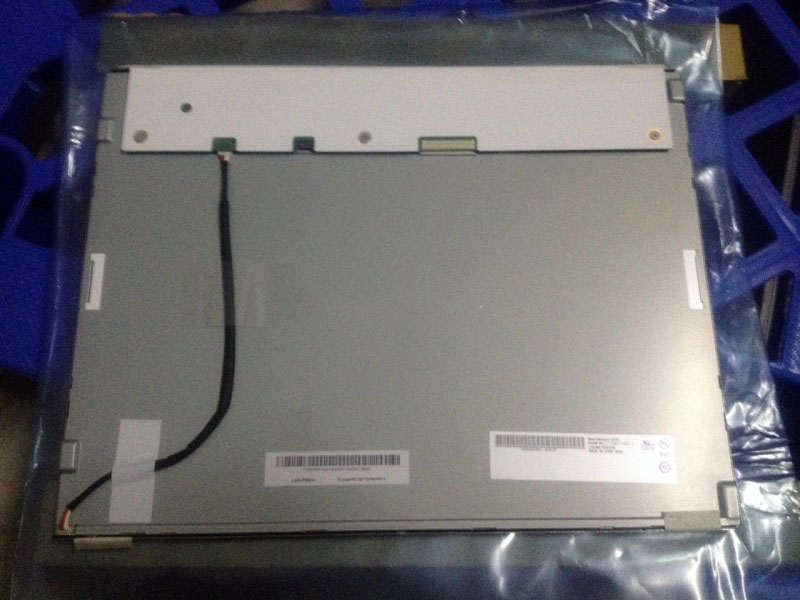
This article delves into a comprehensive technical and application-oriented analysis of the AUO G150XTN03.1 LCD panel. We will move beyond basic datasheet specifications to explore its underlying technology, dissect its performance profile, and examine the practical considerations for integration. Our goal is to provide design engineers, product managers, and technical buyers with the depth of understanding necessary to evaluate whether this panel is the optimal choice for their next project, ensuring that the selected display aligns perfectly with both technical requirements and long-term operational goals.
Unpacking the Core Specifications and Technology
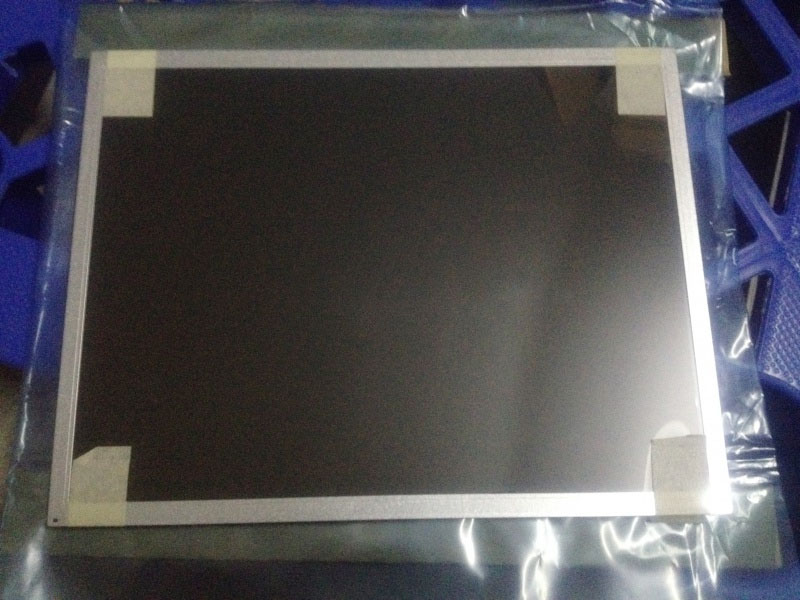
The AUO G150XTN03.1 is a 15.0-inch diagonal display module built on a Twisted Nematic (TN) panel technology. Its native resolution is 1024 x 768 pixels (XGA), offering a 4:3 aspect ratio—a format still prevalent in many industrial, point-of-sale, and medical systems designed for specific legacy interfaces or data presentation. The panel utilizes a standard RGB stripe pixel arrangement and typically employs a CCFL (Cold Cathode Fluorescent Lamp) backlighting system, which provides uniform and bright illumination suitable for various lighting conditions.
Key physical specifications include its outline dimensions, active area, and surface treatment, often featuring a hard coating to resist scratches. The interface is typically LVDS (Low-Voltage Differential Signaling), a robust and common standard for transmitting high-speed video data with minimal noise interference. Understanding these foundational specs is crucial as they form the non-negotiable framework for mechanical and electrical integration, dictating the physical footprint, driver board compatibility, and basic visual output of the end device.
Performance Analysis: Brightness, Contrast, and Viewing Angles
Performance evaluation moves us from static specifications to dynamic behavior. The G150XTN03.1 typically boasts a high brightness level, often around 300 nits or higher, making it readable in brightly lit environments like retail floors or factory settings. The contrast ratio, a measure of the difference between the brightest white and the darkest black, is characteristic of TN technology—adequate for many applications but generally lower than modern IPS panels.
The most defining performance characteristic of a TN panel is its viewing angle dependency. The G150XTN03.1 offers optimal contrast and color fidelity primarily within a narrow cone directly in front of the screen. Color shift and contrast inversion can occur at wider horizontal and, particularly, vertical viewing angles. This is not necessarily a flaw but a critical design consideration. For applications where the user interacts directly head-on, such as an ATM or a test equipment front panel, this is acceptable. For multi-viewer scenarios, it may be a limiting factor.
The Application Landscape: Where This Panel Excels
The technical profile of the G150XTN03.1 directly maps to specific application verticals. Its rugged construction, stable performance, and 4:3 format make it a mainstay in industrial human-machine interfaces (HMIs) for factory automation and process control. In the point-of-sale (POS) and self-service kiosk sector, its high brightness ensures clear transaction displays under store lighting.
Furthermore, it finds use in medical monitoring devices (where specific legacy systems require the XGA format), transportation information displays, and various embedded systems. Its longevity in the market and mature supply chain also make it a reliable choice for products with long lifecycles, where component consistency over years of production and service is a critical requirement, often outweighing the allure of newer, but less proven, display technologies.
Critical Integration Considerations for Engineers
Selecting the panel is only the first step; successful integration is key. Engineers must design the mechanical housing to precisely match the panel's outline and mounting holes, ensuring secure fit and proper heat dissipation from the backlight system. Electrically, the LVDS interface requires a compatible timing controller (T-CON) or a display driver board that matches the panel's specific signal protocol and power sequence requirements.
Power supply design must account for the significant current draw of the CCFL backlight inverter. Additionally, mitigating electromagnetic interference (EMI) from the high-voltage inverter and ensuring signal integrity for the LVDS lines are crucial for stable operation. Proper handling of the flex cables and connectors is essential to avoid static damage or physical failure. These integration details separate a functional prototype from a robust, mass-producible product.
Comparative Context: TN vs. IPS and Technology Evolution
To fully appreciate the G150XTN03.1's position, a comparative view is necessary. Against modern In-Plane Switching (IPS) panels, the TN technology of the G150XTN03.1 has clear trade-offs. IPS panels offer vastly superior viewing angles and color consistency but historically came at a higher cost and sometimes slightly higher power consumption. For the target applications of the G150XTN03.1, where wide viewing angles are not a priority, the TN panel provides a cost-effective and performance-adequate solution.
The industry's shift towards LED backlighting is another point of context. While the G150XTN03.1 often uses CCFL, newer panels favor LEDs for their thinner profile, lower power consumption, and mercury-free design. However, in upgrade or replacement scenarios, the consistent performance and specific optical characteristics of the CCFL backlight in this panel may be a specified requirement, justifying its continued use.
Sourcing, Lifecycle, and Replacement Strategies
For procurement and sustainability planning, understanding the panel's lifecycle is vital. As a mature product, the AUO G150XTN03.1 may be in a sustained production or "end-of-life" management phase. Working with authorized distributors or reliable suppliers is critical to avoid counterfeit components. It is prudent to secure a long-term supply agreement or identify qualified alternative panels (with identical outline, interface, and performance) to mitigate production risks.
For maintenance and repair operations, sourcing genuine replacement modules ensures compatibility and longevity. When direct replacement becomes impossible, a well-documented "cross-reference" list of panels with identical mechanical and electrical interfaces is an invaluable asset. This proactive approach to sourcing and lifecycle management protects against costly product redesigns or service interruptions down the line.
FAQs: AUO G150XTN03.1 LCD Panel
Q1: What is the screen size and resolution of the AUO G150XTN03.1?A1: It is a 15.0-inch diagonal panel with an XGA resolution of 1024 x 768 pixels and a 4:3 aspect ratio.
Q2: What type of LCD technology does it use?A2: It uses Twisted Nematic (TN) panel technology.
Q3: What is the typical brightness of this panel?A3: Typical brightness is high, often around 300 nits or more, suitable for bright environments.
Q4: What are its main applications?A4: Common applications include industrial HMIs, POS systems, kiosks, medical monitors, and embedded systems.
Q5: What is the interface for this LCD panel?A5: It typically uses an LVDS (Low-Voltage Differential Signaling) interface.
Q6: What type of backlight does it have?A6: It commonly features a CCFL (Cold Cathode Fluorescent Lamp) backlight system.
Q7: What are the key limitations of this panel?A7: The primary limitations are narrower viewing angles (characteristic of TN technology) and the use of older CCFL backlighting compared to modern LED-backlit IPS panels.
Q8: Is this panel suitable for outdoor use?A8: While bright, it is not specifically designed for full sunlight readability like a high-brightness, ruggedized outdoor display. Its standard construction is best for indoor or protected environments.
Q9: Can I directly replace it with an IPS panel?A9: Not directly. An IPS panel would likely have different mechanical dimensions, interface requirements, and power needs, necessitating a redesign of the housing and driver electronics.
Q10: Where can I source this panel or find a replacement?A10: Source from authorized electronic component distributors or specialized display module suppliers. For replacements, seek panels with identical mechanical outlines, mounting holes, interface (LVDS pinout), and power requirements.
Conclusion
The AUO G150XTN03.1 15-inch LCD panel stands as a testament to the enduring value of mature, well-understood display technology. Its significance lies not in cutting-edge specs, but in its proven reliability, specific performance characteristics, and perfect suitability for a well-defined set of industrial and commercial applications. For projects requiring a robust 4:3 XGA display with high brightness and straightforward integration via LVDS, it remains a compelling and rational choice.
Ultimately, successful implementation hinges on a holistic understanding that balances its technical attributes—the TN viewing angles, CCFL backlighting, and rugged build—against the precise demands of the target application and environment. By carefully considering the integration nuances, lifecycle status, and comparative technology landscape outlined in this analysis, engineers and buyers can make a confident, informed decision, ensuring this display module becomes a reliable cornerstone of their product's user interface for years to come





