














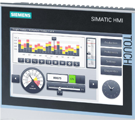





- Industrial display
-
Industrial Products
- DC Servo Drive
- AC Servo Drive
- Industrial board
- Siemens
- Switch Sensor
- Proximity Switch
- Temperature Controller
- Protection Relay
- Fiber Optic Sensor
- Encoder
- Fan
- other
- Heidelberg
- MITSUBISHI
- FANUC
- Siemens adapter
- Fujitsu connector
- Motherboard
- Board
- Contactor
- Circuit
- OMRON
- Relay
- Motor Driver
- power supply
- Cable
- Transformer
- HMI Touch Glass
-
HMI Full Machine Whole unit
- OMRON HMI Touch Panel
- Siemens HMI Touch Panel
- Mitsubishi HMI Touch Panel
- Allen-Bradley automation HMI Touch Panel
- DELTA HMI Touch Panel
- Proface HMI Touch Panel
- KINCO DELTA HMI Touch Panel
- HITECH HMI Touch Panel
- WEINTEK HMI Touch Panel
- TECVIEW HMI Touch Panel
- WEINVIEW HMI Touch Panel
- PANASONIC HMI Touch Panel
- KYOCERA HMI Touch Panel
- SCHNEIDER HMI Touch Panel
- Module
- lcd inverter
- Membrane Keypad Switch
- Zhiyan Customized Touch Screens
- Frequency Inverter
- Servo Motor
- PLC
In the intricate ecosystem of modern display technology, certain components become foundational pillars for entire product categories. The G150XTN02.0, a 15-inch TFT-LCD module (LCM) developed by AUO (AU Optronics), stands as a prime example of such a component. This specific panel, with its 1024(RGB)×768 (XGA) resolution, represents a mature yet persistently relevant standard in industrial, medical, and embedded applications where reliability, longevity, and consistent performance outweigh the pursuit of ultra-high pixel density. This article delves deep into the technical DNA and application philosophy of the G150XTN02.0.
We will move beyond basic datasheet specifications to explore the engineering rationale behind its a-Si (amorphous Silicon) TFT technology, its enduring XGA format, and the critical role of its integrated LCM design. The analysis will cover its performance characteristics in challenging environments, its position within AUO's product lineage, and the specific market niches it continues to serve effectively. By understanding this module's strengths and inherent design choices, engineers, procurement specialists, and technology integrators can make informed decisions about its implementation in systems where durability is paramount.

Deconstructing the Core Technology: a-Si TFT and XGA Resolution
The G150XTN02.0 is built upon amorphous Silicon (a-Si) Thin-Film Transistor technology, a workhorse of the LCD industry. While newer technologies like LTPS and IGZO offer higher electron mobility for higher resolution or lower power consumption, a-Si remains the champion of cost-effectiveness, manufacturing stability, and proven reliability for mainstream industrial panels. Its maturity translates to a robust supply chain and a deep well of application history, which is invaluable for long-lifecycle products.
The choice of a 1024×768 resolution, known as XGA (Extended Graphics Array), is equally strategic. In an era of 4K and 8K displays, XGA provides a "sweet spot" of sufficient detail for complex human-machine interfaces (HMIs), diagnostic imaging, and point-of-sale systems, while maintaining excellent compatibility with legacy systems and lower computational overhead for embedded controllers. The RGB stripe sub-pixel arrangement ensures accurate color representation for standard visualization tasks, making it a versatile choice for a wide array of professional applications beyond consumer media consumption.
The Integrated LCM Advantage: Beyond the Bare Panel
A key differentiator of the G150XTN02.0 is its designation as an LCM (LCD Module). This means it is not merely a bare glass panel but a fully integrated unit that includes the LCD cell, driver ICs, a backlight unit (BLU), and often a controller board, all framed within a defined mechanical structure. This integration drastically simplifies the design-in process for OEMs. Engineers do not need to source and qualify separate drivers, design complex backlight optics, or manage the delicate interfacing of bare glass; the module presents a standardized, plug-and-play display subsystem.
This all-in-one approach reduces time-to-market, minimizes engineering risk, and consolidates the supply chain to a single vendor (AUO). It also ensures optimal performance matching between the backlight (typically CCFL or LED in such modules) and the LCD matrix, guaranteeing uniform brightness and consistent color temperature across the screen—a critical factor in medical and industrial monitoring where visual consistency is non-negotiable.
Performance in Demanding Environments: Rugged Reliability
The true value of a module like the G150XTN02.0 is proven under stress. Its design parameters are inherently geared towards challenging operational environments common in factory floors, transportation, and outdoor kiosks. Key performance aspects include a wide operating temperature range, often spanning from -20°C or lower to 70°C or higher, ensuring functionality in unregulated climates. It also features high brightness levels (typically 300 nits or more) to combat ambient glare and sunlight readability issues.
Furthermore, the mechanical construction prioritizes durability. The use of robust connectors, secure frame mounting, and protective layers shield the delicate internal components from vibration, dust, and electromagnetic interference (EMI). This environmental hardening is not an afterthought but a core design criterion, distinguishing it from consumer-grade panels that prioritize slimness and aesthetics over long-term resilience. The module's longevity and mean time between failures (MTBF) are thus significantly enhanced.
Interface and Signal Compatibility: Connecting to Legacy and Modern Systems
Ensuring seamless communication with host systems is paramount. The G150XTN02.0 typically features standard, low-voltage differential signaling (LVDS) interfaces. LVDS has been the industry-standard digital interface for industrial panels for decades due to its robustness, noise immunity, and ability to transmit high-speed data over relatively long cables with low power consumption. This makes the module directly compatible with a vast universe of embedded graphics controllers, single-board computers, and industrial PCs.
The persistence of this interface underscores the module's role in upgrading or maintaining existing equipment. When a system designed 10-15 years ago requires a display replacement, a drop-in compatible module like the G150XTN02.0 is invaluable. It allows for the modernization of hardware without necessitating a complete and costly redesign of the system's core electronics, protecting prior investments and extending the service life of capital equipment.
Application-Specific Domains: Where This Module Excels
The technical profile of the G150XTN02.0 carves out clear, dominant positions in several vertical markets. In industrial automation, it serves as the primary HMI for PLCs, CNC machines, and test equipment, where its readability and reliability under constant use are essential. The medical device field utilizes it in patient monitoring systems, diagnostic equipment, and surgical displays, where color consistency and 24/7 uptime are critical.
Additionally, it finds a home in point-of-sale (POS) terminals, kiosks, and information displays, enduring public use and varying environmental conditions. Its format is also suitable for avionics and transportation displays, where standardization and proven performance are mandated. In each case, the module is selected not for being cutting-edge, but for being a trusted, predictable, and sustainable component that minimizes system risk.
The Supply Chain and Lifecycle Considerations
Procuring a specialized industrial component involves strategic thinking beyond initial specs. AUO, as a major panel manufacturer, typically provides longer lifecycle support for such industrial modules compared to consumer models, which may have refresh cycles of mere months. This extended product longevity is a crucial factor for OEMs whose own products may have field life expectancies of 5, 10, or even 15 years.
However, the G150XTN02.0 is itself a mature product. Therefore, understanding its production status (active, end-of-life, etc.) and securing reliable distribution channels is vital. It often leads companies to partner with authorized distributors or consider compatible alternatives from AUO's refreshed product lines. Effective supply chain management for such components involves forecasting, potential last-time buys, or planning for eventual qualified replacement modules to ensure continuous product support.
FAQs
Q1: What does "a-Si TFT-LCD" mean?A1: It stands for amorphous Silicon Thin-Film Transistor Liquid Crystal Display, a mature, reliable, and cost-effective technology for controlling individual pixels.
Q2: Is 1024x768 (XGA) resolution considered high today?A2: No, it's a standard resolution. Its value lies in excellent system compatibility, lower processing needs, and sufficient clarity for many industrial/medical interfaces.
Q3: What is the difference between an LCD Panel and an LCM?A3: An LCM (LCD Module) is a complete, integrated unit including the panel, drivers, backlight, and often a controller. A panel is just the bare glass.
Q4: What type of backlight does this module use?A4: It traditionally used CCFL but modern versions likely use LED backlighting for better longevity, lower power, and mercury-free design.
Q5: What is the most common interface for this module?A5: It typically uses an LVDS (Low-Voltage Differential Signaling) interface, the standard for industrial digital displays.
Q6: Can this display be used outdoors?A6: It can be used in bright indoor environments and some semi-outdoor kiosks if it has high brightness (e.g., 300+ nits), but full sunlight readability may require a specialized high-brightness version.
Q7: Is the G150XTN02.0 suitable for medical imaging diagnostics?A7: For primary diagnostic imaging (reading X-rays, MRIs), higher-resolution medical-grade panels are used. It is suitable for patient monitoring and displaying secondary diagnostic data.
Q8: How do I replace a failing G150XTN02.0 module in my equipment?A8: Source a compatible module from a reliable distributor, ensuring mechanical, interface, and electrical compatibility. It is often a direct swap.
Q9: Is this module still in production?A9: Production status changes. You must check with AUO or authorized distributors for its current status (active, end-of-life, etc.).
Q10: Are there direct replacement alternatives from AUO?A10: AUO frequently releases newer models in the same form factor. Consult AUO's industrial panel catalog or a distributor for the latest drop-in compatible successors.
Conclusion
The AUO G150XTN02.0 15-inch XGA LCM is a testament to the enduring importance of engineered reliability over fleeting specifications. In a market obsessed with higher pixels and thinner bezels, this module fulfills a different, critical mandate: to perform consistently, durably, and predictably in systems where failure is not an option. Its integrated design, robust a-Si TFT foundation, and standard XGA resolution are not limitations but deliberate choices that ensure compatibility, reduce integration complexity, and extend product lifecycles.
For engineers and product managers operating in industrial, medical, and embedded fields, understanding components like the G150XTN02.0 is crucial. It represents a class of technology where the total cost of ownership, including reliability and long-term supply, far outweighs the allure of marginally higher specs. As the bridge between legacy systems and future upgrades, this module and its successors will continue to be the unseen, yet indispensable, visual interface for the machines that power our critical infrastructure and daily operations.





