














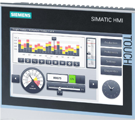






- Industrial display
-
Industrial Products
- DC Servo Drive
- AC Servo Drive
- Industrial board
- Siemens
- Switch Sensor
- Proximity Switch
- Temperature Controller
- Protection Relay
- Fiber Optic Sensor
- Encoder
- Fan
- other
- Heidelberg
- MITSUBISHI
- FANUC
- Siemens adapter
- Fujitsu connector
- Motherboard
- Board
- Contactor
- Circuit
- OMRON
- Relay
- Motor Driver
- power supply
- Cable
- Transformer
- HMI Touch Glass
-
HMI Full Machine Whole unit
- OMRON HMI Touch Panel
- Siemens HMI Touch Panel
- Mitsubishi HMI Touch Panel
- Allen-Bradley automation HMI Touch Panel
- DELTA HMI Touch Panel
- Proface HMI Touch Panel
- KINCO DELTA HMI Touch Panel
- HITECH HMI Touch Panel
- WEINTEK HMI Touch Panel
- TECVIEW HMI Touch Panel
- WEINVIEW HMI Touch Panel
- PANASONIC HMI Touch Panel
- KYOCERA HMI Touch Panel
- SCHNEIDER HMI Touch Panel
- Module
- lcd inverter
- Membrane Keypad Switch
- Zhiyan Customized Touch Screens
- Frequency Inverter
- Servo Motor
- PLC
In the intricate ecosystem of industrial and embedded display solutions, specific panel models become the unsung heroes powering critical applications where reliability, longevity, and performance under demanding conditions are non-negotiable. The G150XAN02.2, a 15-inch a-Si TFT-LCD LCM module developed by AUO (AU Optronics), stands as a prime example of such a component. Designed not for consumer glamour but for professional endurance, this XGA-resolution panel is engineered to meet the rigorous demands of sectors ranging from industrial automation and medical instrumentation to point-of-sale and human-machine interfaces.

This article delves into a comprehensive technical and application-focused analysis of the AUO G150XAN02.2 display module. We will move beyond basic datasheet specifications to explore the engineering rationale behind its design, the practical implications of its key features, and its strategic positioning within the competitive landscape of industrial displays. Our aim is to provide engineers, procurement specialists, and system integrators with a deep understanding of where and why this specific LCM excels, and what considerations are paramount for its successful integration and long-term deployment.
Core Architecture and Technological Foundation
At its heart, the G150XAN02.2 is built on amorphous Silicon (a-Si) Thin-Film Transistor (TFT) technology, a mature and exceptionally robust process. This foundation is key to its value proposition. Unlike newer but sometimes less stable technologies for niche markets, a-Si TFT offers proven long-term reliability, excellent uniformity, and lower manufacturing costs for standard-size panels like this 15-inch diagonal. The module is an LCM (LCD Module), meaning it integrates the LCD glass, driver ICs, backlight unit, and interface connectors into a single, ready-to-use unit.
The native resolution is 1024 (RGB) x 768 pixels, adhering to the XGA (Extended Graphics Array) standard. This 4:3 aspect ratio is a significant characteristic. In an era dominated by widescreens, the "square" format remains highly functional for vertical market applications where displaying multiple lines of data, legacy software interfaces, or detailed control panels is essential. The RGB stripe arrangement ensures accurate color reproduction, suitable for both monochrome and color information display in professional environments.


Decoding Key Performance Specifications
The performance parameters of the G150XAN02.2 are tailored for consistent operation in controlled and industrial environments. Its brightness, typically around 300 nits or higher depending on backlight option, is sufficient for indoor use under normal office or factory lighting without causing excessive power draw or heat. The contrast ratio ensures text and graphics are sharp and legible.
Perhaps more critical are its viewing angles. With specifications like 80/80/80/80 (Left/Right/Up/Down) or better, it guarantees that the display content remains visible without major color inversion or contrast loss from various vantage points, a crucial feature for panels mounted in cabinets or viewed by multiple operators. The color gamut coverage, often around 45-50% NTSC, is adequate for its intended use-cases where color fidelity is important but not to the extreme levels required for graphic design.
Interface and Signal Integration
Integration is streamlined through standard LVDS (Low-Voltage Differential Signaling) interfaces. LVDS remains the workhorse for industrial displays due to its robustness, noise immunity, and ability to transmit high-speed data over longer cable lengths compared to older TTL interfaces. The G150XAN02.2 typically supports single-channel or dual-channel LVDS, compatible with a wide range of readily available controller boards and embedded system GPUs.
This compatibility reduces development time and complexity for system integrators. Power supply requirements are straightforward, usually involving a single +3.3V or +5V input for the logic and a separate, higher voltage input for the CCFL or LED backlight inverter. Understanding these interface requirements is the first step in designing the power circuitry and selecting the correct signal source for a seamless integration.
Backlight Systems and Longevity Considerations
The backlight system is a critical determinant of the module's lifespan and visual performance. Earlier versions of this panel likely used CCFL (Cold Cathode Fluorescent Lamp) backlights, while newer iterations or custom options may employ LED (Light Emitting Diode) arrays. Each technology has implications.
CCFL backlights can offer excellent uniformity and a specific white point but may have a shorter half-life (e.g., 30,000 to 50,000 hours) and require a high-voltage inverter. LED backlights are increasingly favored for their longer lifetime (often 50,000 hours or more), lower power consumption, mercury-free design, and ability to sustain brightness over time with less degradation. When specifying or replacing this module, the backlight type is a key factor for maintenance planning and total cost of ownership.
Application-Specific Advantages and Use Cases
The true value of the G150XAN02.2 is realized in its targeted applications. In industrial automation, its 4:3 format is ideal for SCADA systems, machine control HMI, and test equipment displays, where information density is paramount. The robust construction resists vibration, dust, and fluctuating temperatures common in factory settings.
In the medical field, it may be found in diagnostic equipment, patient monitoring systems, and laboratory instruments, where clarity and reliability are essential. For point-of-sale (POS) and kiosk systems, the panel provides a durable and cost-effective display solution for transactional interfaces. Its standardization means easy replacement and long-term supply chain availability, a critical factor for products with multi-year lifecycles.
Competitive Landscape and Lifecycle Management
While the G150XAN02.2 is a strong contender, it exists within a competitive market that includes similar panels from manufacturers like Innolux, BOE, and LG Display. Its advantages often lie in AUO's specific quality consistency, potential for custom modifications (like bonded touchscreens), and the support ecosystem.
A paramount consideration for engineers is lifecycle management. As an industrial-grade component, its production lifespan is typically longer than consumer panels. However, planning for end-of-life is crucial. Strategies include securing lifetime buys, identifying approved alternate models from AUO (with careful cross-compatibility checks), or working with distributors specializing in long-term supply of industrial components. This foresight mitigates the risk of production halts for the end-user's equipment.
FAQs
Q: What is the aspect ratio of the G150XAN02.2?A: It has a 4:3 aspect ratio, standard for XGA resolution.
Q: What is the primary interface for this display?A: It uses an LVDS (Low-Voltage Differential Signaling) interface for robust data transmission.
Q: Is this a touchscreen display?A: The base G150XAN02.2 is an LCD module (LCM). Touchscreens (resistive, capacitive) are typically added as an optional bonded component.
Q: What type of backlight does it use?A: It can vary; models may use CCFL or LED backlights. LED is more common in newer production for longer life.
Q: What are typical applications for this panel?A: Industrial HMIs, medical devices, POS systems, kiosks, and instrumentation.
Q: What is the resolution in pixels?A: The resolution is 1024 (horizontal) x 768 (vertical) pixels.
Q: Who manufactures the G150XAN02.2?A: It is manufactured by AU Optronics (AUO), a leading display panel maker.
Q: Why choose a 4:3 panel over a widescreen?A: The 4:3 format offers more vertical space for data-dense applications like control panels and legacy software.
Q: How do I ensure a long-term supply for my product?A: Engage with authorized distributors for lifecycle planning, consider lifetime buys, or identify AUO's recommended successor models early.
Q: What does "a-Si TFT-LCD" mean?A: It stands for amorphous Silicon Thin-Film Transistor Liquid Crystal Display, a reliable and mature display technology.
Conclusion
The AUO G150XAN02.2 exemplifies the engineered reliability required in professional display markets. Its strength lies not in cutting-edge specs, but in a balanced, proven, and application-optimized design. The combination of robust a-Si TFT technology, the functional XGA 4:3 format, standard industrial interfaces, and a build quality suited for challenging environments makes it a dependable workhorse.
For system integrators, the key to leveraging this module successfully lies in a deep understanding of its integration requirements, a strategic approach to backlight and lifecycle management, and a clear alignment with application needs where durability and clarity trump fleeting consumer trends. In the world of industrial displays, components like the G150XAN02.2 remain foundational, quietly enabling the interfaces upon which critical processes and equipment depend.





