


















- Industrie-LCD-Display
-
Industrial Products
- DC Servo Drive
- AC Servo Drive
- PCB
- Siemens
- Switch Sensor
- Näherungsschalter
- Temperaturregler
- Schutzrelais
- Fiber Optic Sensor
- Encoder
- Fan
- other
- Heidelberg
- MITSUBISHI
- FANUC
- Siemens adapter
- Fujitsu connector
- Der Aufsichtsrat
- Board
- Contactor
- Circuit
- Omron
- Relais.
- Motortreiber
- power supply
- Cable
- Transformator
- HMI Touch-Glas
-
HMI-Vollautomat Ganze Einheit
- OMRON HMI Touch Panel
- Siemens HMI Touch Panel
- Mitsubishi HMI Touch Panel
- Allen-Bradley Automatisierung HMI Touch
- DELTA HMI Touch Panel
- EVIEW DELTA HMI Touch Panel
- KINCO DELTA HMI Touch Panel
- HITECH HMI Touch Panel
- WEINTECK HMI Touch Panel
- TECVIEW HMI Touch Panel
- WEINVIEW HMI Touch Panel
- PANASONIC HMI Touch Panel
- KYOCERA HMI Touch Panel
- SCHNEIDER HMI Touch Panel
- Module
- LCD Wechselrichter
- Membran Tastenfeld Schalter
- Winni Touch Screens
- Frequenzumrichter
- Servo Motor
- PLC
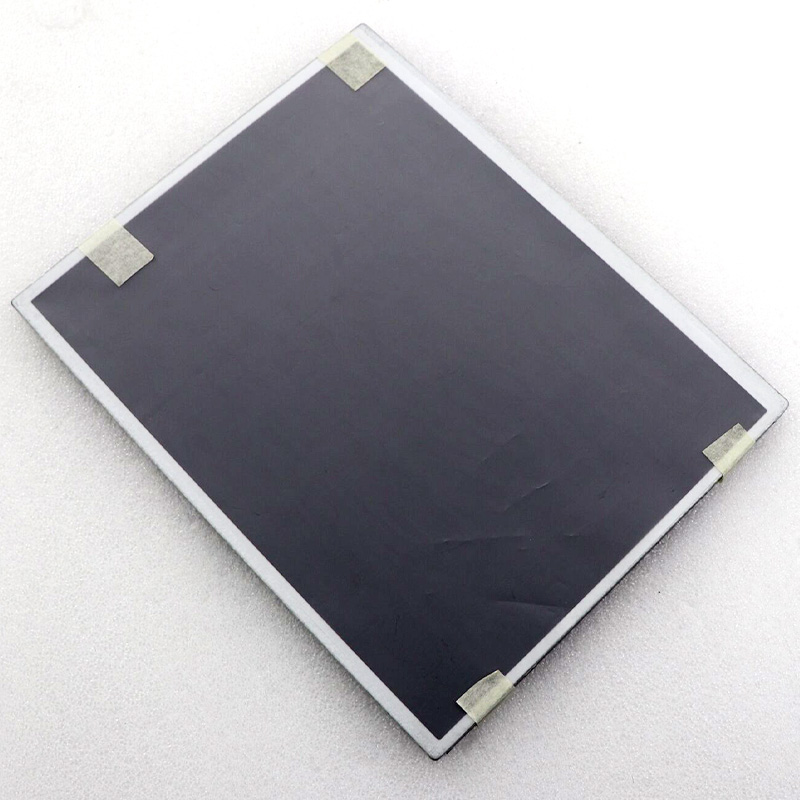
In the demanding world of industrial automation, medical instrumentation, and human-machine interfaces, the display panel is far more than a simple output device—it is the critical nexus of information exchange. At the heart of many robust systems lies a component like the 12.1-inch G121S1-L01 industrial LCD module. This specific panel, with its 800 x 600 SVGA resolution, represents a carefully engineered solution designed to thrive where commercial-grade screens would falter.

This article delves into a comprehensive analysis of the G121S1-L01 module. We will move beyond basic specifications to explore the engineering philosophy behind its design, its core technological strengths, and the specific challenges it is built to overcome. By understanding its integration requirements, application landscapes, and selection criteria, engineers, system integrators, and procurement specialists can make informed decisions, ensuring their projects benefit from reliable, long-term visual performance in the most unforgiving environments.
Engineering for Adversity: The Industrial Design Philosophy
The G121S1-L01 is fundamentally distinguished from consumer displays by its industrial design DNA. This philosophy prioritizes reliability, longevity, and stability over slim form factors or ultra-high refresh rates. The module is built to withstand constant operation, often measured in tens of thousands of hours. Its construction typically involves reinforced structures and high-grade materials resistant to vibration, shock, and physical stress common in factory settings.
Furthermore, industrial modules like this one are designed for extended product lifecycles. In consumer electronics, display models change yearly; an industrial panel must remain available for a decade or more to support the long service life of the machinery it's embedded within. This commitment to durability and supply continuity is a cornerstone of its value proposition, ensuring that a production line or medical device does not become obsolete due to a discontinued display component.
Core Specifications and Technological Breakdown
At its core, the G121S1-L01 features a 12.1-inch diagonal TFT LCD with an 800 x 600 pixel array. This SVGA resolution offers a balanced compromise between detail clarity and system processing load, making it ideal for displaying structured data, control interfaces, and diagnostic readouts. The module commonly employs LED backlighting, providing bright, even illumination with better energy efficiency and longevity than older CCFL technology.
A critical aspect is its wide operating temperature range, often spanning from -20°C or lower to 70°C or higher. This is enabled by specialized liquid crystal compounds and circuit designs that prevent sluggish response or image retention in extreme cold and mitigate heat-induced degradation. The interface is typically a standard LVDS (Low-Voltage Differential Signaling) channel, ensuring robust, low-noise data transmission from the system's controller board to the panel itself, which is essential for maintaining signal integrity in electrically noisy industrial environments.
The Resilience Factor: Withstanding Harsh Environments
The true test of an industrial module occurs in the field. The G121S1-L01 is engineered for resilience against a triad of common industrial adversaries: contamination, temperature fluctuation, and electrical interference. Many versions feature an optical bonding option, where the LCD cell is laminated directly to the cover glass. This process eliminates the air gap, preventing internal condensation, reducing surface reflections, and enhancing durability against impact. It also makes the display easier to clean, a vital feature for medical or food-grade applications.
Resistance to electromagnetic interference (EMI) is baked into the design through shielded connectors, careful PCB layout, and compliant components. This prevents the display from both emitting disruptive signals and succumbing to noise from powerful motors, relays, or wireless equipment nearby. This holistic approach to environmental hardening ensures consistent performance whether installed on a factory floor, inside a vehicle, or in an outdoor kiosk with wide temperature swings.
Integration and Interface Considerations
Successfully deploying the G121S1-L01 requires careful attention to integration. While the LVDS interface is a industry standard, designers must ensure their system's timing controller (TCON) or FPGA output matches the panel's specific signal timing requirements, including clock frequency and data mapping. Power supply design is equally crucial; a clean, stable voltage rail is necessary to avoid visual artifacts and ensure backlight longevity.
Mechanical integration involves accounting for the module's exact bezel dimensions, mounting hole positions, and connector orientation. Furthermore, the choice of a compatible touch solution—such as a resistive or projected capacitive overlay—must be considered from the outset, as it affects the optical stack and required controller hardware. Proper thermal management, even with its wide operating range, through passive heatsinking or adequate airflow, will maximize the module's operational life.
Application Landscape: Where Reliability is Non-Negotiable
The application spectrum for the G121S1-L01 is defined by sectors where failure is not an option. In industrial automation, it serves as the primary interface for PLCs, CNC machine controls, and robotic cell operators, displaying complex schematics and real-time parameters. The medical device field utilizes it in patient monitors, diagnostic equipment, and surgical tools, where clarity and 24/7 reliability are critical for patient care.
Transportation and logistics leverage its ruggedness in fleet management systems, vehicle dashboards, and warehouse control terminals. Additionally, it finds a home in point-of-sale systems in hospitality, kiosks for public information, and test and measurement equipment. In each case, the module's value lies in its ability to deliver uninterrupted service, maintaining clear communication between the machine and the human operator over many years.
Selecting the Right Module: A Buyer's Guide
Choosing an industrial display like the G121S1-L01 involves more than matching size and resolution. First, validate the environmental specs against your application's worst-case temperature, humidity, and vibration scenarios. Second, confirm the optical specifications: brightness (nits) for high-ambient-light viewing, contrast ratio for image depth, and viewing angles for off-axis readability.
Third, scrutinize the supply chain and support. Reputable suppliers offer long-term availability guarantees, comprehensive datasheets, and technical support. Fourth, consider value-added options like optical bonding, specific touch technologies, or custom cover glass. Finally, evaluate the total cost of ownership, which includes not just the unit price, but the reduced downtime, maintenance, and replacement costs afforded by a truly industrial-grade component.
FAQs: Industrial LCD Module G121S1-L01
Q1: What is the primary advantage of the G121S1-L01 over a consumer 12.1-inch panel?A1: Its industrial-grade durability, wide operating temperature range, long-term supply availability, and design for 24/7 operation in harsh environments.
Q2: Is the 800x600 resolution sufficient for modern applications?A2: Yes, for industrial HMI, medical readouts, and control interfaces where legibility and system efficiency are prioritized over multimedia content.
Q3: What does "optical bonding" mean and why is it important?A3: It laminates the LCD to the cover glass, improving durability, readability in bright light, and resistance to condensation and contamination.
Q4: What is the typical interface for this module?A4: It typically uses an LVDS (Low-Voltage Differential Signaling) interface for robust and reliable data transmission.
Q5: Can it be used outdoors?A5: With a high-brightness option (e.g., 1000+ nits) and proper environmental sealing, it can be suitable for outdoor kiosks or vehicles.
Q6: What is the expected lifespan of this industrial LCD module?A6: Industrial modules are often rated for 50,000 hours or more of continuous operation, far exceeding consumer displays.
Q7: Does it support touch functionality?A7: The core LCD module may not, but it is commonly designed to be compatible with add-on resistive or projected capacitive touch screens.
Q8: How critical is power supply quality during integration?A8: Extremely critical. A clean, stable power supply is essential to prevent image artifacts and ensure the long-term health of the backlight and electronics.
Q9: Where can I find detailed technical specifications?A9: A comprehensive datasheet should be obtained from an authorized distributor or the manufacturer, detailing electrical, mechanical, and optical parameters.
Q10: Is this module suitable for medical certification (e.g., FDA/CE)?A10: The module itself is a component; final medical device certification depends on the entire system's design and testing. However, its reliability makes it a common choice for such applications.
Conclusion
The 12.1-inch G121S1-L01 industrial LCD module exemplifies the specialized engineering required for technology to perform beyond the controlled confines of an office or home. Its value is not defined by pixel density alone, but by its proven resilience, unwavering reliability, and seamless integration into systems where performance is critical. From factory floors to hospital wards, this display panel acts as a dependable portal for human-machine interaction.
Selecting such a component is a strategic decision that impacts product longevity, user satisfaction, and total operational cost. By prioritizing environmental hardening, interface stability, and long-term support, the G121S1-L01 moves from being a simple commodity to a foundational element of robust system design. In an increasingly automated world, the clarity and durability of this industrial visual interface remain indispensable.





