













































- Industrial display
-
Industrial Products
- DC Servo Drive
- AC Servo Drive
- Industrial board
- Siemens
- Switch Sensor
- Proximity Switch
- Temperature Controller
- Protection Relay
- Fiber Optic Sensor
- Encoder
- Fan
- other
- Heidelberg
- MITSUBISHI
- FANUC
- Siemens adapter
- Fujitsu connector
- Motherboard
- Board
- Contactor
- Circuit
- OMRON
- Relay
- Motor Driver
- power supply
- Cable
- Transformer
- HMI Touch Glass
-
HMI Full Machine Whole unit
- OMRON HMI Touch Panel
- Siemens HMI Touch Panel
- Mitsubishi HMI Touch Panel
- Allen-Bradley automation HMI Touch Panel
- DELTA HMI Touch Panel
- Proface HMI Touch Panel
- KINCO DELTA HMI Touch Panel
- HITECH HMI Touch Panel
- WEINTEK HMI Touch Panel
- TECVIEW HMI Touch Panel
- WEINVIEW HMI Touch Panel
- PANASONIC HMI Touch Panel
- KYOCERA HMI Touch Panel
- SCHNEIDER HMI Touch Panel
- Module
- lcd inverter
- Membrane Keypad Switch
- Zhiyan Customized Touch Screens
- Frequency Inverter
- Servo Motor
- PLC
In the intricate world of electronic components, the display module often serves as the critical bridge between a device's internal logic and its human user. Among the myriad of options available to engineers and product developers, the EL160.120.39 TFT LCD Display Module stands out as a specialized component designed for demanding applications. This alphanumeric identifier isn't just a model number; it encapsulates a specific set of physical dimensions, technological capabilities, and performance parameters tailored for integration into industrial, medical, or instrumentation equipment.
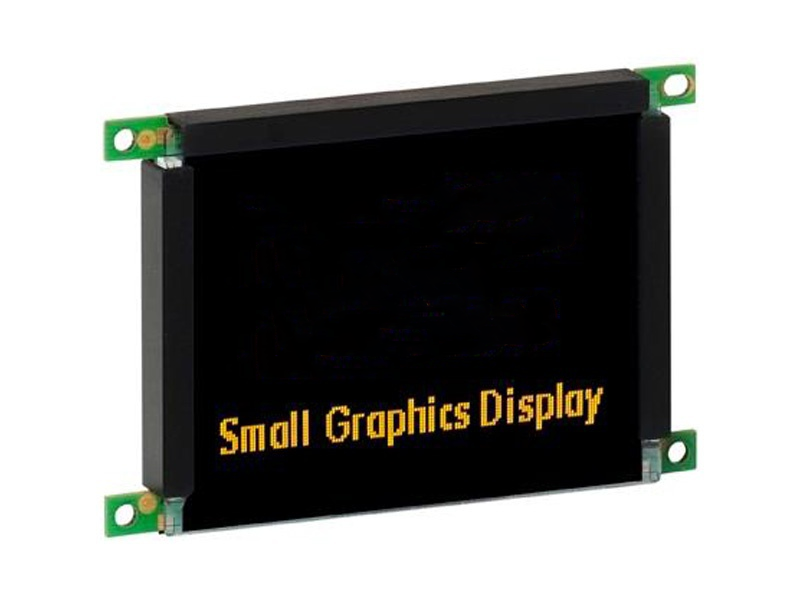
This article delves into a comprehensive exploration of the EL160.120.39 module. We will move beyond basic datasheet specifications to understand its architectural significance, the advantages it offers in real-world scenarios, and the key considerations for its successful implementation. Our journey will cover its core technical anatomy, the benefits of its likely TFT and interface technology, its ideal application ecosystems, and the crucial design factors that ensure optimal performance and longevity. By the end, you will have a nuanced understanding of where and why this specific module becomes the display of choice.
Decoding the Nomenclature: Anatomy of EL160.120.39
The model name EL160.120.39 is a concise technical descriptor. Typically, in display module naming conventions, "EL" may denote the manufacturer series or product line. The numerical sequence is most revealing: 160.120.39 almost certainly refers to the module's physical dimensions in millimeters. This suggests a compact, rectangular form factor approximately 160mm in width, 120mm in height, and 39mm in depth, inclusive of the driving circuitry and backlight assembly.
This dimensional clarity is the first critical step for engineers, as it dictates the mechanical design of the end product's enclosure. The "TFT LCD" portion confirms the core technology: a Thin-Film Transistor Liquid Crystal Display. Unlike passive or segment displays, an active-matrix TFT provides superior control over each individual pixel, resulting in the capability for high-resolution graphics, sharp text, and smooth imagery. Understanding this nomenclature is foundational to assessing the module's fit for a project.
Core Technical Specifications and Interface Technology
While exact specifications vary by manufacturer, a module like the EL160.120.39 typically centers around a 16:9 or 4:3 aspect ratio screen with a diagonal size deducible from its dimensions (often around 7 to 8 inches). Key specs include its native resolution (e.g., 800x480, 1024x768 pixels), which defines its sharpness, and its luminance, measured in nits, crucial for readability in various lighting conditions.
The interface is the communication lifeline. This module likely employs a LVDS (Low-Voltage Differential Signaling) or parallel RGB interface. LVDS is particularly common for its robustness, noise immunity, and ability to support higher resolutions over longer cable runs within the device. The integration of a controller board (the "module" aspect) means designers do not need to manage the complex timing controllers for the LCD panel itself, significantly simplifying integration. Power requirements, operating temperature range, and viewing angles are other pivotal specifications derived from its intended industrial-grade use.
Advantages in Demanding Application Environments
The EL160.120.39 is engineered for reliability beyond consumer-grade displays. Its extended operating temperature range (often from -20°C to 70°C or wider) ensures functionality in harsh environments, from factory floors to outdoor installations. The use of high-brightness LEDs for backlighting, potentially with dimming control, guarantees visibility under direct sunlight or in brightly lit medical settings.
Furthermore, the mechanical construction is designed for resilience. It often features a robust metal frame for structural integrity and electromagnetic shielding. The choice of a durable surface glass, possibly with optical bonding techniques, reduces glare, enhances contrast, and protects the LCD layers from condensation, dust, and physical shock. These features collectively minimize downtime and maintenance, a critical factor in industrial and commercial applications where reliability is paramount.
Ideal Ecosystems: From Industrial HMIs to Medical Devices
The specific attributes of the EL160.120.39 module make it a preferred component in several high-stakes verticals. In Industrial Automation, it serves as the core of Human-Machine Interfaces (HMIs) for controlling machinery, monitoring PLCs, and visualizing SCADA system data. Its readability and durability are essential here.
In the Medical Device field, it can be found in patient monitoring systems, diagnostic equipment, and surgical tools, where clarity of information and the ability to withstand frequent cleaning are mandatory. Other key application areas include Transportation (in-vehicle infotainment or control systems), Point-of-Sale (POS) terminals, and Test & Measurement instrumentation. In each case, the module provides a reliable, high-performance visual interface that forms an integral part of the larger system's functionality and user experience.
Critical Integration and Design Considerations
Successfully integrating the EL160.120.39 requires careful planning. Power supply design must be clean and stable, as noise can introduce visual artifacts. The interface matching between the host processor's video output and the module's input (LVDS/RGB) is fundamental, often requiring a specific display driver IC or FPGA configuration.
Mechanically, designers must account for heat dissipation from the backlight and drivers, ensuring adequate ventilation in the end-product enclosure. The electromagnetic compatibility (EMC) of the entire system must be considered, as the display can be both a source and victim of interference. Furthermore, selecting the correct cable and connector type, with proper strain relief, is vital for long-term reliability, especially in applications subject to vibration or movement.
Enhancing Longevity and Display Performance
To maximize the operational life and performance of the display module, several proactive strategies are employed. Optical Bonding—laminating the cover glass directly to the LCD cell with a resin—eliminates an air gap, reducing internal reflection, improving contrast in bright light, and providing additional structural support.
Managing the backlight's thermal and electrical stress is crucial. Implementing constant-current drivers and pulse-width modulation (PWM) for dimming, rather than voltage-controlled dimming, promotes longer LED life and stable color temperature. For software, implementing pixel shifting and screen timeout features can mitigate the risk of image burn-in on static screens. These considerations transform a standard integration into an optimized, durable solution.
Frequently Asked Questions (FAQs)
1. What does "EL160.120.39" signify?It primarily denotes the module's physical dimensions: approximately 160mm wide, 120mm high, and 39mm deep.
2. What is the likely screen size?Based on its dimensions, it typically houses a TFT LCD with a diagonal measurement around 7 to 8 inches.
3. What interface does it use?It commonly uses an LVDS or parallel RGB interface for high-speed, reliable data transmission from the host controller.
4. Is this an industrial-grade module?Yes, its design, wide temperature range, and robust construction are hallmarks of an industrial-grade component.
5. What are its main application areas?Industrial HMIs, medical devices, transportation systems, POS terminals, and test equipment.
6. Why is optical bonding important?It improves readability in bright light, enhances durability, and protects against condensation and dust ingress.
7. How do I ensure a long backlight life?Use constant-current drivers, implement PWM dimming, and ensure proper thermal management in your enclosure design.
8. What is the key integration challenge?Ensuring compatible video signal interfacing (e.g., LVDS level matching) and managing power supply noise and EMC.
9. Can it display full-color graphics?Yes, as a TFT module, it is capable of displaying high-resolution full-color graphics, icons, and text.
10. Where do I find the exact specifications?You must obtain the official datasheet from the manufacturer or authorized distributor of the EL160.120.39 module.
Conclusion
The EL160.120.39 TFT LCD Display Module represents far more than the sum of its pixels and dimensions. It is a purpose-built industrial component that balances visual performance with environmental robustness. From its informative naming convention to its underlying LVDS interface and hardened mechanical design, every aspect is tailored for integration into systems where failure is not an option.
For engineers and product managers, selecting this module is a strategic decision that impacts the device's usability, reliability, and total cost of ownership. By understanding its technical foundations, ideal applications, and the critical nuances of integration and longevity enhancement, development teams can fully leverage its capabilities. In the landscape of electronic interfaces, the EL160.120.39 stands as a reliable and high-performance conduit for information, enabling clearer communication between complex machines and their human operators.





