













































- Industrie-LCD-Display
-
Industrial Products
- DC Servo Drive
- AC Servo Drive
- PCB
- Siemens
- Switch Sensor
- Näherungsschalter
- Temperaturregler
- Schutzrelais
- Fiber Optic Sensor
- Encoder
- Fan
- other
- Heidelberg
- MITSUBISHI
- FANUC
- Siemens adapter
- Fujitsu connector
- Der Aufsichtsrat
- Board
- Contactor
- Circuit
- Omron
- Relais.
- Motortreiber
- power supply
- Cable
- Transformator
- HMI Touch-Glas
-
HMI-Vollautomat Ganze Einheit
- OMRON HMI Touch Panel
- Siemens HMI Touch Panel
- Mitsubishi HMI Touch Panel
- Allen-Bradley Automatisierung HMI Touch
- DELTA HMI Touch Panel
- EVIEW DELTA HMI Touch Panel
- KINCO DELTA HMI Touch Panel
- HITECH HMI Touch Panel
- WEINTECK HMI Touch Panel
- TECVIEW HMI Touch Panel
- WEINVIEW HMI Touch Panel
- PANASONIC HMI Touch Panel
- KYOCERA HMI Touch Panel
- SCHNEIDER HMI Touch Panel
- Module
- LCD Wechselrichter
- Membran Tastenfeld Schalter
- Winni Touch Screens
- Frequenzumrichter
- Servo Motor
- PLC
In the intricate world of industrial and embedded display solutions, the selection of a display module is a critical decision that impacts performance, reliability, and total cost of ownership. At the heart of many robust human-machine interfaces (HMIs), medical devices, and point-of-sale systems lies a specific component: the AT104XH11 Toshiba 10.4-inch a-Si TFT-LCD LCM. This module represents more than just a screen; it is a carefully engineered convergence of mature technology and proven durability.
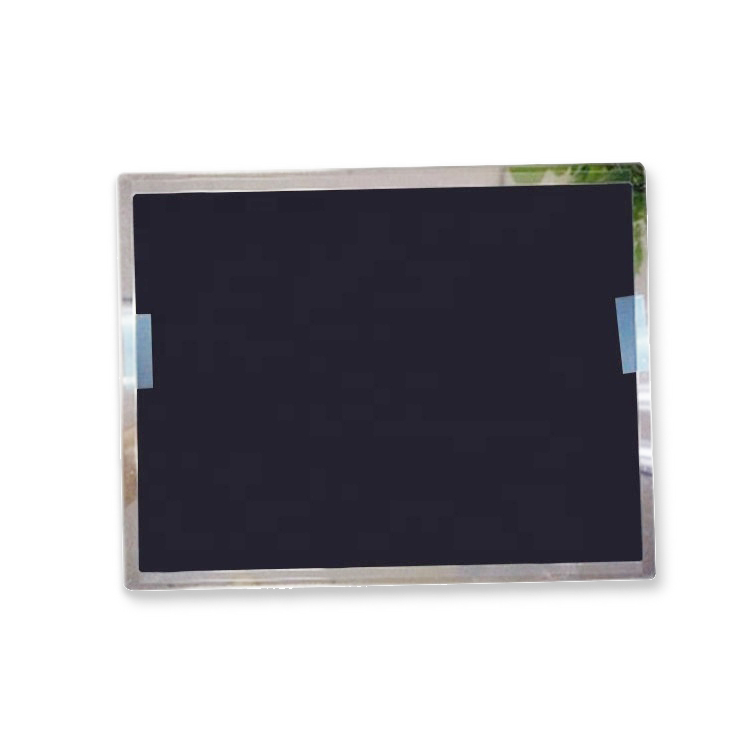
This article delves into a comprehensive analysis of the AT104XH11, moving beyond basic datasheet specifications. We will explore its underlying amorphous Silicon (a-Si) TFT technology, dissect its key performance characteristics, and examine the unique value proposition it offers in a market increasingly focused on newer alternatives. Our goal is to provide engineers, procurement specialists, and product developers with the depth of understanding needed to evaluate whether this longstanding workhorse is the optimal visual interface for their demanding applications.
Deconstructing the Technology: The Enduring Role of a-Si TFT
The foundation of the AT104XH11 is Amorphous Silicon Thin-Film Transistor (a-Si TFT) technology. While often viewed as a mature or legacy technology compared to LTPS or IGZO, a-Si remains a cornerstone for industrial displays due to its exceptional balance of cost, reliability, and manufacturing scalability. The "amorphous" structure refers to the non-crystalline form of silicon used for the transistors that control each pixel.
This maturity translates into significant advantages. The manufacturing processes for a-Si panels are highly stabilized, leading to excellent production yields and consistent quality. For applications like the AT104XH11, which prioritizes long-term operational stability over ultra-high pixel densities or extreme refresh rates, a-Si TFT provides a robust and cost-effective backbone. Its electrical characteristics are well-understood, allowing for dependable driver integration and predictable performance over a wide temperature range, a non-negotiable requirement in industrial environments.
Detailed Specifications and Performance Profile
The AT104XH11 features a 10.4-inch diagonal display with a standard XGA resolution of 1024 x 768 pixels. This 4:3 aspect ratio, once ubiquitous, is now a defining characteristic for legacy system upgrades or applications where screen real estate for data presentation is optimized vertically. The module typically offers a brightness level of 500 nits or higher, ensuring readability in various indoor lighting conditions.
Critical performance parameters include a wide operating temperature range, often from -20°C to 70°C, which is essential for uncontrolled environments. The contrast ratio and color gamut are adequate for most industrial HMI and diagnostic display purposes, though not designed for premium multimedia consumption. The interface is commonly LVDS, a reliable and noise-resistant standard for transmitting high-speed video signals. Understanding these specs in context reveals a module built for clarity, resilience, and seamless integration into existing electronic architectures.
The LCM Advantage: Integration and Reliability
The designation LCM (LCD Module) is crucial. Unlike a bare LCD panel, the AT104XH11 is a fully integrated unit that includes the LCD glass, driver ICs, backlight unit (LED array, light guide, and diffusers), and often a metal or plastic structural frame. This turnkey approach dramatically reduces engineering overhead for OEMs.
Integrating the backlight is particularly significant. The LED backlight system is calibrated for uniform illumination across the entire screen, a factor that bare panels leave for the system integrator to solve. The LCM's design also manages heat dissipation from the backlight and controllers, enhancing long-term reliability. By sourcing the AT104XH11 as an LCM, developers mitigate risks associated with component compatibility, optical performance tuning, and mechanical assembly, accelerating time-to-market for the end product.
Target Applications and Use Case Analysis
The AT104XH11 finds its niche in applications where dependability trumps cutting-edge specs. Its primary domains include:
Industrial Automation: As the interface for PLCs, CNC machine controls, and factory HMIs, where 24/7 operation and resistance to electrical noise are paramount.
Medical Equipment: In patient monitoring devices, diagnostic instruments, and bedside terminals, where consistent, flicker-free performance is critical.
Point-of-Sale & Kiosks: For retail terminals, self-service kiosks, and hospitality systems requiring a durable display with good viewing angles for customers.
Legacy System Modernization: As a direct form-fit replacement for aging 10.4" XGA displays in transportation, military, and utility systems, extending product lifecycles.
Comparative Context: Positioning in the Modern Display Landscape
In a market buzzing with OLED, high-refresh-rate, and ultra-HD displays, the AT104XH11 occupies a distinct strategic position. Its value is not in competing on sheer performance metrics but in offering a proven, low-risk solution. Compared to newer technologies, a-Si TFT LCMs like this one generally present a lower total cost, especially in volume.
Furthermore, their long lifecycle and stable supply chain are vital for industries with lengthy product development and certification phases (e.g., medical, industrial). While a newer panel might offer slimmer bezels or lower power consumption, the AT104XH11 provides something equally valuable: predictability. It represents a known entity with extensive field history, reducing project uncertainty.
Strategic Sourcing and Lifecycle Considerations
Procuring a component like the AT104XH11 requires a strategic view. As a part from a major manufacturer like Toshiba, concerns regarding long-term availability are valid. Engaging with authorized distributors or specialized display solution providers is essential to secure reliable stock and access to technical support.
Proactive lifecycle management is key. For new designs, evaluating potential future-proof alternatives is prudent. However, for ongoing production or legacy support, the strategy often involves securing lifetime buys or identifying qualified second-source LCMs with identical form, fit, and function. Understanding the module's mechanical dimensions, interface pinout, and power sequence is critical for a successful sourcing and replacement strategy, ensuring continuity for products that may remain in the field for a decade or more.
FAQs: AT104XH11 Toshiba 10.4-inch LCD Module
Q1: What does "a-Si TFT-LCD LCM" stand for?A1: It stands for Amorphous Silicon Thin-Film Transistor Liquid Crystal Display Module, describing the panel technology and its fully integrated form.
Q2: What is the screen resolution and aspect ratio?A2: It has an XGA resolution of 1024 x 768 pixels with a 4:3 aspect ratio.
Q3: Is this module suitable for outdoor use?A3: With a typical brightness of ~500 nits, it's suitable for bright indoor use. Outdoor readability in direct sunlight would require a higher-brightness variant or a protective hood.
Q4: What is the most common interface for this LCM?A4: It typically uses an LVDS (Low-Voltage Differential Signaling) interface for robust data transmission.
Q5: Why choose an LCM over a bare LCD panel?A5: An LCM includes the backlight and drivers, reducing design complexity, ensuring optical performance, and speeding up integration.
Q6: What are the typical operating and storage temperature ranges?A6: Operating range is often -20°C to 70°C, with a wider storage range (e.g., -30°C to 80°C). Always verify the specific datasheet.
Q7: Is the AT104XH11 still in production?A7: It may be in a mature or long-term supply phase. Contact authorized distributors or Toshiba's display division for current status.
Q8: Can it be used as a direct replacement for an old 10.4" display?A8: Yes, if the mechanical dimensions, mounting holes, interface, and power requirements match the existing system. Pinout compatibility is crucial.
Q9: What industries commonly use this display?A9: Industrial automation, medical devices, point-of-sale systems, and kiosks are primary industries.
Q10: What are the main alternatives to a-Si TFT for this size?A10: Alternatives include LTPS TFT (for higher resolution/efficiency) or newer IGZO panels, though often at a higher cost and potentially different supply stability.
Conclusion
The Toshiba AT104XH11 10.4-inch a-Si TFT-LCD Module exemplifies the enduring value of mature, well-executed technology in specialized markets. Its significance lies not in pushing the boundaries of display specs, but in delivering unwavering reliability, seamless integration, and cost-effective performance for mission-critical applications. In the demanding realms of industrial control, medical diagnostics, and transactional systems, these attributes are often more valuable than the latest pixel density benchmark.
For engineers and product managers, understanding this module's full profile—from its a-Si TFT foundation to its LCM integration benefits and strategic sourcing landscape—enables informed decision-making. It serves as a reminder that in the world of embedded technology, the optimal component is not always the newest, but the one that most reliably and efficiently bridges the gap between human and machine for the long term.





