




















- Industrial display
-
Industrial Products
- DC Servo Drive
- AC Servo Drive
- Industrial board
- Siemens
- Switch Sensor
- Proximity Switch
- Temperature Controller
- Protection Relay
- Fiber Optic Sensor
- Encoder
- Fan
- other
- Heidelberg
- MITSUBISHI
- FANUC
- Siemens adapter
- Fujitsu connector
- Motherboard
- Board
- Contactor
- Circuit
- OMRON
- Relay
- Motor Driver
- power supply
- Cable
- Transformer
- HMI Touch Glass
-
HMI Full Machine Whole unit
- OMRON HMI Touch Panel
- Siemens HMI Touch Panel
- Mitsubishi HMI Touch Panel
- Allen-Bradley automation HMI Touch Panel
- DELTA HMI Touch Panel
- Proface HMI Touch Panel
- KINCO DELTA HMI Touch Panel
- HITECH HMI Touch Panel
- WEINTEK HMI Touch Panel
- TECVIEW HMI Touch Panel
- WEINVIEW HMI Touch Panel
- PANASONIC HMI Touch Panel
- KYOCERA HMI Touch Panel
- SCHNEIDER HMI Touch Panel
- Module
- lcd inverter
- Membrane Keypad Switch
- Zhiyan Customized Touch Screens
- Frequency Inverter
- Servo Motor
- PLC
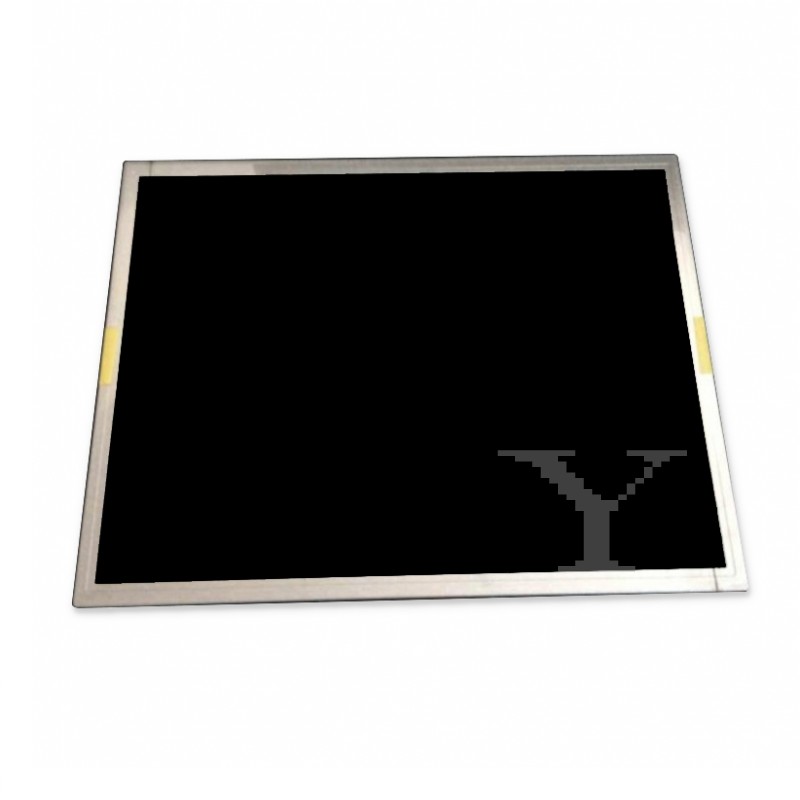
In the intricate ecosystem of industrial and embedded display solutions, specific components stand out for their reliability, precise engineering, and critical role in demanding applications. The AC150XA03, a 15-inch a-Si TFT-LCD module from Mitsubishi Electric, is one such component. This display module, with its XGA (1024x768) resolution and 85 PPI pixel density, represents a mature yet persistently relevant technology standard. Far more than just a screen, it is a complete LCM (LCD Module) engineered for stability and longevity in environments where consumer-grade panels would falter.
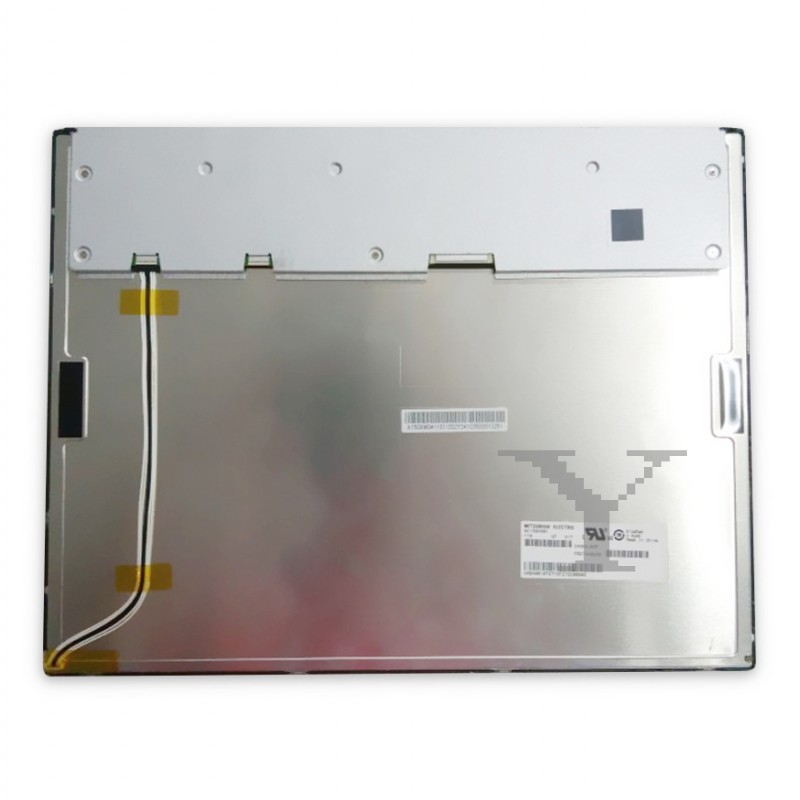
This article delves into a comprehensive technical and application-focused analysis of the Mitsubishi AC150XA03. We will move beyond basic specifications to explore its underlying a-Si TFT technology, dissect its optical and electrical performance characteristics, and understand the practical implications of its interface and mechanical design. Furthermore, we will identify its ideal application sectors, compare it with modern alternatives, and provide crucial considerations for system integration and sourcing. Our goal is to provide engineers, procurement specialists, and technology integrators with the depth of understanding needed to evaluate this module's suitability for their specialized projects.
Deconstructing the Core Technology: a-Si TFT-LCD
The foundation of the AC150XA03 lies in its Amorphous Silicon (a-Si) Thin-Film Transistor (TFT) technology. This mature and highly optimized process involves depositing non-crystalline silicon on a glass substrate to create the transistors that control each individual pixel. For a 15-inch XGA display with 1024x768x3 (RGB) subpixels, this means manufacturing and perfectly controlling nearly 2.36 million transistors.
The choice of a-Si TFT, as opposed to more modern LTPS or IGZO, is strategic. It offers an exceptional balance of manufacturing yield, cost-effectiveness for larger sizes, and proven long-term reliability. The technology provides stable performance across a wide temperature range and is less susceptible to image sticking under static content—a critical factor in industrial HMIs (Human-Machine Interfaces). The 85 PPI pixel density, while not "retina" level, is perfectly suited for viewing distances typical in machinery, medical devices, or point-of-sale systems, ensuring clarity without unnecessary processing overhead.
Optical and Performance Characteristics
The optical performance of the AC150XA03 is tailored for functional readability under various conditions. Its 500 cd/m² typical brightness ensures visibility in well-lit industrial settings or under office lighting. The contrast ratio, typically around 500:1, delivers solid differentiation between dark and light areas, which is essential for displaying data, schematics, and user interface elements.
Color performance is defined by its ability to cover a specific portion of the color gamut, typically aligning with standard sRGB or similar benchmarks suitable for accurate representation of interfaces and diagnostic imagery. Perhaps more importantly for its target markets are its wide viewing angles (exceeding 80 degrees in all directions), allowing for clear readability even when operators are not directly in front of the screen. The module's response time is adequate for non-video applications, ensuring smooth cursor movement and menu navigation without distracting smearing.
Electrical Interface and Signal Integration
Integration is a key strength of an LCM like the AC150XA03. It accepts a standard LVDS (Low-Voltage Differential Signaling) interface. LVDS is the industry workhorse for robust, noise-resistant data transmission over longer distances within a device chassis. The module includes a single-channel LVDS receiver, compatible with common timing controllers (TCONs) and graphics controllers from major chipset providers.
The power supply requirement is a simple 3.3V input for the logic and typically a higher voltage (e.g., 5.0V or 12.0V) for the LED backlight inverter or driver. This separation allows for flexible power management, including dimming control via PWM (Pulse-Width Modulation). Understanding these interface requirements is crucial for designers to correctly mate the display with their system's mainboard, ensuring signal integrity and stable operation without electromagnetic interference issues.
Mechanical Design and Environmental Robustness
As a complete LCM, the AC150XA03 comes housed in a robust metal frame, providing structural rigidity and electromagnetic shielding. The mechanical outline and the position of the mounting holes are precisely defined, allowing for secure installation into enclosures. The inclusion of a CCFL (Cold Cathode Fluorescent Lamp) backlight system is a notable characteristic of this generation of modules.
While LED backlighting is more common today, CCFL offers advantages in certain contexts, such as very even luminance across the entire panel surface. The module is designed to operate reliably within specified temperature and humidity ranges, often 0°C to 50°C or wider for industrial grades. This robustness makes it suitable for environments that are not fully climate-controlled, a common scenario in factory automation, outdoor kiosks (in sheltered conditions), and transportation.
Primary Application Sectors and Use Cases
The technical profile of the AC150XA03 directly maps to several critical industrial and professional sectors. Its primary domain is Industrial Automation and HMI, where it serves as the primary interface for PLCs, controlling machinery, monitoring processes, and displaying SCADA system data. Its reliability is paramount here.
Other significant applications include:
Medical Monitoring Equipment: For non-critical patient monitoring devices where stable, always-on display of vital signs is required.
Point-of-Sale (POS) and Kiosk Systems: In retail and hospitality for order terminals, self-checkout, and information displays.
Test and Measurement Instruments: As the display for oscilloscopes, spectrum analyzers, and other bench-top equipment.
Specialized Transportation and Maritime Displays: For non-safety-critical navigation aids or system status panels.
Sourcing, Lifespan, and Modern Alternatives
The AC150XA03 is often classified as a standard or catalog part with a long product lifecycle, a necessity in industries where equipment is deployed for a decade or more. Sourcing is typically done through specialized electronic component distributors or directly from Mitsubishi's industrial channels. It is crucial to verify the specific version and backlight type (CCFL), as these factors affect compatibility and supply.
When evaluating alternatives, modern TFT modules often feature LED backlights for lower power consumption and mercury-free designs, higher resolutions, or wider color gamuts. However, for legacy system repairs, direct upgrades, or new designs prioritizing proven reliability, stable long-term supply, and cost optimization over cutting-edge specs, the AC150XA03 remains a compelling and rational choice. The decision often hinges on a trade-off between the latest technology and battle-tested performance.
Frequently Asked Questions (FAQs)
Q1: What does "LCM" stand for in AC150XA03?A1: LCM stands for LCD Module. It means the unit includes the LCD panel, backlight, drivers, and interface connectors as one integrated unit.
Q2: Is the backlight LED or CCFL?A2: The AC150XA03 typically uses a CCFL (Cold Cathode Fluorescent Lamp) backlight system.
Q3: What is the main advantage of the 85 PPI pixel density?A3: It provides clear readability at typical arm's-length viewing distances for industrial applications without requiring excessive graphics processing power or costly high-resolution interfaces.
Q4: What interface does it use?A4: It uses a standard LVDS (Low-Voltage Differential Signaling) digital interface.
Q5: What is the operating temperature range?A5: The standard operating temperature range is typically 0°C to +50°C, but specific grades may offer extended ranges.
Q6: Can I use this for a new design, or is it only for repair?A6: It can be used for both. Its long lifecycle support makes it a viable choice for new designs where long-term availability and proven reliability are key requirements.
Q7: How do I control the backlight brightness?A7: Brightness is usually controlled via an analog voltage adjustment or a PWM (Pulse-Width Modulation) signal on the inverter module.
Q8: Is it suitable for outdoor use?A8: Not for direct sunlight/rain exposure. It may be used in sheltered outdoor kiosks, but sunlight readability (high brightness) and full environmental sealing are not its primary features.
Q9: What are common replacement or compatible models?A9: Compatibility depends on exact specs. Consult distributor cross-reference lists or Mitsubishi for potential successors or pin-compatible alternatives from other manufacturers.
Q10: Where is the best place to purchase this module?A10: Through authorized distributors of Mitsubishi Electric's electronic components or reputable specialized display component suppliers to ensure authenticity.
Conclusion
The Mitsubishi AC150XA03 15-inch XGA TFT-LCD module exemplifies the enduring value of well-engineered, purpose-built industrial technology. Its significance lies not in chasing the highest resolution or slimmest bezel, but in delivering unwavering reliability, straightforward integration, and long-term stability in environments where failure is not an option.
For engineers and integrators, understanding its a-Si TFT foundation, robust LVDS interface, CCFL backlight system, and precise mechanical design is key to leveraging its strengths. While newer technologies offer advancements in power efficiency and pixel density, the AC150XA03 remains a cornerstone solution for a vast array of industrial, medical, and commercial applications. Its continued relevance is a testament to the principle that in mission-critical systems, proven performance often outweighs marginal technical novelty.





