


















In the intricate world of industrial and embedded display solutions, specific components become the unsung heroes behind reliable human-machine interfaces. One such component is the AA084VB02, an 8.4-inch TFT-LCD module manufactured by Mitsubishi Electric. This article delves deep into this specific display module, moving beyond basic datasheet specifications to explore its technological foundations, design rationale, and practical applications. We will dissect what makes this seemingly standard VGA display a persistent and trusted choice in demanding environments.
The core of our discussion is not just a screen, but a complete LCD Module (LCM) solution. The AA084VB02 represents a mature yet enduring technology—a-Si (amorphous Silicon) TFT—packaged with its driving circuitry, backlight, and interface into a single, robust unit. By understanding its characteristics, from its 640x480 resolution to its 95 PPI pixel density and 500:1 contrast ratio, engineers, procurement specialists, and technology integrators can make informed decisions about its suitability for their projects. This exploration is crucial for anyone involved in designing or maintaining systems where durability, longevity, and consistent performance trump the need for ultra-high resolution.
Deconstructing the AA084VB02: Core Specifications and Technology
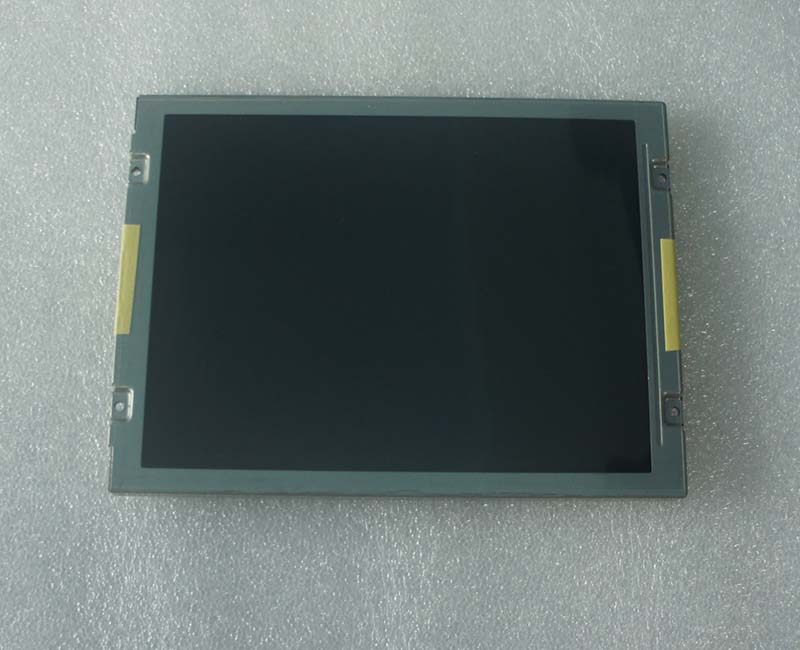
The Mitsubishi AA084VB02 is built on a-Si (amorphous Silicon) Thin-Film Transistor (TFT) technology. This mature and highly reliable process forms the basis of its display matrix. The module features a native resolution of 640 horizontal pixels by 480 vertical pixels, adhering to the classic VGA standard. This results in a pixel density of approximately 95 Pixels Per Inch (PPI). While this is low compared to modern smartphone displays, it is a deliberate and functional characteristic for its intended use cases.
The optical performance is defined by a brightness of 400 cd/m², a contrast ratio of 500:1, and a wide viewing angle. Crucially, it incorporates a CCFL (Cold Cathode Fluorescent Lamp) backlight system with an integrated inverter. This technology choice, though older than contemporary LED backlighting, offers proven stability and even illumination. The module is designed as a complete LCM, meaning it includes the timing controller, column/row drivers, and power supply circuitry, presenting a simple parallel RGB interface to the host system, significantly reducing integration complexity for the designer.
The Enduring Relevance of VGA Resolution in Niche Applications
In an era of 4K and 8K displays, the persistence of the 640x480 VGA resolution might seem anachronistic. However, for the AA084VB02 and its industrial peers, VGA is not a limitation but a strategic asset. This resolution provides a perfect balance between sufficient information density and exceptional system reliability. Lower resolution means lower data bandwidth requirements, less processing power needed from the host controller, and reduced electromagnetic interference (EMI).
Furthermore, many legacy industrial software systems, machine control interfaces, and diagnostic terminals were designed around VGA. Upgrading these systems to higher resolutions often requires costly and complex software redevelopment. The AA084VB02 acts as a direct, drop-in replacement or a sustained component for long-lifecycle products. Its resolution ensures compatibility and stability, which are often more critical than visual fidelity in environments like factory floors, medical devices, and transportation systems.
Optical Performance and Ruggedized Design for Harsh Environments
The AA084VB02 is engineered not for a consumer living room, but for potentially harsh operational environments. Its optical specs are tailored accordingly. The 400 cd/m² brightness ensures readability under strong ambient light, such as in outdoor kiosks or sunlit factory settings. The 500:1 contrast ratio delivers clear differentiation between foreground and background elements, crucial for displaying critical data or alerts.
Beyond the numbers, the module's construction emphasizes durability. While specific hardening details depend on the final product integration, displays like the AA084VB02 are typically designed to withstand wider temperature ranges, higher levels of vibration, and greater humidity than commercial panels. The use of a CCFL backlight, while consuming more power than LEDs, is known for its long lifespan and consistent output over time, a key factor for systems where display failure necessitates expensive downtime and service.
Interface Architecture and System Integration Simplicity
A major advantage of using a complete LCM like the AA084VB02 is the simplification of the system integration process. The module accepts standard parallel RGB (also called TTL or LVDS) signals alongside standard synchronization clocks (HSYNC, VSYNC) and a data enable signal. This is a straightforward interface for most embedded graphics controllers or older PC chipsets to drive.
The integration burden of generating precise timing signals and managing the power sequencing for the TFT panel itself is handled internally by the module's controller. The designer primarily needs to provide the correct video signal and the necessary power rails (typically +5V or +3.3V for logic and a higher voltage for the backlight inverter). This "all-in-one" approach reduces development time, minimizes risk, and accelerates time-to-market for the end product, making it a preferred choice for low-to-medium volume specialized equipment.
Primary Application Sectors and Use-Case Scenarios
The AA084VB02 finds its home in sectors where reliability, longevity, and environmental resistance are paramount. A primary application is in Industrial Automation and Control. Here, it serves as the display for PLC (Programmable Logic Controller) interfaces, CNC machine operator panels, and test/measurement equipment. Its ruggedness and stable performance are essential.
Another significant sector is Transportation and Automotive, particularly in commercial vehicles, agricultural machinery, and construction equipment for dashboard displays or onboard diagnostic terminals. Medical Devices also utilize such modules in non-critical patient monitoring or diagnostic equipment where long-term supply consistency is required. Finally, it appears in Point-of-Sale (POS) systems and specialized kiosks, where its wide viewing angle and brightness ensure customer and operator usability.
The Supply Chain and Legacy Component Considerations
Choosing a display module like the Mitsubishi AA084VB02 involves important supply chain considerations. As a product based on mature a-Si technology, it may be in a sustained production phase or potentially approaching End-of-Life (EOL). For manufacturers of long-lifecycle products (e.g., industrial machinery with 10-20 year service lives), this creates a critical challenge.
Proactive procurement, lifetime buy decisions, and securing reliable distributors become part of the product strategy. The alternative—redesigning a product to accommodate a new display module—can be prohibitively expensive. Therefore, understanding the lifecycle status of such components is as important as understanding their technical specifications. This reality underscores the value of established, well-documented modules from major manufacturers like Mitsubishi, which often provide longer support horizons than commodity consumer panels.
FAQs: AA084VB02 Mitsubishi Display Module
Q1: What does "LCM" stand for in AA084VB02 LCM?A1: LCM stands for LCD Module. It indicates the unit includes the LCD panel, driver circuits, backlight, and connectors as one integrated component.
Q2: What is the screen size and resolution?A2: It is an 8.4-inch (diagonal) screen with a resolution of 640 (RGB) x 480 pixels (VGA).
Q3: What is the pixel density (PPI)?A3: The pixel density is approximately 95 Pixels Per Inch.
Q4: What type of backlight does it use?A4: It uses a CCFL (Cold Cathode Fluorescent Lamp) backlight with an integrated inverter.
Q5: What is the primary interface for this display?A5: It uses a parallel RGB (TTL/LVDS) interface with standard sync signals (HSYNC, VSYNC).
Q6: Is this display suitable for outdoor use?A6: Its high brightness (400 cd/m²) makes it readable in bright conditions, but full outdoor suitability depends on additional sealing and anti-glare treatment by the integrator.
Q7: Why would someone use VGA resolution today?A7: For legacy system compatibility, lower system cost, reduced processing demands, and reliability in industrial/embedded applications where high resolution is unnecessary.
Q8: What are typical applications for the AA084VB02?A8: Industrial control panels, medical devices, vehicle dashboards, POS systems, and specialized kiosks.
Q9: Is this module still in production?A9: Production status changes. It is a mature product, so checking with authorized distributors or Mitsubishi for current lifecycle status (Active, EOL, etc.) is essential.
Q10: What are the main advantages over consumer LCD panels?A10: Key advantages include a robust design for wider temperature ranges, longer-term supply availability, simpler integration (complete LCM), and reliability in demanding environments.
Conclusion
The Mitsubishi AA084VB02 8.4-inch TFT-LCD module exemplifies how tailored, robust technology maintains critical relevance long after consumer trends have moved on. Its value proposition lies not in cutting-edge specs, but in its proven reliability, straightforward integration, and environmental resilience. For engineers and designers in industrial, medical, and transportation fields, components like this are the bedrock upon which durable, maintainable, and long-lifecycle products are built.
Understanding its a-Si TFT technology, the practical benefits of its VGA resolution, and the implications of its supply chain status is crucial for making informed design and procurement decisions. In a world of rapid technological obsolescence, the AA084VB02 serves as a reminder that in specialized engineering, the optimal solution is often the one that delivers unwavering performance under pressure, year after year.





