


















- Industrial display
-
Industrial Products
- DC Servo Drive
- AC Servo Drive
- Industrial board
- Siemens
- Switch Sensor
- Proximity Switch
- Temperature Controller
- Protection Relay
- Fiber Optic Sensor
- Encoder
- Fan
- other
- Heidelberg
- MITSUBISHI
- FANUC
- Siemens adapter
- Fujitsu connector
- Motherboard
- Board
- Contactor
- Circuit
- OMRON
- Relay
- Motor Driver
- power supply
- Cable
- Transformer
- HMI Touch Glass
-
HMI Full Machine Whole unit
- OMRON HMI Touch Panel
- Siemens HMI Touch Panel
- Mitsubishi HMI Touch Panel
- Allen-Bradley automation HMI Touch Panel
- DELTA HMI Touch Panel
- Proface HMI Touch Panel
- KINCO DELTA HMI Touch Panel
- HITECH HMI Touch Panel
- WEINTEK HMI Touch Panel
- TECVIEW HMI Touch Panel
- WEINVIEW HMI Touch Panel
- PANASONIC HMI Touch Panel
- KYOCERA HMI Touch Panel
- SCHNEIDER HMI Touch Panel
- Module
- lcd inverter
- Membrane Keypad Switch
- Zhiyan Customized Touch Screens
- Frequency Inverter
- Servo Motor
- PLC
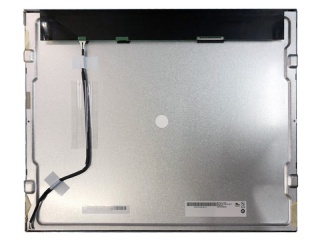
In an era dominated by dazzling OLEDs and high-resolution mobile displays, the industrial LCD sector quietly upholds rigorous standards for durability, legibility, and thermal stability. Standing as a paragon of this engineering philosophy is the AUO G190EAN01.3, a 19.0-inch TFT-LCD module from AU Optronics. This display is not designed for consumer glamour; it is engineered for the relentless operational demands of point-of-sale systems, industrial automation, medical instruments, and kiosks. At its core lies a sophisticated combination of AHVA (Advanced Hyper-Viewing Angle) technology and an aggressive high-brightness backlight, typically exceeding 1500 cd/m². This article moves beyond a simple datasheet recitation. It explores the specific technical architecture that allows this panel to function in direct sunlight, its role in critical human-machine interfaces, and the nuanced interplay between its optical characteristics and power management. For engineers and procurement specialists, understanding the G190EAN01.3 is less about novelty and more about appreciating how thoughtful design trade-offs create a reliable, long-term solution in a disposable world.

Decoding the AHVA Matrix: Beyond Standard IPS Performance
The G190EAN01.3 employs AUO’s proprietary AHVA (Advanced Hyper-Viewing Angle) technology, a sophisticated variant of the In-Plane Switching (IPS) architecture. Unlike standard TN panels which suffer from color inversion at extreme angles, AHVA ensures exceptional color consistency and grayscale stability across a wide 178°/178° viewing cone. However, the true depth of this technology in the G190EAN01.3 is its optimization for high-luminance environments. The liquid crystal alignment is tuned to maintain a high contrast ratio—typically near 3000:1—even when the backlight is driven to its maximum output. This is critical because high brightness often washes out the black state, destroying image depth. The panel’s pixel architecture also minimizes light leakage at the edges, a common flaw in larger industrial displays. Furthermore, the AHVA layer is paired with a proprietary anti-glare treatment that diffuses ambient light without creating a hazy “sparkle” effect. This creates a robust optical stack that preserves color fidelity for critical applications like medical patient monitoring, where subtle changes in hue can indicate a shift in vital signs, rather than a display artifact.
The Sunlight-Readable Imperative: Analyzing the 1500-nit Backlight
The defining characteristic of the G190EAN01.3 is its ultra-high luminance backlight, engineered to output over 1500 cd/m² (nits). This is not simply a matter of installing brighter LEDs; it involves a complete overhaul of thermal and optical management. To achieve this, AUO utilizes a multi-layered diffuser film stack and a high-density LED array, often employing a side-lit or direct-lit configuration carefully tuned for uniformity. The intensity is necessary to overcome the “veiling glare” of ambient sunlight. When a display is used outdoors or near a window, the ambient light reflects off the panel surface. If the display’s own luminance is lower than the ambient reflection, the content becomes unreadable. At 1500 nits, the G190EAN01.3 provides a luminance ratio sufficient for readability under 50,000 lux of ambient light (direct sunlight). This is achieved without resorting to aggressive transflective technologies that compromise indoor color saturation. The trade-off is significant power draw—typically exceeding 20 watts for the backlight alone. This necessitates careful system-level design, often requiring external heatsinking or active cooling to prevent LED degradation and maintain the panel’s stated lifespan of 50,000 hours.
Thermal Management and Long-Term Reliability in Enclosed Systems
Powering a 1500-nit backlight generates substantial heat, and the G190EAN01.3’s design philosophy directly addresses the thermal engineering challenges of enclosed kiosks and industrial cabinets. The panel’s aluminum frame is not merely structural; it serves as a critical heat spreader. The thermal interface between the LED array and the chassis is optimized using thermally conductive pads or tapes, designed to wick heat away from the sensitive light-emitting diodes. This is vital because LED lifespan is inversely proportional to junction temperature. A 10°C rise can halve the expected life. For a 24/7 operation, this is unacceptable. The panel’s recommended operating temperature range (-20°C to +70°C) further underscores its ruggedness. However, the real depth is in the panel’s software-level thermal protection. Many versions of this panel include an internal thermistor that provides feedback to the driving electronics. If the panel approaches its thermal threshold, the system can intelligently throttle the backlight current, reducing brightness to protect the LEDs. This is not a failure; it is a graceful degradation feature that prevents a total blackout in a critical moment, such as a medical procedure or a point-of-sale transaction.
Interface Choices: The Practicality of LVDS in an Embedded World
While newer interfaces like eDP (Embedded DisplayPort) are compact and high-speed, the G190EAN01.3 adheres to the Dual-Channel LVDS (Low-Voltage Differential Signaling) standard. This is a deliberate choice rooted in *industrial practicality and longevity*. LVDS is a mature, well-understood technology with vast ecosystem support. Its key advantage for the integrator is simplicity. LVDS signals are less susceptible to electromagnetic interference (EMI) over the relatively short distances involved in a kiosk or medical cart. More importantly, LVDS allows for direct, low-latency driving of the panel without the need for complex protocol negotiation found in eDP or HDMI. This is critical for real-time video or control interfaces where latency must be deterministic. The 30-pin JEIDA/ VESA standard connector ensures compatibility with a wide range of embedded motherboards and single-board computers. The dual-channel configuration is mandatory to drive the full 1280 x 1024 (SXGA) resolution at 60 Hz. Choosing LVDS also future-proofs the application against obsolescence in the supply chain; LVDS controllers are commodity items that will be available for decades, unlike proprietary embedded controllers. For a product with a 5-10 year lifecycle, this interface stability is a feature, not a flaw.
Navigating the Application Landscape: From Kiosk to Operating Room
The technical specifications of the G190EAN01.3 find their true expression in specific deployment environments. Its primary market is the self-service kiosk, particularly in outdoor applications like ticketing, wayfinding, and EV charging stations. Here, the high brightness combats direct sun glare, while the anti-glare surface resists fingerprints and scratches from repetitive touch. In the medical sector, the panel is a workhorse for anesthesia machines, patient monitors, and diagnostic ultrasound systems. The combination of wide viewing angles (essential for clinicians viewing from different positions) and high contrast (for reading fine details in waveforms or scans) is non-negotiable. The panel also finds a home in industrial Human-Machine Interfaces (HMIs) controlling assembly lines and CNC machines. These environments often involve ambient dust, vibration, and temperature fluctuations. The G190EAN01.3’s robust mechanical construction, with its rigid mounting chassis and clearly marked fixing points, is designed to withstand these forces. Finally, its use in *gaming machines* is notable. Casinos demand vivid, bright displays under low ambient light, and the panel’s long lifespan reduces the costly downtime associated with replacing burned-out displays. Each application leverages a different combination of its features, proving it is a versatile platform, not a single-function component.
Understanding the Supply Chain: Longevity and the Obsolescence Factor
One of the most critical, yet often overlooked, aspects of the G190EAN01.3 is its product lifecycle management by AUO. Unlike consumer panels which may become obsolete in 12-18 months, industrial panels like this are committed to a minimum production longevity, often spanning 5 to 7 years. This commitment is validated by a dedicated product support status from AUO, ensuring that the panel will be available for new designs and as a spare part for existing installations. The decision to utilize standard LVDS connectors and a common 19-inch aspect ratio further stabilizes the supply chain. However, the integrator must be aware of *revision changes*. A newer revision (e.g., G190EAN01.3 Rev. A vs. Rev. C) may contain an updated LED driver IC or a slightly different diffuser film. While these maintain electrical compatibility, they can affect power consumption or optical uniformity. The true depth of understanding the supply chain involves establishing a direct relationship with an authorized distributor, like DigiKey, Mouser, or a regional AUO partner, to source the *latest revision* and receive proper documentation. Relying on grey-market stockpiles for this specific panel is a high-risk proposition for mission-critical equipment.
Frequently Asked Questions (FAQs)
Q: What is the native resolution of the AUO G190EAN01.3?A: Its native resolution is SXGA (1280 x 1024 pixels), with a 5:4 aspect ratio standard for industrial monitors.
Q: Is this panel suitable for outdoor direct sunlight use?A: Yes, its high brightness (1500+ nits) and anti-glare surface make it an excellent choice for direct sunlight readability in kiosks and information displays.
Q: What type of backlight does it use?A: It uses an LED (Light Emitting Diode) backlight, typically configured in an edge-lit or direct-lit array for high output, with a rated lifespan of 50,000 hours.
Q: What is the interface connection type?A: It requires a Dual-Channel LVDS interface, usually via a 30-pin connector conforming to JEIDA or VESA standards.
Q: Does it support touch functionality?A: The panel itself is just the LCD cell and backlight. It is usually integrated with a touchscreen overlay (PCAP, resistive) by a system integrator.
Q: What is its typical operating temperature range?A: The industrial-grade range is -20°C to +70°C for the LCD glass, though the backlight performance may degrade outside of 0°C to 50°C.
Q: How does it compare to a standard TN panel?A: It offers vastly superior viewing angles (178/178) and color consistency versus a TN panel, which suffers from severe color shift at angles.
Q: What is the contrast ratio?A: Due to its AHVA technology and optimized backlight, it typically achieves a high static contrast ratio of 3000:1.
Q: Is the G190EAN01.3 available in a wide-temperature version?A: This specific model is designed for standard industrial conditions. Check the datasheet for the exact suffix; some revisions specify a wider range, but -20 to +70 is the norm.
Q: What is the power consumption?A: The total power consumption is high, typically 20-25 watts at maximum brightness, due to the powerful LED backlight. This will require thermal management in the final product.
Conclusion: A Foundation for Durable Systems, Not Disposable Gadgets
The AUO G190EAN01.3 is emphatically *not* a consumer component. It is a meticulously engineered foundation for systems that demand reliability over novelty. Its true value is not found in a spec sheet column for “high brightness,” but in the holistic engineering trade-offs it represents: a thermally managed, LVDS-based, high-contrast window into a machine’s soul. For an integrator, choosing this panel is a vote for longevity, readability, and serviceability over thinness and cost reduction. It acknowledges that a screen in a factory, a hospital, or an outdoor kiosk must perform flawlessly for years, often under harsh conditions. The G190EAN01.3 proves that high technology is not always about the newest interface or the highest pixel count. Sometimes, it is about mastering the fundamentals—optical performance, thermal stability, and interface simplicity—to create a product that is truly fit for purpose. As the Internet of Things (IoT) expands into more unforgiving outdoor and industrial spaces, panels like this will remain the quiet, bright workhorses of the visual interface.





