





















- Industrial display
-
Industrial Products
- DC Servo Drive
- AC Servo Drive
- Industrial board
- Siemens
- Switch Sensor
- Proximity Switch
- Temperature Controller
- Protection Relay
- Fiber Optic Sensor
- Encoder
- Fan
- other
- Heidelberg
- MITSUBISHI
- FANUC
- Siemens adapter
- Fujitsu connector
- Motherboard
- Board
- Contactor
- Circuit
- OMRON
- Relay
- Motor Driver
- power supply
- Cable
- Transformer
- HMI Touch Glass
-
HMI Full Machine Whole unit
- OMRON HMI Touch Panel
- Siemens HMI Touch Panel
- Mitsubishi HMI Touch Panel
- Allen-Bradley automation HMI Touch Panel
- DELTA HMI Touch Panel
- Proface HMI Touch Panel
- KINCO DELTA HMI Touch Panel
- HITECH HMI Touch Panel
- WEINTEK HMI Touch Panel
- TECVIEW HMI Touch Panel
- WEINVIEW HMI Touch Panel
- PANASONIC HMI Touch Panel
- KYOCERA HMI Touch Panel
- SCHNEIDER HMI Touch Panel
- Module
- lcd inverter
- Membrane Keypad Switch
- Zhiyan Customized Touch Screens
- Frequency Inverter
- Servo Motor
- PLC
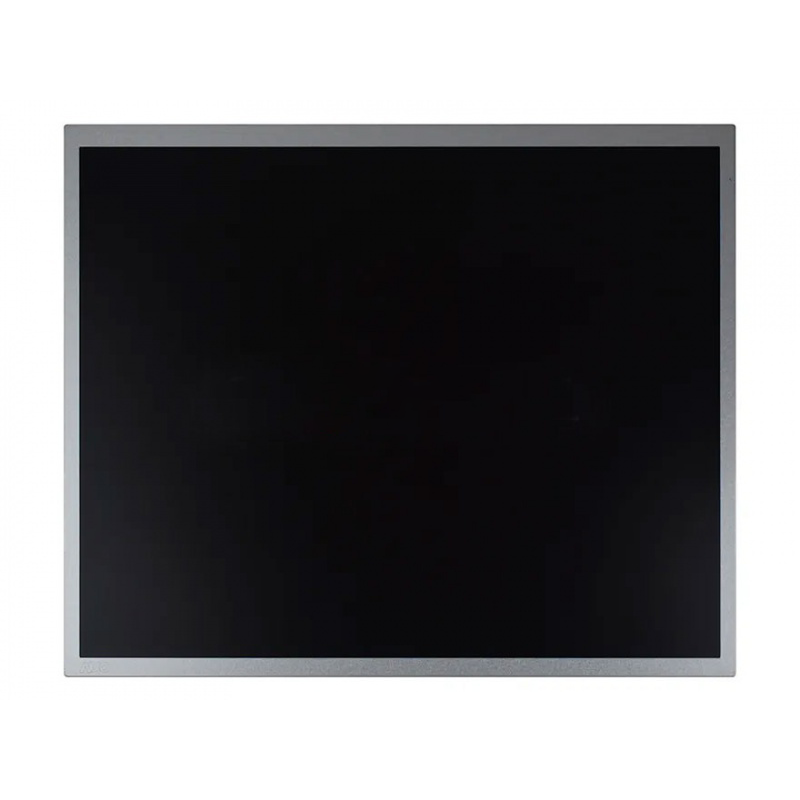
In the rapidly evolving landscape of industrial automation, medical instrumentation, and digital signage, the reliability and clarity of display modules are not a luxury but a fundamental requirement. Among the myriad of options available, the AUO G170ETN02.1 stands as a compelling contender, yet its specific advantages often remain underexplored beyond basic datasheet specifications. This article delves deep into the AUO G170ETN02.1 17-inch LCD display module, moving past superficial specs to examine its role as a critical interface component. We will dissect its optical performance, mechanical construction, interface architecture, and the factors that dictate its environmental resilience. The core theme of this analysis is understanding how this module balances high-definition visual fidelity with the rugged demands of industrial contexts, where failure is not an option. By the end of this exploration, professionals in design, procurement, and system integration will gain a comprehensive understanding of where this display excels, where its limitations lie, and how to best leverage its capabilities for long-term, mission-critical deployments.
Optical Precision: Beyond Standard Resolution
The G170ETN02.1 is built on a foundation of 1280 x 1024 (SXGA) resolution, a standard that remains the workhorse for many industrial human-machine interfaces (HMIs). However, the true value of this module lies not just in its pixel count but in its light management system. With a native brightness rating of 350 cd/m², this panel is categorized for "standard" brightness applications, yet its performance is optimized for environments with controlled ambient lighting, such as factory control rooms or medical carts.
A critical attribute often overlooked is the contrast ratio of 1000:1. In a 17-inch form factor, this high native contrast allows for deep blacks and vibrant whites, significantly enhancing the readability of complex data visualizations and diagnostic imaging. The viewing angles, rated at 80/80/80/80 degrees (CR≥10), are achieved through Advanced Wide Viewing Angle technology. This ensures that operators viewing the screen from off-center positions—common in multi-operator workstations—do not experience color washout or gamma shift. The panel's anti-glare surface treatment (3H hardness) is another subtle yet vital feature, diffusing reflections that could otherwise cause eye strain during long shifts. For integrators, understanding that this module achieves its optical clarity without the power overhead of high-brightness backlights is key to thermal management in sealed enclosures.
Mechanical Architecture and Form Factor Synergy
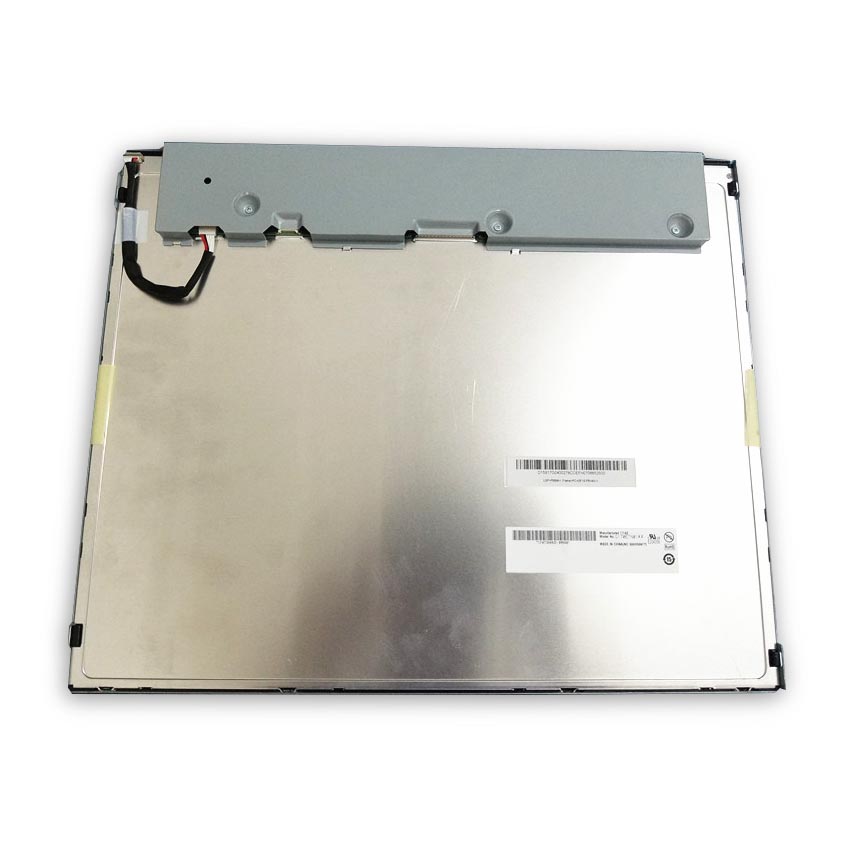
While optical performance captures attention, the mechanical reality of the G170ETN02.1 dictates its integration success. The module adheres to the industry-standard 17-inch form factor with an active area of 337.92mm x 270.336mm. Its physical dimensions—358.5mm x 296.5mm x 11.0mm—reveal a notably slim profile for a panel of this generation, achieved through a streamlined backlight assembly. This slimness is a double-edged sword: it allows for deeper integration into space-constrained enclosures but demands careful design regarding structural support to prevent torque stress on the LCD glass.
The module utilizes two CCFL (Cold Cathode Fluorescent Lamp) backlights. While this may seem anachronistic in a world dominated by LEDs, there is a strategic logic here. For certain long-life industrial contracts (like aviation ground support or legacy medical equipment) where the end-user has a validated supply chain for CCFL inverters, the G170ETN02.1 provides a drop-in replacement path. The backlight is rated for 50,000 hours of life under normal conditions, but thermal management is paramount; high ambient cabinet temperatures can drastically shorten this lifespan. The panel's mounting method relies on a standard bezel frame, and its total weight of approximately 1.2kg (2.65 lbs) requires robust mounting brackets to avoid vibration-induced failures in mobile equipment, such as diagnostic carts or military field units.
The LVDS Interface: Signal Integrity and Compatibility
The communication backbone of the AUO G170ETN02.1 is its 2-channel LVDS (Low-Voltage Differential Signaling) interface, specifically supporting 8-bit color depth. This enables the display to render 16.7 million colors, a necessity for medical imaging where subtle gradients differentiate tissue types. The interface operates on a single 20-pin connector (JAE FI-SE20P-HFE or equivalent), a standardized pinout that simplifies cable sourcing. However, cable quality and length are often underestimated variables.
For SXGA resolution at 60Hz refresh rate, the LVDS clock frequency hovers around 85-90 MHz. A poorly shielded or excessively long cable (beyond 500mm) introduces signal jitter and crosstalk, manifesting as sparkles or vertical line noise on the screen. The module is designed for a pixel clock of 108 MHz, providing a slight headroom for processing. Engineers must ensure their graphics controller outputs the correct timing parameters—particularly the H-total and V-total porch periods—to match this panel. Mismatched timing can cause the panel to fail to synchronize, resulting in a blank screen or garbled output. Furthermore, the input voltage for logic is a tight 3.3V ±0.3V; any deviation here risks permanent damage to the timing controller (TCON) board, making voltage regulation on the host side a non-negotiable design requirement.
Environmental Resilience and Thermal Management
Industrial displays must survive conditions that would cripple consumer-grade electronics. The G170ETN02.1 is rated for a storage temperature range from -20°C to +60°C and an operating range of 0°C to +50°C. These figures are not merely numbers; they represent the limits of the liquid crystal material's viscosity and the elastic properties of the polarizers. Operating below 0°C can cause the LC fluid to become sluggish, producing extremely slow response times and temporary image sticking.
Thermal management is particularly critical for the CCFL backlights, which generate significant heat. In an enclosed cabinet, passive heat sinks or forced air cooling may be required to keep the ambient temperature around the backlight below the 40°C threshold to maximize lamp lifespan. Conversely, high humidity environments (the panel is tested up to 95% RH non-condensing) can cause electrode corrosion on the glass edge. A key specification often missed is the vibration resistance. While not a hardened military spec, the module holds up to 1.0G of non-operational vibration. For high-vibration applications (e.g., on a vehicle or heavy machinery), integrators must use rubber grommets or shock-absorbing mounts rather than rigid steel brackets to decouple mechanical resonance from the fragile glass substrate.
Lifecycle Management and Strategic Procurement
In the industrial world, product longevity is king. The AUO G170ETN02.1 sits in a peculiar lifecycle phase. While AUO has moved many of its lines to LED-backlit models (like the G170J1 series), the G170ETN02.1 remains in production due to legacy contracts. This creates a strategic dilemma for procurement teams. The advantage is price stability; CCFL-based panels are often significantly cheaper than their LED equivalents, offering a lower Bill of Materials (BOM) cost for large runs.
However, the risk of obsolescence is the critical factor. As CCFL inverter ICs and backlight tubes become scarcer, the G170ETN02.1 becomes a "time-bomb" for long-term deployments (5-10 year lifecycles). Procurement managers should negotiate last-time-buy (LTB) clauses directly with their distributors. Furthermore, this exact model is often counterfeited or substituted with "compatible" versions that use inferior polarizers or weaker backlights. Only sourcing from authorized distributors (like Winstar, DigiKey, or Mouser) with traceable AUO lot codes guarantees the genuine optical and reliability specifications. For new designs, it is advisable to have a second-source PCB layout that can accommodate the pin-compatible, but LED-based, successor model if the project timeline extends beyond two years.
Frequently Asked Questions (FAQs)
Can I directly replace a G170ETN02.0 with a G170ETN02.1?Yes, they are mechanically and electrically compatible. However, verify the backlight connector pinout, as minor revisions exist. Always test brightness uniformity as the .1 revision may have different CCFL tube tension.
What is the MTBF of this LCD module?The typical Mean Time Between Failures (MTBF) for the LCD panel alone is above 50,000 hours at 25°C. The CCFL lamps are the primary wear item, with an estimated life of 40,000 to 50,000 hours to half-brightness.
Does this display support touch screen overlays?No, this is a bare LCD module. However, its standard bezel dimensions allow for easy integration of a resistive or capacitive touch screen as an add-on layer. Ensure the touch panel's optical bonding does not create Newton rings on the anti-glare surface.
What is the exact pinout for the LVDS connector?The standard pinout is: Pin1-6 (Odd data), Pin7-12 (Even data), Pin13 (GND), Pin14 (CLK), Pin15-20 (Power/Backlight). Always consult the official AUO datasheet for specific pin assignments, as cross-manufacturer confusion is common.
Can I use this in a high-altitude environment (e.g., 5000m)?Yes, but with caution. The CCFL tubes may require a higher strike voltage from the inverter due to lower air density. Verify your inverter can output the required 1500Vrms at altitude to avoid flickering.
Is the G170ETN02.1 ROHS compliant?Yes, this module is fully RoHS (Restriction of Hazardous Substances) compliant. It uses lead-free solder and is free of SVHC substances as per current EU standards.
How do I clean the screen without damaging the coating?Use only a microfiber cloth lightly dampened with distilled water or isopropyl alcohol (70% max). Never use ammonia-based cleaners (like Windex), as they will chemically etch the anti-glare hard coating.
What are the consequences of running the display at a non-native resolution?The display is fixed at 1280x1024. Running it at 1024x768 will force the T-CON to use a scaling engine, resulting in slight blurriness and increased input lag. It is best to run at native resolution.
Does this panel require a separate inverter controller?Yes. Unlike LED-backlit modules which have integrated constant-current drivers, this CCFL panel requires an external inverter. Ensure the inverter matches the CCFL tube's starting voltage (typically 1200-1500Vrms) and operating current (5-7mA).
What is the typical response time?The typical Tr/Tf (Rise/Fall) response time is 8ms/10ms, totaling 18ms. This is acceptable for static menus and data, but may produce visible ghosting in fast video playback or animation.
Conclusion
The AUO G170ETN02.1 is a testament to the engineering philosophy that "good enough" when executed with precision, is often superior to "cutting edge." It is not the brightest, fastest, or thinnest display on the market, yet it serves a vital role in the industrial ecosystem. Its value lies in its predictable performance, cost-efficiency, and robust standardization. For system integrators, the key takeaway is that success with this module hinges on understanding its external dependencies: the quality of the CCFL inverter, the integrity of the LVDS cable, and the thermal management of the enclosure. Ignoring these factors will lead to premature failure, not because the display is fragile, but because it demands a competent engineering ecosystem around it. If your project prioritizes long-term supply stability over raw specs, and if you are willing to manage the nuances of CCFL backlight technology, the G170ETN02.1 remains a highly viable, battle-tested choice. However, for new designs where future-proofing is paramount, this module serves as an excellent benchmark against which to measure the cost-benefit trade-off of migrating to the current generation of LED-backlit panels.





