














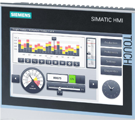







- Industrial display
-
Industrial Products
- DC Servo Drive
- AC Servo Drive
- Industrial board
- Siemens
- Switch Sensor
- Proximity Switch
- Temperature Controller
- Protection Relay
- Fiber Optic Sensor
- Encoder
- Fan
- other
- Heidelberg
- MITSUBISHI
- FANUC
- Siemens adapter
- Fujitsu connector
- Motherboard
- Board
- Contactor
- Circuit
- OMRON
- Relay
- Motor Driver
- power supply
- Cable
- Transformer
- HMI Touch Glass
-
HMI Full Machine Whole unit
- OMRON HMI Touch Panel
- Siemens HMI Touch Panel
- Mitsubishi HMI Touch Panel
- Allen-Bradley automation HMI Touch Panel
- DELTA HMI Touch Panel
- Proface HMI Touch Panel
- KINCO DELTA HMI Touch Panel
- HITECH HMI Touch Panel
- WEINTEK HMI Touch Panel
- TECVIEW HMI Touch Panel
- WEINVIEW HMI Touch Panel
- PANASONIC HMI Touch Panel
- KYOCERA HMI Touch Panel
- SCHNEIDER HMI Touch Panel
- Module
- lcd inverter
- Membrane Keypad Switch
- Zhiyan Customized Touch Screens
- Frequency Inverter
- Servo Motor
- PLC
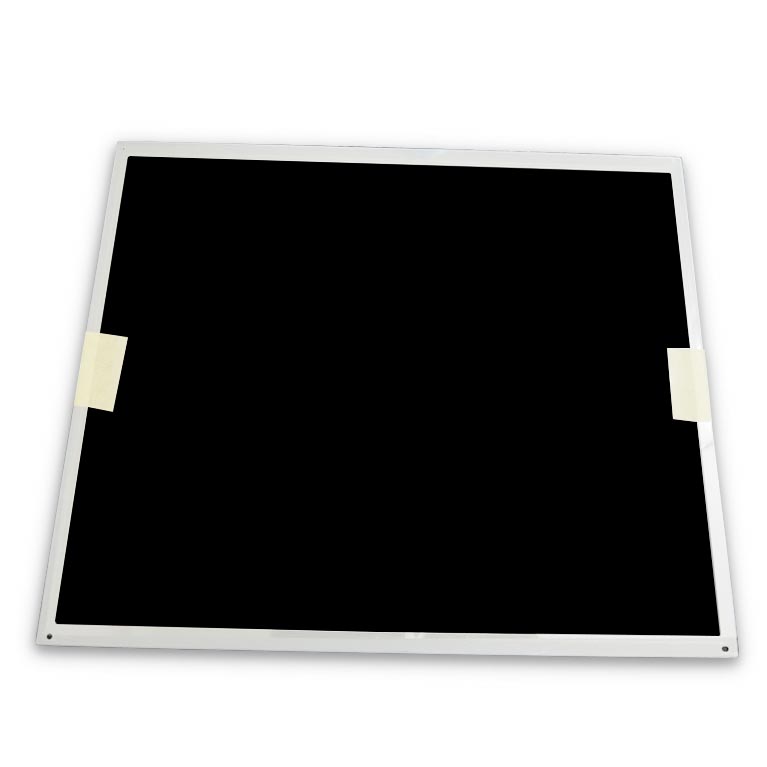
In the vast ecosystem of industrial displays, the 17-inch form factor has long held a position of quiet dominance, particularly for Human-Machine Interface (HMI) applications, medical carts, and gaming machines. Among these, the G170ETN01.0 from AU Optronics (AUO) stands as a specific, highly relevant component for engineers and procurement specialists. This article provides a deep dive into this specific LCD display, moving beyond basic specifications to explore its architectural design, performance trade-offs, and suitability for demanding environments. We will dissect why a panel with a relatively standard resolution of 1280×1024 remains a workhorse in an era of 4K and ultra-wide monitors. By examining its interface, timing controllers, optical characteristics, and competitive landscape, this analysis aims to equip integrators and decision-makers with the nuanced understanding required to select, source, or replace this panel with confidence. The G170ETN01.0 is not merely a display; it is a nexus of reliability, cost-efficiency, and legacy compatibility that deserves a rigorous technical examination.

The Architectural Foundation: TN Technology and the 17-Inch Form Factor
At its core, the G170ETN01.0 employs a Twisted Nematic (TN) liquid crystal mode, which is a pivotal choice influencing its entire application profile. Unlike In-Plane Switching (IPS) panels that prioritize wide viewing angles and color consistency, TN technology delivers unmatched response times and superior luminosity efficiency. For a 17-inch diagonal panel, the TN architecture allows for a thinner cell gap and lower driving voltages, which directly contributes to a lower power consumption profile—a critical factor for passively cooled industrial equipment.
The physical dimension of 17 inches with a 4:3 aspect ratio is a deliberate design choice. This form factor aligns perfectly with legacy VGA and DVI standards that are still ubiquitous in factory automation. The active area of 337.92 mm x 270.34 mm provides a substantial viewing surface without requiring the mechanical re-engineering of existing enclosures. Furthermore, the panel’s thickness and mounting bracket locations (often VESA or custom) are optimized for drop-in replacement. The G170ETN01.0 leverages a proven backlight system, typically using CCFL in earlier revisions but often converted or engineered for LED in later compatible versions, ensuring a long operational lifespan of 50,000 hours or more.
Resolution, Pixel Density, and Image Clarity at 1280×1024
The decision to utilize an SXGA resolution of 1280×1024 pixels is far from arbitrary; it represents a strategic balance between visual detail and processing overhead. With a pixel density of roughly 96 PPI (Pixels Per Inch), this panel offers a crisp reading experience for typography and industrial icons without burdening lower-powered embedded controllers. This resolution is particularly native for many SCADA (Supervisory Control and Data Acquisition) systems, which were designed during an era when this resolution was the standard.
From a technical standpoint, the panel’s ability to render text without anti-aliasing artifacts is a direct benefit of its pixel geometry. Each sub-pixel (RGB stripe) is precisely aligned, and the lack of scaling from a lower resolution (like 1024×768) eliminates the fuzziness often seen in medical imaging or real-time data monitoring. The contrast ratio, typically rated at 1000:1, ensures that data fields are sharply differentiated from background windows. For gauges, charts, and multi-window surveillance feeds, the 1.25:1 aspect ratio provides a slightly taller canvas than 16:9, allowing for more vertical information to be displayed without scrolling.
Interface and Signal Integrity: The LVDS Connection
The G170ETN01.0 communicates via a single-channel Low-Voltage Differential Signaling (LVDS) interface. This is a critical detail for engineers designing the host controller. LVDS operates by transmitting data over a pair of wires with a low voltage swing (typically 350 mV), which drastically reduces electromagnetic interference (EMI) compared to older TTL (Transistor-Transistor Logic) interfaces. The panel requires a standard 30-pin LVDS connector, with a pinout that is well-documented by AUO.
Understanding the signal timing is paramount. The panel demands a pixel clock frequency of approximately 80 MHz and expects a DE (Data Enable) mode timing. The backlight connection is separate, typically a 6-pin connector for the inverter or LED driver. For field repairs or integration, ensuring that the LVDS cable is twisted-pair and correctly shielded is non-negotiable; signal degradation over long cables (over 3-5 meters) can cause ghosting or flickering. This panel supports an 8-bit color depth, delivering 16.7 million colors, which is achieved by processing the RGB color signals through the source driver ICs mounted on the glass edge.
Optical Performance: Brightness, Viewing Angles, and the Trade-Offs
While TN panels are sometimes criticized for narrow viewing angles, the G170ETN01.0 has been engineered to mitigate this within its intended use case. Typical specifications list 170° horizontal and 160° vertical viewing angles (CR>10). However, a nuanced understanding reveals that color shift and contrast inversion occur beyond a 45-degree incline from the normal axis. This is actually advantageous in environments like kiosks or medical diagnostics, where privacy is a concern; the panel is difficult to read from extreme side angles, preventing casual data theft.
The brightness rating of 350 cd/m² (typical) is a sweet spot for indoor industrial and medical use. It offers ample luminance for a clean, readable display under ambient office lighting (300-500 lux) without causing eye strain. The anti-glare treatment (Haze 25%) diffuses reflections from overhead lights, which is a common pain point in factory floors. The color gamut is typically 72% NTSC, which is sufficient for industrial icons, waveform monitoring, and text, but not recommended for color-critical graphic design or photography. The black level at 0.35 cd/m² ensures that dark mode interfaces remain legible without blooming.
Reliability, Lifespan, and the Industrial Ecosystem
The longevity of the G170ETN01.0 is governed by its design for continuous operation. AUO rates this panel for 24/7 usage in controlled environmental conditions. The operating temperature range of 0°C to 60°C and a storage range of -20°C to 60°C define its deployment boundaries. In applications like medical patient monitoring or outdoor ticketing machines (with proper heating/cooling), these parameters ensure the liquid crystal material does not freeze or degrade prematurely.
The backlight, whether CCFL or LED-based in later variants, is the most common failure point. With an MTBF (Mean Time Between Failures) often exceeding 50,000 hours (roughly 5.7 years of continuous use), replacement schedules should be planned around this metric. Furthermore, the panel undergoes rigorous vibration testing (typically 1.5G) and humidity testing (90% RH) to ensure resilience. Its compatibility with resistive touchscreens is a key feature; the mechanical stack-up allows for a 4-wire or 5-wire analog resistive touch overlay to be laminated without introducing moiré patterns, a common issue with higher-density pixel arrays.
FAQs: Ten Critical Questions About the G170ETN01.0
1. Is the G170ETN01.0 a direct replacement for the G170ETN01.1? Yes, they are electrically and dimensionally identical. The .1 revision often has minor updates to the timing controller firmware but is pin-to-pin compatible.
2. What is the exact pixel pitch of this display? The pixel pitch is 0.264 mm x 0.264 mm, providing a crisp text display.
3. Can I use this panel with a Raspberry Pi? Yes, but only with an LVDS to HDMI or DSI converter board. The Pi does not natively output LVDS signals.
4. What is the expected power consumption of the G170ETN01.0? Typically around 15W for the panel (excluding backlight) and 5-8W for the backlight, totaling under 23W.
5. Does it support 1920x1080 resolution? No. It is a native 1280x1024 panel. Scaling a 1080p signal up will degrade image sharpness significantly.
6. Is the backlight CCFL or LED? The original model uses CCFL. However, many aftermarket or later revisions (e.g., G170ETN01.0 Rev. A1) may use LED edge-lit backlights. Verify the part number suffix.
7. What is the surface hardness of the polarizer? Standard is 3H hardness. For touch applications, a hardened glass overlay is recommended over hardcoating the polarizer.
8. Can this panel be used in direct sunlight? Not without a significant brightness upgrade (e.g., 1000+ nits) or an optical bonding treatment. The 350 cd/m² standard is for indoor use.
9. What is the response time (Tr/Tf) typically? The response time is typically 5ms (rise + fall), which is excellent for video playback and avoids ghosting in fast-moving HMI graphics.
10. Is the G170ETN01.0 RoHS compliant? Yes, AUO panels from this generation are RoHS (Restriction of Hazardous Substances) compliant, but always check the specific manufacturing date for lead-free solder compliance.
Conclusion: The Legacy of a Workhorse Panel
The G170ETN01.0 is a testament to the principle that in engineering, a perfect balance often trumps raw specifications. It is not the thinnest, the brightest, or the highest-resolution 17-inch panel available, but it occupies a critical niche where reliability, compatibility, and cost-effectiveness intersect





