




















- Industrial display
-
Industrial Products
- DC Servo Drive
- AC Servo Drive
- Industrial board
- Siemens
- Switch Sensor
- Proximity Switch
- Temperature Controller
- Protection Relay
- Fiber Optic Sensor
- Encoder
- Fan
- other
- Heidelberg
- MITSUBISHI
- FANUC
- Siemens adapter
- Fujitsu connector
- Motherboard
- Board
- Contactor
- Circuit
- OMRON
- Relay
- Motor Driver
- power supply
- Cable
- Transformer
- HMI Touch Glass
-
HMI Full Machine Whole unit
- OMRON HMI Touch Panel
- Siemens HMI Touch Panel
- Mitsubishi HMI Touch Panel
- Allen-Bradley automation HMI Touch Panel
- DELTA HMI Touch Panel
- Proface HMI Touch Panel
- KINCO DELTA HMI Touch Panel
- HITECH HMI Touch Panel
- WEINTEK HMI Touch Panel
- TECVIEW HMI Touch Panel
- WEINVIEW HMI Touch Panel
- PANASONIC HMI Touch Panel
- KYOCERA HMI Touch Panel
- SCHNEIDER HMI Touch Panel
- Module
- lcd inverter
- Membrane Keypad Switch
- Zhiyan Customized Touch Screens
- Frequency Inverter
- Servo Motor
- PLC
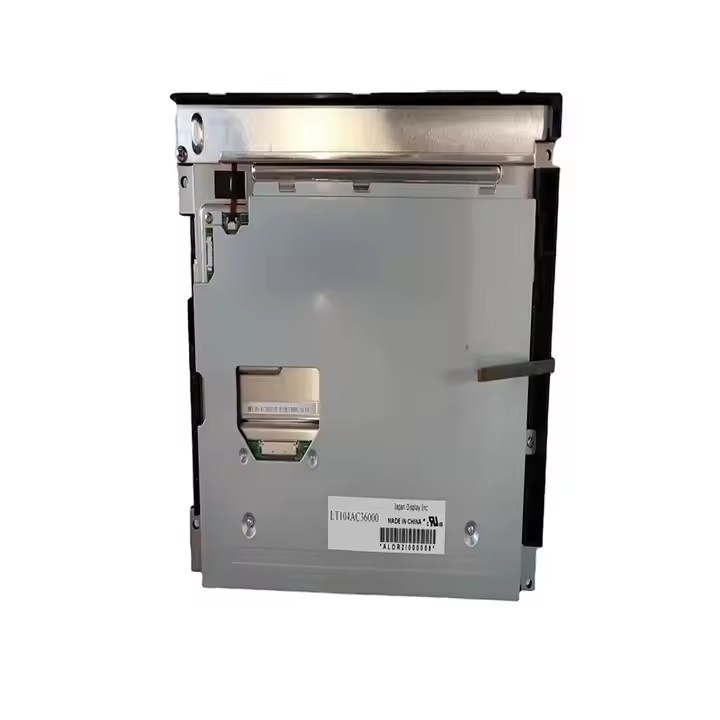
In the realm of industrial and embedded computing, the display is often the most critical interface between human operator and machine. While consumer electronics chase high refresh rates and ultra-high resolutions, the industrial sector demands reliability, longevity, and consistent performance under harsh conditions. The G170ECE-LE1, a 17.0-inch LCD display manufactured by INNOLUX Corporation, stands as a benchmark in this specialized field. This article delves deep into the technical architecture, operational nuances, and market positioning of this specific panel. Rather than offering a superficial spec sheet, we will explore why this particular model has become a preferred choice for applications ranging from medical imaging to automated kiosks. We will dissect its LVDS interface intricacies, analyze its contrast ratio performance in various ambient lighting conditions, and compare its lifecycle management against newer, but often less reliable, alternatives. By the end of this analysis, you will not just know what the G170ECE-LE1 is, but you will understand the engineering philosophy behind its design and how to leverage its strengths for your next project.
The Core Architecture: Resolution, Aspect Ratio, and Pixel Mechanics
At its heart, the G170ECE-LE1 adheres to the classic SXGA standard, delivering a native resolution of 1280 x 1024 pixels. This is a defining characteristic that separates it from the more common 16:9 widescreen panels flooding the market. The choice of a 5:4 aspect ratio is a deliberate design decision rooted in legacy compatibility and vertical real estate. For applications like point-of-sale systems, medical monitors displaying patient lists, or industrial control dashboards with stacked toolbars, the extra 128 lines of vertical pixels compared to a standard 16:9 screen are invaluable. It prevents the need for constant vertical scrolling, allowing operators to see more critical data at a glance.
From a pixel architecture perspective, the panel utilizes a TN (Twisted Nematic) mode. While often dismissed by graphics professionals due to limited viewing angles in the vertical plane, TN technology in this industrial context offers a critical trade-off: extremely low response time and high refresh rate stability. The G170ECE-LE1 typically operates at 60Hz, but its pixel structure is optimized for consistent grey-to-grey transitions, eliminating motion blur in dynamic data displays or scrolling menus. The pixel arrangement follows an RGB vertical stripe pattern, which provides sharp text clarity—a non-negotiable requirement for reading operational codes or diagnostic readouts. Understanding this architecture is the first step in appreciating why this panel is not a commodity display, but a precision tool designed for a specific visual workload.
Luminance and Contrast: Engineering for High Ambient Light
One of the most frequently overlooked specifications in industrial displays is usable brightness. The G170ECE-LE1 is rated for a typical luminance of 350 cd/m². However, this number is not just about being "bright." It is engineered to maintain a usable contrast ratio of 1000:1 even when the display is placed near windows, under fluorescent factory lighting, or inside a brightly lit kiosk enclosure. The key to this performance lies in the backlight unit (BLU) design.
Unlike consumer panels which utilize edge-lit LEDs that can create uneven hotspots, this INNOLUX panel employs a carefully calibrated direct-lit LED array or a highly optimized light guide plate design. This ensures uniform light distribution across the entire 337.92mm x 270.336mm active area. The surface treatment is equally important. The panel features an Anti-Glare (AG) coating with a hardness rating that resists minor scratching from stylus use or periodic cleaning. This coating diffuses ambient light, preventing specular reflections that would wash out the image. When an operator needs to read a critical error code in a sunlit warehouse, it is not the peak brightness that matters, but the sustained contrast delivered through this engineering combination. The deep black levels achieved by the 1000:1 ratio ensure that dark gray elements on the screen are distinguishable from black backgrounds, preventing operator fatigue caused by squinting to see low-contrast information.
Interface and Connectivity: The LVDS Protocol in Practice
Connectivity is the nervous system of any integrated display. The G170ECE-LE1 utilizes a dual-channel LVDS (Low-Voltage Differential Signaling) interface, operating specifically on a 30-pin connector. This is a critical distinction. A single-channel LVDS interface (typically using 20 pins) can handle resolutions up to WXGA (1366x768) at 60Hz. To drive the full 1280x1024 resolution with the required data bandwidth for stable 8-bit color depth, a dual-channel implementation is mandatory. This splits the pixel data into two data streams, effectively doubling the clock speed capability and ensuring no data corruption during transmission.
For system integrators, this means the host controller—whether a single-board computer like a Raspberry Pi with an LVDS adapter or an industrial motherboard—must explicitly support a dual-channel LVDS output. The panel operates on a 3.3V logic level for the interface, which is standard for modern embedded systems. The pinout is defined by the JEITA standard, but it is crucial to verify the specific mapping of the odd and even pixel channels. A common pitfall is connecting a single-channel cable, which will result in a scrambled image or a "stretched" display where half the screen is black or shows corrupted data. Understanding the electrical characteristics—the differential impedance of 100 ohms and the required common-mode voltage—is essential for designing a reliable cable assembly that will not introduce electromagnetic interference (EMI) into the sensitive industrial environment.
Thermal Management and Longevity: Beyond the Datasheet
Industrial displays are frequently subjected to temperature extremes that would destroy consumer electronics. The official operating temperature range for the G170ECE-LE1 is typically -10°C to +60°C, with a storage range extending from -20°C to +70°C. However, the true mark of quality lies in how the panel behaves at these limits. The liquid crystal material used in this model is a wide-temperature liquid crystal mixture. At low temperatures, standard LC fluids become sluggish, leading to extremely slow response times and visible ghosting. The INNOLUX formulation minimizes this viscosity increase, ensuring that the display remains operable—though with slower transitions—down to the lower limit.
At high temperatures, the primary challenge is backlight degradation and polarizer delamination. The G170ECE-LE1 uses high-quality LEDs rated for 50,000 hours of life to half-brightness (L70 life). This is not a theoretical maximum; it is based on continuous operation at 25°C ambient. For every 10°C rise above this, the LED lifespan is roughly halved. Therefore, designing proper active or passive cooling into the enclosure is not optional—it is a reliability requirement. The metal frame structure of the panel acts as a heatsink, drawing heat away from the IC drivers and the backlight. Furthermore, the polarizer film is treated with an inner retardation layer that resists yellowing under sustained high-temperature operation. A panel that looks good out of the box but fails after 18 months in a factory is useless; the G170ECE-LE1 is designed to provide consistent performance for that 50,000-hour window, assuming proper thermal management.
Touch Integration and Mechanical Framing
Modern industrial applications rarely use a display in isolation. The G170ECE-LE1 is designed with mechanical mounting compatibility for resistive, capacitive, and even infrared touch overlays. The panel thickness and front bezel design include specific mounting holes and bracket slots that align with standard touch panel frames from major manufacturers like 3M and ELO. This is not an accident; it is a deliberate engineering choice to reduce the cost and complexity of integration.
From a mechanical standpoint, the panel utilizes a screwless front frame design that relies on bent tabs and adhesive foam tape to secure the front bezel. This reduces the overall weight and allows for a slimmer profile (typically around 11mm to 13mm depth), which is critical for embedded systems where space is at a premium. The active area is surrounded by a non-functional bezel area of approximately 10mm on the left/right and 15mm on the top/bottom, providing a structural buffer against edge impacts. When integrating a touch solution, the touch controller must be calibrated to the specific optical stack of this panel. The air gap between the LC cell and the cover glass (if any) affects parallax, which is particularly problematic for capacitive touch in medical applications requiring precise finger targeting. Many integrators choose a direct-bonding process, filling the air gap with optical-grade adhesive, but this requires careful validation because it changes the thermal expansion behavior of the assembly. Understanding this mechanical ecosystem is essential for avoiding costly redesigns during the prototyping phase.
Replacement Logistics and Supply Chain Considerations
In the world of industrial electronics, obsoletion is a constant threat. The G170ECE-LE1 belongs to INNOLUX's long-life product line, which is explicitly guaranteed for a minimum of 3 to 5 years of continuous production availability, with a planned lifecycle extending to 7 years or more after initial release. This is a stark contrast to consumer panels which are discontinued within 12 to 18 months. However, "available" does not mean "identical." INNOLUX has released multiple sub-version revisions of this panel, including the G170ECE-LE1 Rev.C1, Rev.D, and Rev.E variants.
While the optical specifications remain largely consistent, changes occur in the backlight drive current and the connector pinout between revisions. A Rev.C1 panel might require a specific LED driver voltage (e.g., 12V) while a Rev.E version operates at a different voltage (e.g., 24V). Ordering the wrong revision can result in a non-functional display that requires a new power supply design. Furthermore, the timing controller (TCON) firmware can differ between batches, impacting the exact gamma curve and color temperature. Savvy procurement teams maintain a revision compatibility matrix and buy a buffer stock of the exact revision they qualified. Aftermarket threats exist, too; counterfeit panels with lower-quality LC fluid or substandard diffuser films can appear on secondary markets, offering a lower price but failing the thermal stress tests. Always source from authorized distributors who can provide traceability back to INNOLUX's factory.
Frequently Asked Questions (FAQS)
Q: What is the exact native resolution of the G170ECE-LE1?A: It is 1280 x 1024 pixels (SXGA) with a 5:4 aspect ratio.
Q: Does this panel support touch input natively?A: No, it is a raw LCD panel. Touch functionality must be added via an external touch overlay (resistive, capacitive, or IR).
Q: What is the interface type and pin count?A: It uses a dual-channel LVDS interface on a standard 30-pin connector.
Q: Can I use this display in a car or outdoor environment?A: It is rated for industrial indoor use (0-60°C). Direct sunlight requires a high-brightness version and aggressive thermal management.
Q: What is the typical power consumption?A: Typically around 13-15 watts, depending on the backlight brightness setting and driver efficiency.
Q: Is the G170ECE-LE1 RoHS and REACH compliant?A: Yes, it is manufactured under RoHS compliance for hazardous substance restrictions.
Q: What is the recommended viewing angle orientation?A: As a TN panel, it is best viewed on the horizontal axis. Vertical viewing angles are limited; mount it at eye level.
Q: How do I connect this to a Raspberry Pi?A: You need an LVDS-to-HDMI adapter board that explicitly supports dual-channel output and provides the correct voltage.
Q: Can I replace a Rev.C1 with a Rev.E version?A: Check the LED driver specifications first. The electrical requirements may differ between revisions.
Q: What is the expected lifespan of the backlight?A: 50,000 hours to half-brightness (L70), assuming standard ambient temperatures.
Conclusion: The Rational Choice for Mission-Critical Interfaces
The G170ECE-LE1 is not a glamorous display; it will never win an award for color accuracy or the thinnest bezel. Yet, its true value lies in the quiet consistency it brings to demanding environments. We have explored how its 5:4 aspect ratio optimizes vertical data density, how its robust LVDS interface ensures signal integrity in noisy factories, and how its revision control system demands disciplined procurement. The decision to use this panel is a decision to prioritize reliability over trendiness. For any design engineer or project manager facing the question of which 17-inch display to specify, the answer is not always the newest model on the market. Often, it is the proven, well-architected solution that ensures your system runs without failure for the next five years. The G170ECE-LE1 represents that philosophy: a display engineered not just to be seen, but to be trusted.





