


















- Industrial display
-
Industrial Products
- DC Servo Drive
- AC Servo Drive
- Industrial board
- Siemens
- Switch Sensor
- Proximity Switch
- Temperature Controller
- Protection Relay
- Fiber Optic Sensor
- Encoder
- Fan
- other
- Heidelberg
- MITSUBISHI
- FANUC
- Siemens adapter
- Fujitsu connector
- Motherboard
- Board
- Contactor
- Circuit
- OMRON
- Relay
- Motor Driver
- power supply
- Cable
- Transformer
- HMI Touch Glass
-
HMI Full Machine Whole unit
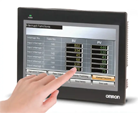
- OMRON HMI Touch Panel
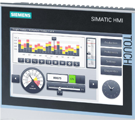
- Siemens HMI Touch Panel
- Mitsubishi HMI Touch Panel
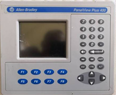
- Allen-Bradley automation HMI Touch Panel
- DELTA HMI Touch Panel
- Proface HMI Touch Panel
- KINCO DELTA HMI Touch Panel
- HITECH HMI Touch Panel
- WEINTEK HMI Touch Panel
- TECVIEW HMI Touch Panel
- WEINVIEW HMI Touch Panel
- PANASONIC HMI Touch Panel
- KYOCERA HMI Touch Panel
- SCHNEIDER HMI Touch Panel
- Module
- lcd inverter
- Membrane Keypad Switch
- Zhiyan Customized Touch Screens
- Frequency Inverter
- Servo Motor
- PLC
The 15.6-inch LCD panel market is a fiercely competitive arena, dominated by applications ranging from rugged industrial HMIs to portable medical devices. Within this landscape, the AUO G156XTN02.0 has carved out a reputation as a reliable workhorse, often specified by engineers who prioritize longevity and optical consistency over flashy consumer specifications. While many associate 15.6-inch panels with standard laptops, the G156XTN02.0 belongs to a different class: the industrial-grade sector. This article provides a deep dive into the technical architecture, market positioning, and practical considerations of this specific model. We will move beyond basic datasheet parameters to explore why this particular panel serves as a critical component in high-stakes environments such as factory floors, medical carts, and digital signage systems. Understanding the nuances of its backlight design, interface compatibility, and environmental resilience is essential for procurement specialists and system integrators looking to balance cost with mission-critical reliability. This analysis will serve as a comprehensive technical guide for professionals evaluating the AUO G156XTN02.0 for their next project.
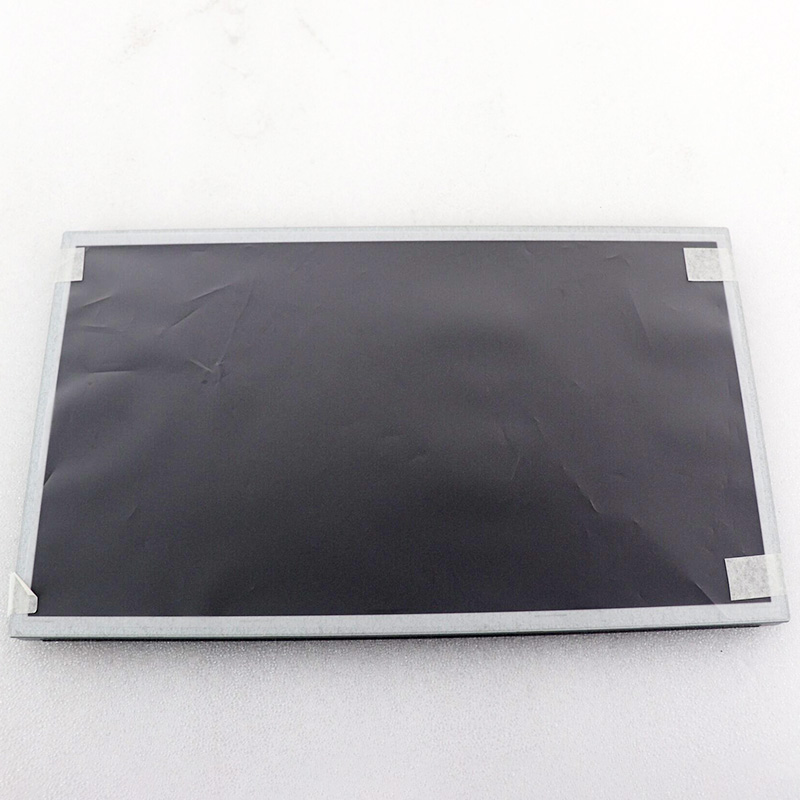
The "XTN" within the name refers to the panel technology: Twisted Nematic (TN) with an enhanced "Xtra" performance layer. While TN is often dismissed for poor viewing angles in consumer electronics, the industrial context redefines its value. The G156XTN02.0 utilizes a TN+Film configuration, which allows for a response time of typically under 8ms (Tr+Tf). This low response time is crucial for applications involving moving data or cursor tracking on cleanroom interfaces. Furthermore, the "Xtra" aspect often implies a higher tolerance for mechanical stress and a more robust backlight unit. The "02.0" revision indicates a mature production cycle, meaning that most early-life failure modes have been corrected in the manufacturing process, making it a safer choice for long lifecycle deployments.
The contrast ratio is specified at 500:1 to 700:1 (typical for TN). While this is lower than IPS panels (which regularly exceed 1000:1), the black level consistency in the TN matrix is predictable and does not suffer from the "glow" effect common in some budget IPS models. The viewing angles are 80° left/right, 65° up, and 75° down. On paper, this seems restrictive. However, in a fixed industrial mount, the operator is almost always positioned directly in front of the display. The narrow vertical angle becomes a feature, not a bug, as it reduces glare from overhead lights. The panel is often paired with an optical bonding process, which reduces the internal air gap and eliminates parallax error, making it ideal for touch screen integration.
More importantly, the panel features an integrated LED driver board or requires an external one based on the specific Inverter/LED driver connector. The backlight consists of an array of 5000K to 7000K white LEDs. The thermal threshold is the real hero here. The panel is rated for an operating temperature of 0°C to 50°C and a storage temperature of -20°C to 60°C. The internal aluminum chassis is designed to wick heat away from the LED bar, preventing the "hot-spotting" that causes premature dimming in consumer panels. If used in an enclosure, proper ventilation around the backlight driver is essential, as the driver ICs generate the most localized heat.
The panel supports a resolution of 1366 x 768 (WXGA). This is often criticized as "low resolution" compared to modern Full HD or 4K panels. Yet, this is a deliberate choice. In a 15.6-inch diagonal, a 1366 x 768 resolution at 100% scaling provides a comfortable text size for operators standing at a distance. It also reduces the GPU processing load on the embedded controller. For system integrators, this means sourcing a LVDS to eDP bridge chip is necessary if connecting to a modern single-board computer (SBC) like a Raspberry Pi Compute Module or a recent Intel NUC. Alternatively, using an old-school motherboard with an LVDS header simplifies the integration dramatically, preserving the overall system cost.
Furthermore, the TN crystal structure is inherently more rigid under physical pressure. When integrating a resistive or projected capacitive touch screen, the lamination process places uniform pressure on the LC layer. TN panels exhibit less "mura" (uneven brightness) under this pressure compared to IPS panels, which are prone to showing Newton rings or distortion when glued to glass. Finally, for applications with very high refresh rates (60Hz is standard here, but the pixel response is rapid), the TN film prevents ghosting on rapidly scrolling text or data logs. Therefore, the G156XTN02.0 remains the superior choice for kiosks, cash registers, and dedicated industrial HMIs where color accuracy is secondary to clarity and cost.
This longevity is achieved through a combination of derated LED driving (running LEDs below their max current) and a robust heat sinking design. In a 24/7 factory operation, a 50,000-hour lifespan equates to nearly 5.7 years of continuous use before the backlight dims to 50% of its original brightness. For a medical or security application, this reduces total cost of ownership significantly. Furthermore, the panel uses a LVDS interface with a robust locking connector specifically designed to withstand repeated cable flexing and vibration. The PCB coating on the control board is often treated to resist condensation, a common issue in cold storage warehouses or humid coastal environments.
What is the exact resolution of the AUO G156XTN02.0?The native resolution is 1366 x 768 pixels (WXGA).
Can I use this panel with a Raspberry Pi 4?Yes, but you will need a specific HDMI-to-LVDS converter board because the Pi outputs HDMI/DSI, not native LVDS.
Is the AUO G156XTN02.0 a touch screen panel?No. It is a standard TFT LCD panel without a touch sensor. You must add a separate touch overlay if needed.
What is the typical response time of this panel?The response time is typically 8ms (Rise + Fall).
Does it support VGA input directly?No. It requires an LVDS signal input. A VGA-to-LVDS converter box is necessary for VGA sources.
What is the physical depth of the module?The typical depth is approximately 5.0 to 6.5mm, not including connectors.
Is this panel suitable for outdoor use?Only in shaded environments. It lacks a high transmissive polarizer and may require a sunlight-readable film upgrade.
Can I replace a notebook screen with this panel?Generally, no. Notebooks use a specific physical mounting pattern and eDP interface, not the generic LVDS this panel uses.
What is the meaning of "G" in the model number?The "G" typically designates an Industrial/General purpose grade panel with extended reliability.
Does it come with an LED driver board integrated?It requires an external LED driver board unless the specific SKU includes one; check the datasheet for your exact model.





