


















In the intricate world of industrial and embedded display solutions, the selection of a specific LCD module can define the performance, reliability, and user experience of an entire system. This article provides a comprehensive, in-depth exploration of the G104STN01.0, a 10.4-inch TFT LCD module manufactured by AU Optronics (AUO). Far more than a simple catalog of specifications, our analysis delves into the technical nuances, application-specific advantages, and critical integration considerations that make this module a noteworthy component for engineers, product designers, and procurement specialists.

We will dissect its core technology, starting with its fundamental panel characteristics and the implications of its STN (Super-Twisted Nematic) designation in a market dominated by IPS. From there, we will examine its optical performance, mechanical and interface design, ideal application landscapes, and practical guidelines for successful implementation. By understanding the why behind its design, readers will be equipped to make an informed decision on whether the G104STN01.0 is the optimal display engine for their demanding projects, particularly where cost-effectiveness, wide-temperature operation, and long-term stability are paramount.

Decoding the G104STN01.0: Core Technology and Specifications
The AUO G104STN01.0 is built around a 10.4-inch diagonal active area with a resolution of 640 x 480 pixels (SVGA). This 4:3 aspect ratio is a classic format, highly compatible with legacy systems and many industrial HMI interfaces. The module's defining characteristic is its STN (Super-Twisted Nematic) technology. While IPS (In-Plane Switching) panels are celebrated for their superior viewing angles and color reproduction, STN technology offers distinct advantages in specific contexts. It typically provides excellent sunlight readability due to high contrast ratios in direct light, lower power consumption, and often, a wider operating temperature range.
Key specifications include a brightness of approximately 300 nits, a contrast ratio suitable for industrial environments, and a wide operating temperature range often spanning from -30°C to +80°C. The module integrates a CCFL (Cold Cathode Fluorescent Lamp) backlight system, which, compared to modern LED backlights, offers a very stable and uniform light output over a broad temperature spectrum. Understanding this foundational technology is crucial, as it sets the stage for the module's performance profile and target applications, positioning it as a robust, no-frills workhorse rather than a consumer-grade multimedia display.
Optical Performance Analysis: Readability and Environmental Suitability
The optical performance of the G104STN01.0 is tailored for challenging environments. Its high contrast ratio in ambient light is a standout feature. The STN cell structure, often combined with specific polarizer films, minimizes surface reflections and allows the display content to remain legible even under strong sunlight or bright factory lighting—a common weakness for many standard TFTs. This makes it an excellent candidate for outdoor kiosks, transportation systems, and agricultural machinery.
While its viewing angles (typically around +50/-60 degrees horizontally and +55/-50 degrees vertically) are narrower than those of IPS panels, they are often sufficient for applications where the user interacts with the display from a relatively fixed position, such as in a vehicle dashboard or a fixed industrial control panel. The color gamut is adequate for displaying status information, graphs, and basic GUI elements without requiring the vibrant color reproduction needed for advertising or medical imaging. The choice of CCFL backlight further ensures consistent brightness and color temperature across its entire operational temperature range, a critical factor for outdoor or unheated industrial settings.
Mechanical Design and Interface Architecture
Robustness is engineered into the G104STN01.0's physical form. The module is designed as a system-on-glass solution, where the driver ICs are bonded directly to the glass substrate, reducing component count and enhancing reliability against vibration—a vital consideration in automotive or mobile applications. The mechanical outline, including mounting hole positions and overall dimensions, adheres to industry-standard footprints for 10.4-inch displays, facilitating easier upgrades or replacements within existing chassis.
The interface is a critical component. This module typically utilizes an LVDS (Low-Voltage Differential Signaling) digital interface. LVDS is the industry standard for robust, noise-resistant data transmission over longer cable lengths within a device. It ensures signal integrity in electrically noisy environments common to industrial floors or near heavy machinery. The pinout and connector type are standardized, but designers must pay close attention to the specific power sequencing requirements and the need for an external LVDS transmitter chip on their controller board, as this module usually does not include one on-board.
Target Applications and Market Niche
The G104STN01.0 finds its ideal home in applications where reliability, environmental endurance, and total cost of ownership trump cutting-edge visual specs. Its primary market niche includes:
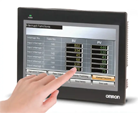
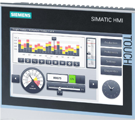
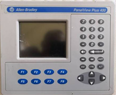
Industrial Human-Machine Interfaces (HMIs): For factory automation, PLC control panels, and test equipment where readability under bright lights and long-term 24/7 operation are required.
Transportation and Automotive: In-vehicle displays for fleet management, construction vehicle consoles, and marine navigation where wide temperature tolerance and resistance to vibration are non-negotiable.
Medical and Instrumentation: For patient monitoring devices or diagnostic equipment where display stability is critical, though color accuracy for medical imaging is not a primary need.
Point-of-Sale and Kiosks: Outdoor or semi-outdoor payment terminals and information kiosks that must remain functional in varying weather conditions.
In these fields, the module's STN technology and CCFL backlight are not drawbacks but selected advantages, providing proven performance where newer technologies might falter.
Integration Considerations and Design Challenges
Successfully integrating the G104STN01.0 requires careful planning. First, the CCFL backlight necessitates an inverter circuit to generate the high-voltage AC needed to drive the lamps. This adds design complexity, consumes more space, and has implications for EMI (Electromagnetic Interference) management. Designers must source a compatible inverter and ensure proper mechanical isolation and thermal management for both the LCD panel and the inverter.
Second, power sequencing is paramount. The LVDS interface and TFT logic must be powered up in a specific order to prevent latch-up and permanent damage. The datasheet's timing diagrams must be followed meticulously. Finally, considering the module's long lifecycle, securing a stable supply chain and planning for potential end-of-life scenarios is a strategic necessity. Engaging with reputable distributors or considering compatible alternatives early in the design process is a prudent step.
Comparative Perspective: STN vs. Modern Alternatives
Placing the G104STN01.0 in the context of modern alternatives clarifies its value proposition. Compared to a standard 10.4" IPS LED module, the G104STN01.0 will generally have:
Narrower viewing angles but better sunlight readability.
Lower power consumption for the panel itself (though the CCFL inverter offsets some savings).
A wider operating temperature range, especially at the low end.
A potentially longer operational lifetime and higher MTBF (Mean Time Between Failures) due to simpler, more mature technology.
A cost structure that may be favorable for mid-to-high volume industrial projects.
The choice is not about which technology is universally "better," but which is optimal for the specific environmental, economic, and performance constraints of the project. For new designs, a thorough evaluation of modern wide-temperature LED-backlit IPS panels is also essential, as the technology gap continues to evolve.
FAQs: G104STN01.0 10.4" TFT LCD Module
Q1: What does "STN" stand for in G104STN01.0?A1: It stands for Super-Twisted Nematic, a type of LCD technology known for good sunlight readability and wide temperature range.
Q2: What is the screen resolution?A2: The resolution is 640 x 480 pixels (SVGA) with a 4:3 aspect ratio.
Q3: What type of backlight does it use?A3: It uses a CCFL (Cold Cathode Fluorescent Lamp) backlight, which requires an external inverter.
Q4: What is the main interface?A4: It features a standard LVDS (Low-Voltage Differential Signaling) digital interface.
Q5: Is it suitable for outdoor use?A5: Yes, its high contrast and wide operating temperature range (-30°C to +80°C typical) make it suitable for many outdoor applications.
Q6: How does it compare to IPS displays?A6: It has narrower viewing angles but often better sunlight readability and a wider temperature range than standard IPS panels.
Q7: What are typical applications?A7: Common uses include industrial HMIs, vehicle displays, medical devices, and outdoor kiosks.
Q8: What is a key design challenge when integrating it?A8: Managing the CCFL inverter (power, EMI, heat) and adhering strictly to power sequencing requirements are critical challenges.
Q9: Can I replace a CCFL backlight with an LED?A9: Not directly. It would require a complete redesign of the backlight unit and optics, which is not a standard modification.
Q10: Is this module still in production?A10: Availability varies. It's a mature product, so checking with AUO or authorized distributors for current lifecycle status is essential for new designs.
Conclusion
The AUO G104STN01.0 10.4" TFT LCD module exemplifies how specialized display technology continues to serve critical roles in demanding sectors. It is not a module chosen for its vibrant colors or ultra-wide viewing angles, but for its proven resilience, environmental robustness, and focused performance in contexts where failure is not an option. Its STN panel and CCFL backlight represent a mature, optimized solution for a specific set of challenges—from freezing winters to scorching summer sun and the constant vibration of a factory floor.
For engineers and designers, the key takeaway is the importance of application-driven selection. By thoroughly understanding its technical profile, integration demands, and ideal use cases, one can leverage the G104STN01.0 to build products that are reliable, durable, and cost-effective over their entire lifecycle. In an era of rapid technological change, such specialized components remind us that the "best" technology is always the one that most perfectly aligns with the real-world conditions of the final product.





