
















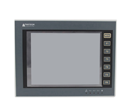
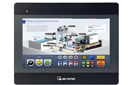
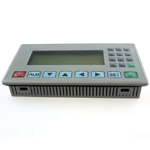




- Industrie-LCD-Display
-
Industrial Products
- DC Servo Drive
- AC Servo Drive
- PCB
- Siemens
- Switch Sensor
- Näherungsschalter
- Temperaturregler
- Schutzrelais
- Fiber Optic Sensor
- Encoder
- Fan
- other
- Heidelberg
- MITSUBISHI
- FANUC
- Siemens adapter
- Fujitsu connector
- Der Aufsichtsrat
- Board
- Contactor
- Circuit
- Omron
- Relais.
- Motortreiber
- power supply
- Cable
- Transformator
- HMI Touch-Glas
-
HMI-Vollautomat Ganze Einheit
- OMRON HMI Touch Panel
- Siemens HMI Touch Panel
- Mitsubishi HMI Touch Panel
- Allen-Bradley Automatisierung HMI Touch
- DELTA HMI Touch Panel
- EVIEW DELTA HMI Touch Panel
- KINCO DELTA HMI Touch Panel
- HITECH HMI Touch Panel
- WEINTECK HMI Touch Panel
- TECVIEW HMI Touch Panel
- WEINVIEW HMI Touch Panel
- PANASONIC HMI Touch Panel
- KYOCERA HMI Touch Panel
- SCHNEIDER HMI Touch Panel
- Module
- LCD Wechselrichter
- Membran Tastenfeld Schalter
- Winni Touch Screens
- Frequenzumrichter
- Servo Motor
- PLC
In the intricate ecosystem of industrial and embedded display solutions, specific components become the unsung heroes of reliability and performance. One such component is the G104VTN01.0, a 10.4-inch TFT-LCD module (LCM) developed by AUO (AU Optronics). This display, with its resolution of 640(RGB)×480 pixels, represents a cornerstone in a class of displays designed not for consumer glamour, but for unwavering duty in demanding environments. Its part number tells a story of a specific era and technological approach, built around amorphous Silicon (a-Si) TFT technology.

This article delves deep into the G104VTN01.0, moving beyond basic datasheet specifications. We will explore its fundamental architecture, decode the rationale behind its seemingly "outdated" resolution, and examine the unique value proposition it offers in a market increasingly dominated by high-resolution panels. Our journey will cover its technical underpinnings, ideal application landscapes, critical interface considerations, and the practical challenges and solutions associated with its integration and longevity in the field.
Decoding the G104VTN01.0: Architecture and Core Technology
The G104VTN01.0 is built on a foundation of amorphous Silicon (a-Si) Thin-Film Transistor (TFT) technology. This mature and highly reliable process involves depositing non-crystalline silicon on a glass substrate to create the transistors that control each individual pixel. For a 10.4-inch diagonal screen with a 640x480 resolution (VGA), this results in a pixel pitch that offers a balance between detail density and manufacturing robustness. The "LCM" designation indicates it is a complete LCD Module, integrating the TFT glass, driver ICs, backlight unit (typically a CCFL, given its era), and power supply circuitry into a single, ready-to-interface unit.
The module's native 4:3 aspect ratio is a direct signature of its design period and target use. This format was the standard for machine interfaces, industrial PCs, and medical monitors before the widescreen revolution. The electrical interface is typically Low-Voltage Differential Signaling (LVDS) or earlier TTL, providing a robust digital connection to a controller board. Understanding this core architecture is crucial, as it defines the module's compatibility, power requirements, and signal needs, setting the stage for successful integration.

The Enduring Relevance of VGA Resolution in Niche Applications
In an age of 4K and beyond, a 640x480 (VGA) resolution might appear anachronistic. However, for the G104VTN01.0's target domains, this resolution is a strategic fit, not a limitation. Industrial Human-Machine Interfaces (HMIs), point-of-sale systems, transportation displays, and specialized medical devices often prioritize reliability, readability, and long-term compatibility over ultra-high pixel density. The VGA resolution ensures graphical user interfaces (GUIs) and text remain legible without excessive scaling, reduces the computational load on embedded processors, and minimizes data transfer requirements.
Furthermore, this resolution aligns perfectly with legacy systems still in operation. Upgrading an entire control system to accommodate a new display aspect ratio and resolution can be prohibitively expensive and complex. The G104VTN01.0 acts as a direct, drop-in replacement, extending the lifecycle of critical machinery. Its value lies in solving an engineering and logistical problem, not in winning spec sheets.
Operational Domains: Where This Display Excels
The G104VTN01.0 finds its true home in environments where environmental resilience and operational consistency are paramount. Its typical operating temperature range, often spanning from -20°C to 70°C, makes it suitable for factory floor automation panels, outdoor kiosks in controlled enclosures, and vehicle-mounted terminals. The robust construction of industrial-grade LCMs protects against vibration, dust, and electromagnetic interference common in these settings.
Beyond heavy industry, this module is a staple in medical diagnostic equipment like patient monitors or ultrasound machines, where color fidelity and consistent performance are critical. Its 4:3 aspect ratio is also preferred in test and measurement equipment and avionics displays, where screen real estate is used for data arrays and control parameters rather than widescreen media. In each case, the display serves as a reliable window into a machine's state, a role where failure is not an option.
Critical Integration Parameters and Interface Considerations
Successfully deploying the G104VTN01.0 requires careful attention to its integration parameters. Engineers must first verify the interface type (e.g., single-channel LVDS) and pinout, ensuring compatibility with the chosen controller board or system-on-chip (SoC). The power supply sequence is critical; improper sequencing of logic power, analog power, and backlight power can permanently damage the module. The backlight, often a CCFL, requires a high-voltage inverter, adding complexity compared to modern LED-backlit units.
Furthermore, physical integration involves designing a bezel that provides proper mechanical support without stressing the glass, managing heat dissipation from the driver ICs and backlight, and ensuring the front polarizer is compatible with the intended use environment (e.g., anti-glare treatment for brightly lit areas). Neglecting these "boring details" is the most common cause of field failures or reduced lifespan in otherwise robust displays.
Sourcing and Lifecycle Management in a Mature Market
As a product based on older a-Si lines, the G104VTN01.0 exists in a mature market phase. Original manufacturing runs by AUO may have ceased, shifting the supply chain to authorized distributors with remaining stock and specialized aftermarket manufacturers. This presents a key challenge: ensuring a stable, long-term supply for products with multi-year development and deployment cycles. Procuring from reputable sources is essential to avoid counterfeit or remarked panels that fail to meet original specifications.
Proactive lifecycle management is therefore a critical part of using such components. This involves forecasting needs, securing inventory, and qualifying alternative or "pin-to-pin compatible" modules from other manufacturers as a contingency plan. Understanding the display's End-of-Life (EOL) status and having a migration strategy is not merely procurement's task but a core design consideration for any product manager relying on this technology.





