

















- Industrie-LCD-Display
-
Industrial Products
- DC Servo Drive
- AC Servo Drive
- PCB
- Siemens
- Switch Sensor
- Näherungsschalter
- Temperaturregler
- Schutzrelais
- Fiber Optic Sensor
- Encoder
- Fan
- other
- Heidelberg
- MITSUBISHI
- FANUC
- Siemens adapter
- Fujitsu connector
- Der Aufsichtsrat
- Board
- Contactor
- Circuit
- Omron
- Relais.
- Motortreiber
- power supply
- Cable
- Transformator
- HMI Touch-Glas
-
HMI-Vollautomat Ganze Einheit
- OMRON HMI Touch Panel
- Siemens HMI Touch Panel
- Mitsubishi HMI Touch Panel
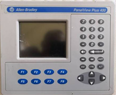
- Allen-Bradley Automatisierung HMI Touch
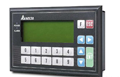
- DELTA HMI Touch Panel
- EVIEW DELTA HMI Touch Panel
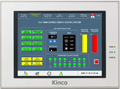
- KINCO DELTA HMI Touch Panel
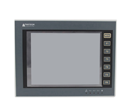
- HITECH HMI Touch Panel
- WEINTECK HMI Touch Panel
- TECVIEW HMI Touch Panel
- WEINVIEW HMI Touch Panel
- PANASONIC HMI Touch Panel
- KYOCERA HMI Touch Panel
- SCHNEIDER HMI Touch Panel
- Module
- LCD Wechselrichter
- Membran Tastenfeld Schalter
- Winni Touch Screens
- Frequenzumrichter
- Servo Motor
- PLC
In the intricate world of embedded systems and human-machine interfaces (HMI), the display module serves as the critical bridge between complex data and user comprehension. Among the myriad of options available to engineers and developers, the COM43T4M05GTC Ortustuch 4.3-inch LCD Display Module emerges as a noteworthy solution, balancing compact form factor with robust functionality. This article delves into a comprehensive analysis of this specific module, moving beyond basic specifications to explore its architectural advantages, practical integration challenges, and ideal application ecosystems.


We will dissect the technical DNA of the COM43T4M05GTC, examining how its components synergize to deliver performance. Furthermore, the discussion will extend to the nuanced process of embedding this module into diverse projects, the software considerations that unlock its potential, and a clear-eyed evaluation of its strengths against competing technologies. Our goal is to provide hardware integrators, product designers, and embedded enthusiasts with a deep, actionable understanding of where and how this Ortustuch display module can be a catalyst for innovation.


Decoding the Architecture: Core Components and Interface
The COM43T4M05GTC is more than just a 4.3-inch LCD panel; it is a fully integrated display system. At its heart lies a TFT LCD with a resolution of 480 x 272 pixels (WVGA), offering a clear and crisp visual output for graphical user interfaces and data visualization. The module incorporates a dedicated LCD controller, which is pivotal as it handles the timing, signal generation, and pixel driving, significantly offloading these tasks from the host microcontroller or processor.
A key feature is its versatile interface, typically centered around an RGB or MCU parallel interface, allowing for direct connection to a wide range of mainstream microprocessors. The integration of a capacitive touch panel, often using Projected Capacitive (P-Cap) technology, provides a modern, responsive user input method. This built-in touch controller translates finger gestures into digital signals, simplifying the design process by reducing external component count and firmware complexity for the system designer.
Electrical Integration and Power Management Nuances
Successfully integrating the COM43T4M05GTC into a design requires careful attention to its electrical requirements. The module operates on a single power supply, typically 3.3V or 5.0V, but its internal power tree generates various voltages needed for the LCD backlight, logic circuits, and touch sensor. Designers must ensure a clean and stable power rail, as noise can manifest as visual artifacts on the display.
Backlight management is a critical aspect of both performance and power efficiency. The module's LED backlight requires a constant-current driver. Design decisions here—whether using a simple resistor, a linear regulator, or a switching LED driver—impact overall system power consumption, heat generation, and backlight uniformity. Furthermore, implementing hardware dimming controls (via PWM) is essential for applications requiring adjustable brightness to suit different ambient lighting conditions, a common need in industrial and automotive settings.
Software Ecosystem and Driver Implementation
The hardware's capability is fully realized only through effective software. For the COM43T4M05GTC, this involves two primary layers: the low-level display driver and the touch controller driver. The display driver initializes the controller, configures the timing parameters (pixel clock, horizontal/vertical sync), and manages the frame buffer. This can be a complex task, often leveraging vendor-provided initialization code as a starting point.
On the input side, the capacitive touch controller communicates via I2C or SPI. The driver must reliably read raw coordinate data, implement filtering algorithms to reduce noise, and often handle multi-touch gesture recognition. The final step involves integrating these drivers with a higher-level graphics library or a real-time operating system (RTOS) with a GUI framework, such as Embedded Wizard, TouchGFX, or LVGL. This library is responsible for rendering widgets, handling touch events, and providing a smooth user experience.
Comparative Analysis in the 4.3-Inch Display Landscape
Positioning the Ortustuch COM43T4M05GTC requires comparison with alternative modules. Its primary advantages often lie in its high level of integration and build quality. Compared to sourcing a bare LCD panel and a separate controller board, this module offers a plug-and-play solution that reduces development time, physical footprint, and electromagnetic interference (EMI) risks.
When evaluated against other integrated modules, its competitive edge may include a superior capacitive touch experience (versus resistive touch), wider operating temperature ranges suitable for industrial applications, or better optical characteristics like higher brightness or wider viewing angles. However, the trade-off often involves cost; highly integrated, quality modules command a premium over fragmented, lower-cost alternatives. The choice ultimately hinges on the project's priorities: development speed, reliability, performance, or unit cost.
Optimal Application Scenarios and Use Cases
The specific attributes of the COM43T4M05GTC make it exceptionally suitable for several domains. In industrial automation, its robust construction and reliable touch interface are ideal for factory floor control panels, PLC operator interfaces, and diagnostic equipment, where clarity and durability are paramount. The medical device field benefits from its ability to create intuitive interfaces for portable monitors or diagnostic tools, with the capacitive touch enabling easy sanitization.
Furthermore, it finds a strong fit in smart home and building automation control hubs, point-of-sale (POS) systems, and advanced automotive aftermarket devices (like diagnostic scanners or multimedia centers). In these applications, the balance of a compact yet readable screen size, modern touch interaction, and reliable performance under continuous use validates its selection. It is less suited for ultra-high-resolution video playback or applications requiring extreme miniaturization where chip-on-glass (COG) solutions might be preferable.
Overcoming Common Design and Sourcing Challenges
Adopting a specific module like the COM43T4M05GTC presents unique challenges. Supply chain volatility is a foremost concern; ensuring long-term availability or identifying second-source compatible modules is a critical part of product planning. Technically, designers may face issues with electromagnetic compatibility (EMC), as the high-speed signals to the display can be emission sources. Careful PCB layout, with proper shielding and grounding of the display connector and cables, is non-negotiable.
Another hurdle is firmware optimization for smooth graphics performance, especially on resource-constrained microcontrollers. Techniques like using partial screen refresh, optimizing the frame buffer memory architecture, and efficiently managing touch events are crucial. Finally, mechanical integration—designing the bezel, securing the module, and ensuring the touch panel aligns perfectly with the front cover—requires precise mechanical design to achieve a professional end-product feel.
FAQs: Ortustuch COM43T4M05GTC Display Module
Q1: What is the primary interface of the COM43T4M05GTC?A: It typically features a parallel RGB or MCU interface for display data and an I2C/SPI interface for the capacitive touch controller.
Q2: What is the screen resolution?A: It offers a WVGA resolution of 480 x 272 pixels.
Q3: Is the touch screen resistive or capacitive?A: This module is equipped with a Projected Capacitive (P-Cap) touch screen for multi-touch support and better durability.
Q4: What voltage does it operate on?A: It commonly operates on a single 3.3V or 5.0V supply, but the backlight may have separate requirements.
Q5: Do I need external drivers for the LCD or touch?A: No, the module integrates both the LCD controller and touch controller, simplifying driver development.
Q6: Is it suitable for outdoor use?A: It depends on the specific model's brightness. Standard modules may be hard to read in direct sunlight; a high-brightness version would be needed.
Q7: Can it be used with a Raspberry Pi?A: Yes, but it usually requires an adapter board or careful connection to the GPIO, as the Pi does not natively support parallel RGB interfaces.
Q8: What graphics libraries are compatible?A: Most common embedded GUI libraries (LVGL, TouchGFX, Embedded Wizard, emWin) are compatible, provided the low-level drivers are implemented.
Q9: What is the typical lifespan of the backlight?A: LED backlights typically have lifespans exceeding 50,000 hours, but this depends on operating current and temperature.
Q10: Where can I find the datasheet and initialization code?A: These technical documents are typically provided by Ortustuch or authorized distributors upon request or purchase.
Conclusion
The Ortustuch COM43T4M05GTC 4.3-inch LCD display module represents a sophisticated, integrated solution for modern embedded HMI projects. Its value proposition lies in the convergence of a quality TFT panel, a capable display controller, and a responsive capacitive touch sensor into a single, manageable component. This integration dramatically accelerates development cycles and reduces design risk, allowing teams to focus on application-specific innovation rather than low-level display electronics.
However, as explored, its successful deployment hinges on a deep understanding of its electrical integration, software driver development, and mechanical design considerations. By carefully evaluating its strengths against project-specific requirements for industrial robustness, user experience, and cost, engineers can leverage this module to build intuitive, reliable, and competitive products. In the fast-evolving landscape of embedded interfaces, such well-engineered components are indispensable tools for turning conceptual interactions into tangible reality.





