













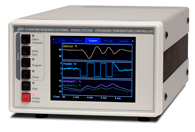
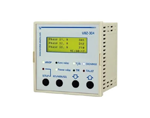

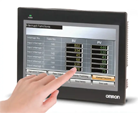





- Industrie-LCD-Display
-
Industrial Products
- DC Servo Drive
- AC Servo Drive
- PCB
- Siemens
- Switch Sensor
- Näherungsschalter
- Temperaturregler
- Schutzrelais
- Fiber Optic Sensor
- Encoder
- Fan
- other
- Heidelberg
- MITSUBISHI
- FANUC
- Siemens adapter
- Fujitsu connector
- Der Aufsichtsrat
- Board
- Contactor
- Circuit
- Omron
- Relais.
- Motortreiber
- power supply
- Cable
- Transformator
- HMI Touch-Glas
-
HMI-Vollautomat Ganze Einheit
- OMRON HMI Touch Panel
- Siemens HMI Touch Panel
- Mitsubishi HMI Touch Panel
- Allen-Bradley Automatisierung HMI Touch
- DELTA HMI Touch Panel
- EVIEW DELTA HMI Touch Panel
- KINCO DELTA HMI Touch Panel
- HITECH HMI Touch Panel
- WEINTECK HMI Touch Panel
- TECVIEW HMI Touch Panel
- WEINVIEW HMI Touch Panel
- PANASONIC HMI Touch Panel
- KYOCERA HMI Touch Panel
- SCHNEIDER HMI Touch Panel
- Module
- LCD Wechselrichter
- Membran Tastenfeld Schalter
- Winni Touch Screens
- Frequenzumrichter
- Servo Motor
- PLC
In the intricate world of embedded systems and portable electronics, the display serves as the critical bridge between the device and the user. Among the myriad of options available to designers, the A027DTN01.F, a 2.7-inch TFT LCD module manufactured by AUO (AU Optronics), stands out as a specialized component engineered for applications where compact size, reliability, and visual clarity are non-negotiable. This module is not merely a screen; it is a complete display subsystem, integrating the LCD panel, driver IC, and often a backlight unit into a single, manageable package.

This article delves into a comprehensive technical and application-focused analysis of the A027DTN01.F module. We will move beyond basic datasheet parameters to explore its architectural nuances, performance characteristics under various conditions, and the specific design challenges it helps solve. Our aim is to provide engineers, product designers, and procurement specialists with a deep understanding of where and how this module creates value, enabling informed decision-making for next-generation compact devices.
Architectural Breakdown and Core Specifications
At its heart, the A027DTN01.F is an a-Si (amorphous Silicon) TFT-LCD module. The "2.7-inch" designation refers to the diagonal measurement of its active area, which typically offers a resolution of 240 (RGB) x 320 dots, commonly known as QVGA. This pixel density strikes a balance between information content and component size. The module integrates a built-in driver IC, which is crucial as it handles the complex timing and voltage signals required to control each individual pixel, significantly simplifying the host processor's interface.
Key electrical specifications include a defined supply voltage range for both the logic and the backlight (often LED-based). The interface is typically a parallel RGB or an SPI (Serial Peripheral Interface), with RGB being standard for this resolution to ensure adequate data throughput for dynamic images. Understanding these core specs—viewing area dimensions, dot format, interface type, and power requirements—forms the foundational knowledge for any integration effort, dictating the physical footprint and basic electrical design of the host device.
Optical Performance and Viewing Experience
The module's optical performance is where its engineering truly meets the user. Key parameters include brightness (measured in nits), contrast ratio, and color gamut. For a module like the A027DTN01.F, brightness levels are tailored for indoor use or shaded outdoor environments, ensuring readability without excessive power draw. The contrast ratio defines the difference between the brightest white and the darkest black, impacting text legibility and image depth.
Perhaps most critical for small displays are the viewing angles. AUO typically employs specific TFT technologies to widen these angles, though they are often more constrained than on larger panels. Engineers must evaluate whether the module's horizontal and vertical viewing angles (e.g., 80/80/80/80 degrees) are sufficient for the target application's usage patterns. Color saturation and uniformity across the panel are also vital for ensuring a consistent and pleasing visual experience, whether displaying a simple user interface or diagnostic icons.

Interface Integration and Signal Management
Successfully integrating the A027DTN01.F into a product requires meticulous attention to its interface. The parallel RGB interface, while common, involves a significant number of data lines (e.g., for 18-bit color, 6 lines each for Red, Green, and Blue), plus control signals like HSYNC, VSYNC, and DOTCLK. Proper PCB layout is essential to minimize crosstalk and signal integrity issues over the flex cable connection.
Designers must also manage power sequencing—the precise order in which logic power, I/O power, and panel power supplies are turned on and off—to prevent latch-up or damage. Furthermore, the initialization sequence sent via the interface to configure the internal driver IC's registers is a critical software step. Missteps in any of these areas can lead to a non-functional display, image artifacts, or reduced reliability, underscoring the need for careful adherence to the manufacturer's timing diagrams and application notes.
Power Efficiency and Thermal Considerations
For battery-powered portable devices, every milliwatt counts. The power consumption of the A027DTN01.F module is dominated by two components: the logic/driver circuitry and the LED backlight. Designers have several levers to optimize efficiency. At the logic level, ensuring clean, stable power supplies minimizes wasted energy. More significantly, the backlight intensity can be dynamically controlled via PWM (Pulse Width Modulation) dimming based on ambient light, offering substantial power savings.
Thermal management, though often overlooked in small modules, is interconnected. The LEDs and driver IC generate heat during operation. In a sealed, compact enclosure, this heat must be dissipated to prevent premature aging of the LCD fluid or LEDs, which can manifest as color shift or dark spots. Adequate ventilation or thermal design that avoids placing high-heat components adjacent to the module is a prudent practice for ensuring long-term performance and longevity.
Application-Specific Design Challenges
The A027DTN01.F finds its niche in specific market segments where its size-to-performance ratio is ideal. Primary applications include portable medical devices (e.g., handheld monitors, diagnostic tools), industrial handheld terminals (for inventory management or logistics), advanced consumer wearables beyond simple smartwatches, and compact human-machine interface (HMI) panels.
Each domain presents unique challenges. Medical devices may demand higher brightness and reliability under stringent environmental conditions. Industrial tools require robustness against vibration, wider temperature tolerances, and enhanced ESD protection. Wearables demand ultra-low power states and sunlight readability. Understanding these vertical-specific requirements allows designers to properly test and qualify the module, potentially requiring additional enhancements like strengthened bonding, optical bonding for sunlight readability, or conformal coating for moisture resistance.
Supply Chain and Lifecycle Management
Selecting a display module extends beyond technical fit to encompass supply chain viability. As a product from a major manufacturer like AUO, the A027DTN01.F benefits from established production quality. However, engineers must verify its current lifecycle status—is it in active production, nearing end-of-life (EOL), or already obsolete? Committing to a component slated for EOL can derail a product's future.
Furthermore, securing a stable supply often involves working with authorized distributors or considering compatible alternatives from other manufacturers. Factors like lead times, minimum order quantities (MOQs), and the availability of long-term supply agreements become critical business considerations. A dual-source strategy or designing with a pin-compatible alternative in mind can mitigate supply risk, ensuring product manufacturing is not halted by a single component shortage.
Frequently Asked Questions (FAQs)
Q1: What is the typical resolution of the A027DTN01.F module?A1: It typically features a QVGA resolution of 240 x 320 pixels.
Q2: What type of interface does it commonly use?A2: It most commonly uses a parallel RGB interface, though some variants may support SPI for simpler control.
Q3: Is the backlight integrated, and what type is it?A3: Yes, it usually includes an integrated LED backlight unit for illumination.
Q4: What are the main applications for this display?A4: Key applications include portable medical equipment, industrial handheld devices, specialized wearables, and compact HMIs.
Q5: How is power consumption managed?A5: Consumption is managed through efficient power supply design and PWM dimming control of the LED backlight.
Q6: What are critical factors for successful integration?A6: Careful attention to power sequencing, signal integrity in PCB layout, and correct driver initialization software.
Q7: What viewing angles can be expected?A7: Viewing angles are typically around 80 degrees in all directions (up/down/left/right), but the datasheet should be consulted for exact specs.
Q8: Can it operate in extreme temperatures?A8: Standard versions have commercial temperature ranges. For industrial or extended ranges, specific variants or testing are required.
Q9: How do I manage the end-of-life risk for this component?A9: Verify lifecycle status with the manufacturer/distributor and consider identifying a pin-compatible alternative for design flexibility.
Q10: Where can I find detailed technical documentation?A10: Full datasheets, application notes, and CAD drawings are typically available through AUO's official channels or authorized distributors.
Conclusion
The AUO A027DTN01.F 2.7-inch TFT LCD module exemplifies the sophisticated engineering packed into compact form factors that drive modern portable electronics. Its value lies not in being a generic display, but in its role as a tailored solution where space, power, and reliability are at a premium. A deep understanding of its optical performance, integration intricacies, and power dynamics is essential for unlocking its full potential within a product.
Ultimately, successful implementation hinges on a holistic view that marries technical specifications with real-world application demands and supply chain pragmatism. By approaching the A027DTN01.F with this comprehensive perspective—from signal integrity on the bench to lifecycle management in the boardroom—designers can confidently leverage this module to create robust, user-friendly, and competitive devices in an increasingly connected world.





