













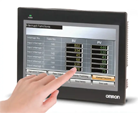
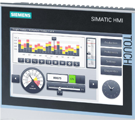





- Industrial display
-
Industrial Products
- DC Servo Drive
- AC Servo Drive
- Industrial board
- Siemens
- Switch Sensor
- Proximity Switch
- Temperature Controller
- Protection Relay
- Fiber Optic Sensor
- Encoder
- Fan
- other
- Heidelberg
- MITSUBISHI
- FANUC
- Siemens adapter
- Fujitsu connector
- Motherboard
- Board
- Contactor
- Circuit
- OMRON
- Relay
- Motor Driver
- power supply
- Cable
- Transformer
- HMI Touch Glass
-
HMI Full Machine Whole unit
- OMRON HMI Touch Panel
- Siemens HMI Touch Panel
- Mitsubishi HMI Touch Panel
- Allen-Bradley automation HMI Touch Panel
- DELTA HMI Touch Panel
- Proface HMI Touch Panel
- KINCO DELTA HMI Touch Panel
- HITECH HMI Touch Panel
- WEINTEK HMI Touch Panel
- TECVIEW HMI Touch Panel
- WEINVIEW HMI Touch Panel
- PANASONIC HMI Touch Panel
- KYOCERA HMI Touch Panel
- SCHNEIDER HMI Touch Panel
- Module
- lcd inverter
- Membrane Keypad Switch
- Zhiyan Customized Touch Screens
- Frequency Inverter
- Servo Motor
- PLC
In the intricate world of industrial and embedded display solutions, the choice of a component can define the performance, reliability, and user experience of an entire system. At the heart of many advanced human-machine interfaces (HMIs), medical devices, and point-of-sale terminals lies a critical component: the LCD display module. This article delves deep into a specific and powerful example of this technology—the C080VAT02.0, an 8-inch LCD display module built around an AUO (AU Optronics) TFT panel.
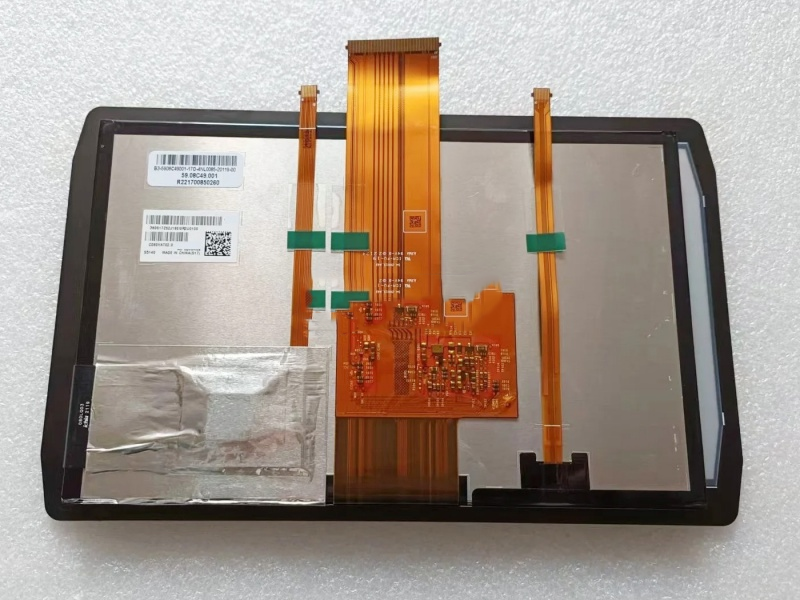
Our exploration goes beyond basic specifications. We will dissect the C080VAT02.0's technical architecture, uncover its optimal application environments, and provide a clear framework for successful integration. For engineers, product designers, and procurement specialists, understanding the nuances of this module is key to unlocking its full potential and ensuring a seamless fit within demanding technological ecosystems.
Technical Architecture and Core Specifications
The C080VAT02.0 is more than just an AUO panel; it is a fully integrated display module. Its foundation is an 8.0-inch diagonal TFT-LCD with a resolution of 800 x RGB x 600 (SVGA), offering a balanced pixel density for clear text and graphics. The module typically incorporates a high-performance LVDS interface, ensuring robust, low-noise signal transmission essential for industrial environments. A critical, often overlooked component is the integrated controller board.
This board houses the timing controller (T-Con), power circuitry, and backlight driver, transforming raw panel signals into a stable, controllable display. The inclusion of a LED backlight system not only ensures uniform brightness but also contributes to a slimmer profile and better power efficiency compared to older CCFL technology. Understanding this architecture—the synergy between the AUO glass, controller, and backlight—is the first step in leveraging its capabilities.
Optimal Application Environments and Use Cases
The design philosophy behind the C080VAT02.0 targets applications where durability, clarity, and long-term reliability are non-negotiable. Its industrial-grade construction makes it ideal for factory automation HMIs, where it must resist vibration, fluctuating temperatures, and continuous operation. In the medical field, its stable performance and good color reproduction support diagnostic displays and patient monitoring equipment.
Furthermore, its form factor and readability make it a prime candidate for portable test and measurement devices, transportation infotainment systems, and self-service kiosks. The module excels in scenarios requiring a compact yet viewable screen that delivers consistent performance without the excess bulk or power draw of consumer-grade displays. Identifying these fit-for-purpose scenarios is crucial for maximizing return on investment.
Critical Integration Considerations for Engineers
Successful deployment of the C080VAT02.0 requires careful attention to integration details. Electrical compatibility is paramount; engineers must ensure their host system's LVDS output signal voltage and timing align perfectly with the module's input requirements. Mechanical integration involves precise consideration of the mounting holes, bezel dimensions, and the connector's location to avoid stress on the flexible printed circuit.
Thermal management is another vital aspect. While efficient, the LED backlight and drivers generate heat. Adequate ventilation or passive heat sinking within the end-product's enclosure is necessary to maintain optimal operating temperatures and ensure long-term luminance stability. Overlooking these integration nuances can lead to image artifacts, reduced lifespan, or outright failure in the field.
Interface Compatibility and Signal Optimization
The LVDS interface of the C080VAT02.0, while standard, demands specific handling for optimal performance. Designers must route the differential LVDS pairs on their main PCB with strict impedance control and length matching to preserve signal integrity over the cable connection to the module. Choosing the correct connector and cable assembly—often a pin-and-socket or FPC type—is equally important for mechanical reliability.
Signal optimization also involves configuring the correct color depth and timing parameters within the system's graphics controller or FPGA. Incorrect settings can result in flicker, color shift, or a blank screen. Some module variants may offer optional touchscreen interfaces (resistive or capacitive), which add another layer of interface planning for the host system's controller.
Enhancing Reliability and Managing the Supply Chain
For products with long lifecycles, the reliability and continued availability of components are critical. The C080VAT02.0, based on a mature AUO panel, is often selected for its proven track record. To further enhance reliability in harsh conditions, conformal coating of the module's controller board may be recommended. Additionally, working with reputable distributors or the module manufacturer directly is key to securing a stable supply and accessing authentic, high-quality components.
Proactive supply chain management includes understanding potential end-of-life (EOL) timelines for the underlying panel and planning for potential future redesigns or securing lifetime buys. Establishing a relationship with a technical supplier who can provide full documentation, including detailed mechanical drawings and EOL notices, mitigates significant project risk.
Comparative Analysis and Future-Proofing
When selecting a display module, it is instructive to compare the C080VAT02.0 against alternatives. Compared to smaller modules, it offers more viewing area for complex data; compared to larger ones, it saves space and power. Its SVGA resolution provides a sweet spot between detail and system cost for many industrial applications, unlike higher-resolution displays that require more powerful and expensive processing.
Future-proofing involves considering the technology's trajectory. While TFT-LCD remains dominant, understanding the role of this module within that landscape is important. Its value lies in its optimized maturity—offering excellent performance and reliability for current-generation designs. For next-generation products, one might evaluate newer panel technologies, but for many stable applications, the C080VAT02.0 represents a dependable and technically sound choice.
FAQs: C080VAT02.0 8" LCD Display Module
Q1: What is the exact resolution of the C080VAT02.0 module?A1: It features an SVGA resolution of 800 x 600 pixels.
Q2: Which interface does this module use?A2: It typically uses a Low-Voltage Differential Signaling (LVDS) interface for robust data transmission.
Q3: Is the module suitable for outdoor use?A3: It is primarily designed for indoor use. Outdoor application requires careful consideration of high-brightness options, sunlight-readable enhancements, and environmental sealing.
Q4: Does it include a touchscreen?A4: The standard module is a display-only unit. Touchscreen panels (resistive or capacitive) are often available as optional add-ons or from integrators.
Q5: What is the operating temperature range?A5: Standard operating temperature ranges are typically from -20°C to 70°C, but specific grades should be verified with the supplier's datasheet.
Q6: Who manufactures the core TFT panel?A6: The core TFT-LCD panel is manufactured by AU Optronics (AUO).
Q7: What type of backlight is used?A7: It employs a long-life, energy-efficient LED backlight system.
Q8: Can I drive this module with a single-board computer like a Raspberry Pi?A8: Not directly. The Raspberry Pi outputs HDMI, not LVDS. You would need an intermediate controller board (HDMI to LVDS converter) for compatibility.
Q9: What are the key advantages over consumer LCDs?A9: Key advantages include industrial-grade reliability, wider operating temperature range, longer lifecycle availability, and often better quality control for consistent performance.
Q10: Where can I find the detailed pinout and mechanical drawings?A10: These are found in the module's official datasheet and specification documents, which should be obtained from the authorized distributor or manufacturer.
Conclusion
The C080VAT02.0 8-inch LCD display module stands as a testament to the enduring value of well-executed, mature display technology. By combining a reliable AUO TFT panel with a fully integrated controller and LED backlight, it presents a turnkey solution that balances performance, durability, and cost-effectiveness for a wide range of professional applications.
From technical integration to supply chain strategy, a deep understanding of this module empowers design teams to make informed decisions. It is not merely a commodity screen but a critical system component whose proper selection and implementation can significantly contribute to the success, longevity, and user satisfaction of the final product. In a landscape of constant technological churn, the C080VAT02.0 offers a pillar of reliable functionality.





