














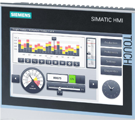

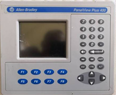


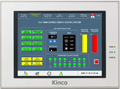







- Industrial display
-
Industrial Products
- DC Servo Drive
- AC Servo Drive
- Industrial board
- Siemens
- Switch Sensor
- Proximity Switch
- Temperature Controller
- Protection Relay
- Fiber Optic Sensor
- Encoder
- Fan
- other
- Heidelberg
- MITSUBISHI
- FANUC
- Siemens adapter
- Fujitsu connector
- Motherboard
- Board
- Contactor
- Circuit
- OMRON
- Relay
- Motor Driver
- power supply
- Cable
- Transformer
- HMI Touch Glass
-
HMI Full Machine Whole unit
- OMRON HMI Touch Panel
- Siemens HMI Touch Panel
- Mitsubishi HMI Touch Panel
- Allen-Bradley automation HMI Touch Panel
- DELTA HMI Touch Panel
- Proface HMI Touch Panel
- KINCO DELTA HMI Touch Panel
- HITECH HMI Touch Panel
- WEINTEK HMI Touch Panel
- TECVIEW HMI Touch Panel
- WEINVIEW HMI Touch Panel
- PANASONIC HMI Touch Panel
- KYOCERA HMI Touch Panel
- SCHNEIDER HMI Touch Panel
- Module
- lcd inverter
- Membrane Keypad Switch
- Zhiyan Customized Touch Screens
- Frequency Inverter
- Servo Motor
- PLC
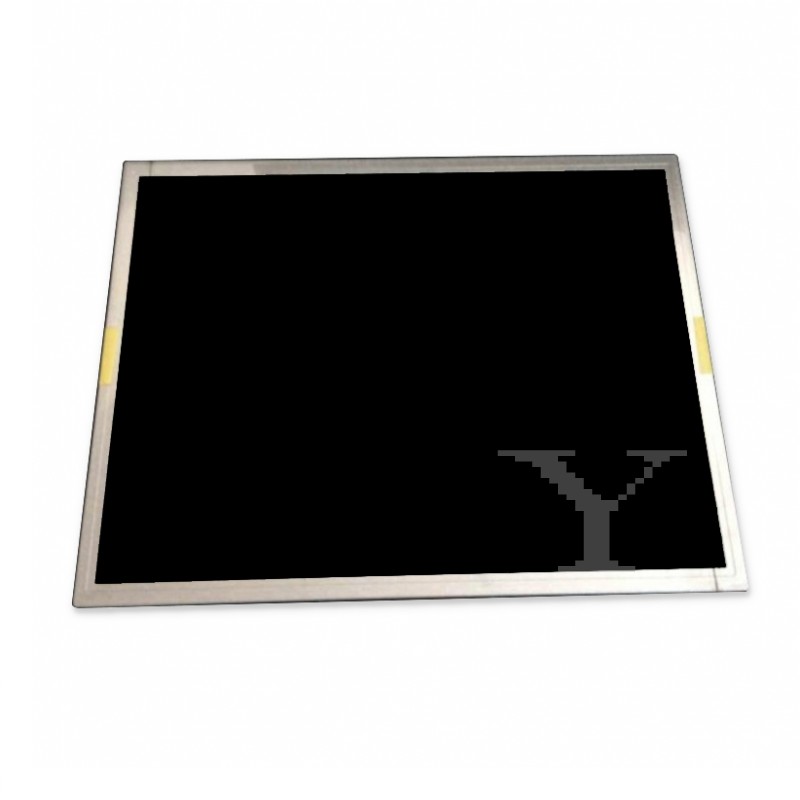
In the intricate world of electronic components, where specifications dictate performance and form factor defines application, the 15-inch AC150XA02 LCD module stands as a notable solution for industrial and specialized display needs. This panel, characterized by its 1024 x 768 (XGA) resolution, represents a specific intersection of reliability, clarity, and mid-sized screen real estate. While consumer markets chase ultra-high definitions, this module carves its niche in environments where durability, signal compatibility, and consistent performance under demanding conditions are paramount.
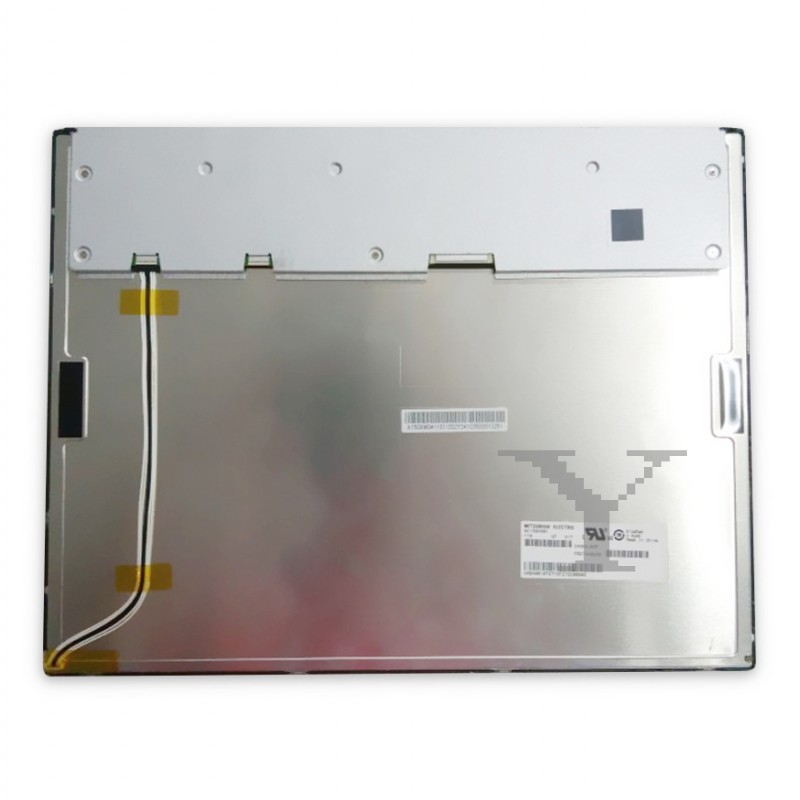
This article delves into a comprehensive analysis of the AC150XA02 display panel. We will move beyond basic datasheet parameters to explore its underlying technology, the practical implications of its key specifications, and the specific market applications it serves. By understanding its strengths, limitations, and ideal use cases, engineers, procurement specialists, and technology integrators can make informed decisions about whether this module is the optimal display engine for their next project.
Decoding the Core Specification: XGA Resolution in a 15-Inch Form
The 1024 x 768 pixel array, known as XGA (Extended Graphics Array), is a foundational specification of the AC150XA02. On a 15-inch diagonal screen, this yields a pixel pitch of approximately 0.297mm and a pixels-per-inch (PPI) value around 85. In today's context, this is not a high-density display. However, this characteristic is often a strategic advantage in its target markets. The lower PPI results in larger, more legible individual pixels, reducing eye strain during long-term monitoring sessions common in industrial control rooms or medical diagnostics.
Furthermore, XGA resolution maintains a 4:3 aspect ratio, a squarer format compared to modern widescreens. This aspect ratio is exceptionally efficient for displaying traditional data interfaces, legacy software applications, vertical lists of information, and diagnostic imagery that originated in square formats. It eliminates the "letterboxing" or wasted screen space that can occur when forcing such content onto a 16:9 panel.
Interface and Signal Compatibility: The LVDS Standard
The AC150XA02 typically utilizes an LVDS (Low-Voltage Differential Signaling) interface. This technology is a critical backbone for industrial and embedded displays. LVDS transmits data using a differential method—sending complementary signals over a pair of wires—which makes it highly resistant to electromagnetic interference (EMI). This noise immunity is crucial in electrically noisy environments like factory floors or within complex machinery.
LVDS also enables longer cable runs without signal degradation compared to older TTL interfaces, providing greater design flexibility for system integration. For engineers, understanding the pinout and power requirements of the module's specific LVDS connector is essential for designing the correct controller board (often called a timing controller or T-Con board) or sourcing a compatible driver solution to translate input signals from a source (like a PC or single-board computer) into the precise LVDS format the panel requires
.
Backlighting Technology and Durability Considerations
Most modules like the AC150XA02 employ CCFL (Cold Cathode Fluorescent Lamp) or LED (Light Emitting Diode) backlighting systems. The backlight type significantly impacts the panel's lifespan, power consumption, and brightness uniformity. CCFL backlights, while sometimes offering excellent uniformity, generally have a shorter operational lifespan (typically 25,000 to 50,000 hours) and require an inverter for power, adding complexity.
An LED-backlit version of this panel would be a more modern and desirable configuration. LED backlights offer longer lifespans (often exceeding 50,000 hours), lower power consumption, a thinner profile, and do not require a high-voltage inverter. They also allow for broader dimming ranges. For any industrial application, the Mean Time Between Failures (MTBF) rating of the backlight and the panel as a whole is a key reliability metric to scrutinize.
Optical Performance: Viewing Angles, Brightness, and Contrast
The usability of a display in shared or non-perpendicular viewing scenarios depends on its optical characteristics. The AC150XA02 likely utilizes Twisted Nematic (TN) or possibly In-Plane Switching (IPS) LCD technology. TN panels are cost-effective and offer fast response times but suffer from limited viewing angles and color shift. IPS technology provides vastly superior viewing angles (often 178/178 degrees) and better color consistency, which is critical for applications where the screen may be viewed from the side, such as in-point-of-sale systems or multi-operator consoles.
Specifications like typical brightness (measured in nits/cd/m²) and contrast ratio define readability in various lighting conditions. A brightness of 300-500 nits is common for indoor industrial use, while outdoor or high-ambient-light applications may require 1000 nits or more. A higher contrast ratio ensures sharper differentiation between dark and light elements, improving overall image clarity.
Typical Applications and Industry Niche
The specific combination of 15-inch size, XGA resolution, and robust construction defines the AC150XA02's market role. It is not designed for consumer laptops or televisions. Its primary applications are in embedded systems and industrial human-machine interfaces (HMIs). You will find such panels in:
Industrial Control Panels: For operating and monitoring machinery, PLCs, and SCADA systems.
Medical Equipment: As the display for diagnostic devices, patient monitors, and laboratory instruments where reliability is non-negotiable.
Point-of-Sale (POS) and Kiosk Systems: For retail terminals, self-checkout stations, and information booths.
Test and Measurement Equipment: In oscilloscopes, spectrum analyzers, and other bench-top instruments.
Transportation and Marine: For navigation aids and vehicle system status displays.
Sourcing, Integration, and Lifecycle Management
Integrating a display module like the AC150XA02 is not as simple as plugging in a consumer monitor. It requires careful electrical and mechanical integration. Engineers must design or source a compatible controller, ensure proper power supply and signal input, and design a bezel or chassis that provides physical protection and heat dissipation.
Sourcing can involve direct procurement from panel manufacturers or through specialized distributors of industrial electronic components. A critical consideration is product lifecycle. Industrial projects often have long development and deployment phases. Therefore, securing a stable, long-term supply of the exact module or a verified compatible alternative is vital to avoid costly redesigns mid-project due to panel end-of-life (EOL) announcements.
FAQs: AC150XA02 15-Inch LCD Module
1. What is the AC150XA02?A 15-inch LCD display module with XGA (1024x768) resolution, commonly used in industrial and embedded systems.
2. What does XGA resolution mean?It means the screen has 1024 horizontal pixels and 768 vertical pixels, offering a standard 4:3 aspect ratio.
3. What is the main interface for this panel?It typically uses an LVDS (Low-Voltage Differential Signaling) interface for robust, low-noise data transmission.
4. Is this panel suitable for outdoor use?Not typically, unless specified as a high-brightness variant (e.g., 1000+ nits). Standard versions are for indoor use.
5. What is the difference between CCFL and LED backlights for this module?LED backlights offer longer life, lower power use, and thinner design compared to older CCFL technology.
6. What are the typical viewing angles?This depends on the LCD technology (TN vs. IPS). IPS versions offer much wider viewing angles (near 178 degrees).
7. Can I connect this directly to a standard HDMI or VGA output?No. You need an intermediate controller board (LCD driver board) to convert HDMI/VGA signals to the panel's native LVDS signal.
8. What are its most common applications?Industrial HMIs, medical devices, POS/kiosk systems, test equipment, and transportation displays.
9. How important is the MTBF rating?Very important for industrial applications. It indicates the predicted reliability and operational lifespan of the panel.
10. Where can I source this module?Through specialized industrial electronic component distributors or by contacting display module manufacturers directly.
Conclusion
The 15-inch AC150XA02 LCD module is far more than a simple collection of glass and circuitry. It is a purpose-built component engineered for reliability and performance in non-consumer environments. Its value lies not in cutting-edge pixel density, but in its proven XGA resolution, robust LVDS interface, and form factor that aligns perfectly with a wide array of industrial, medical, and commercial applications.
Successful implementation hinges on a deep understanding of its specifications—from backlight technology and viewing angles to power requirements and mechanical integration. For system designers and integrators, selecting this module represents a choice for stability, compatibility with legacy systems, and proven performance in the field. In a landscape of rapid technological change, components like the AC150XA02 provide a dependable foundation upon which critical systems are built.





