













































- Industrial display
-
Industrial Products
- DC Servo Drive
- AC Servo Drive
- Industrial board
- Siemens
- Switch Sensor
- Proximity Switch
- Temperature Controller
- Protection Relay
- Fiber Optic Sensor
- Encoder
- Fan
- other
- Heidelberg
- MITSUBISHI
- FANUC
- Siemens adapter
- Fujitsu connector
- Motherboard
- Board
- Contactor
- Circuit
- OMRON
- Relay
- Motor Driver
- power supply
- Cable
- Transformer
- HMI Touch Glass
-
HMI Full Machine Whole unit
- OMRON HMI Touch Panel
- Siemens HMI Touch Panel
- Mitsubishi HMI Touch Panel
- Allen-Bradley automation HMI Touch Panel
- DELTA HMI Touch Panel
- Proface HMI Touch Panel
- KINCO DELTA HMI Touch Panel
- HITECH HMI Touch Panel
- WEINTEK HMI Touch Panel
- TECVIEW HMI Touch Panel
- WEINVIEW HMI Touch Panel
- PANASONIC HMI Touch Panel
- KYOCERA HMI Touch Panel
- SCHNEIDER HMI Touch Panel
- Module
- lcd inverter
- Membrane Keypad Switch
- Zhiyan Customized Touch Screens
- Frequency Inverter
- Servo Motor
- PLC
In the intricate world of industrial and embedded display solutions, certain components stand out not merely as commodities, but as benchmarks of reliability and specific performance. The AA150XN07, a 15-inch TFT-LCD module from Mitsubishi Electric, is one such component. This article delves deep into this specific display module, moving beyond basic datasheet specifications to explore its technological foundations, inherent strengths, and the precise application niches where it excels.
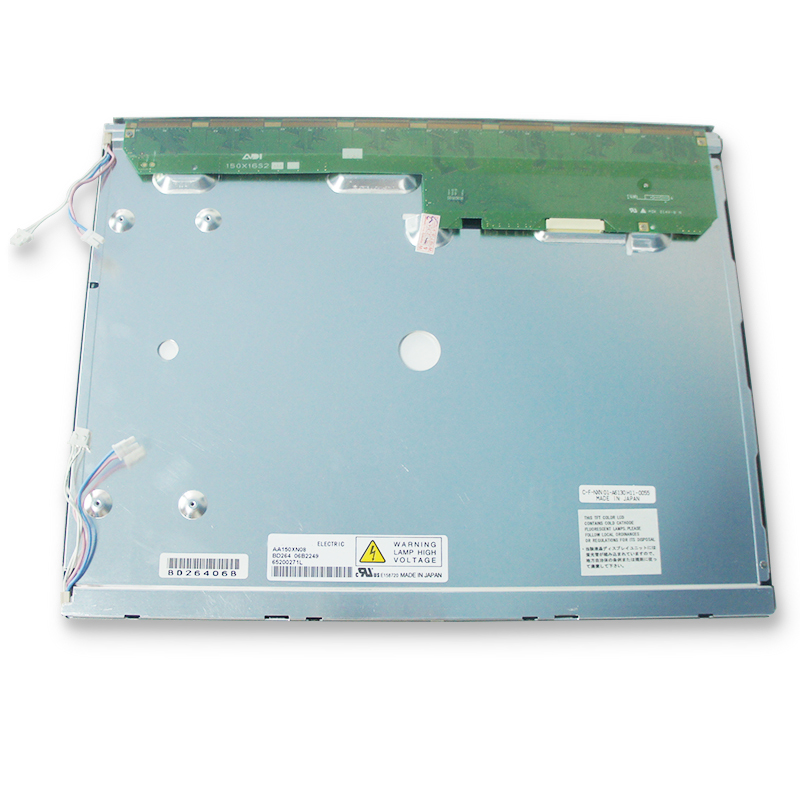
We will dissect the significance of its a-Si (amorphous Silicon) TFT technology, its XGA (1024x768) resolution at 85 PPI, and the implications of its LCM (LCD Module) form factor. The analysis aims to provide engineers, procurement specialists, and product developers with a comprehensive understanding of why the AA150XN07 remains a relevant and often specified choice in an era of rapidly evolving display technologies. This exploration is about contextualizing its value proposition within the demanding environments it was designed to serve.
Deconstructing the Core Technology: a-Si TFT-LCD
The foundation of the AA150XN07 lies in its amorphous Silicon (a-Si) Thin-Film Transistor (TFT) technology. This mature and highly refined manufacturing process is the workhorse of the industrial LCD world. Unlike more recent technologies like LTPS or OLED, a-Si TFT offers an exceptional balance of cost, manufacturing scalability, and reliability over wide temperature ranges and long operational lifetimes.
Each pixel on the 15-inch panel is controlled by its own TFT, allowing for precise and fast switching. This results in stable image quality, consistent color reproduction, and good response times suitable for a wide array of industrial monitoring and control applications. The robustness of a-Si technology against image retention and its lower susceptibility to degradation from continuous static content make it a prudent choice for systems designed to run 24/7. It represents a proven, dependable path rather than the cutting edge, which is often a critical requirement in embedded design.
The Visual Profile: XGA Resolution and 85 PPI Density
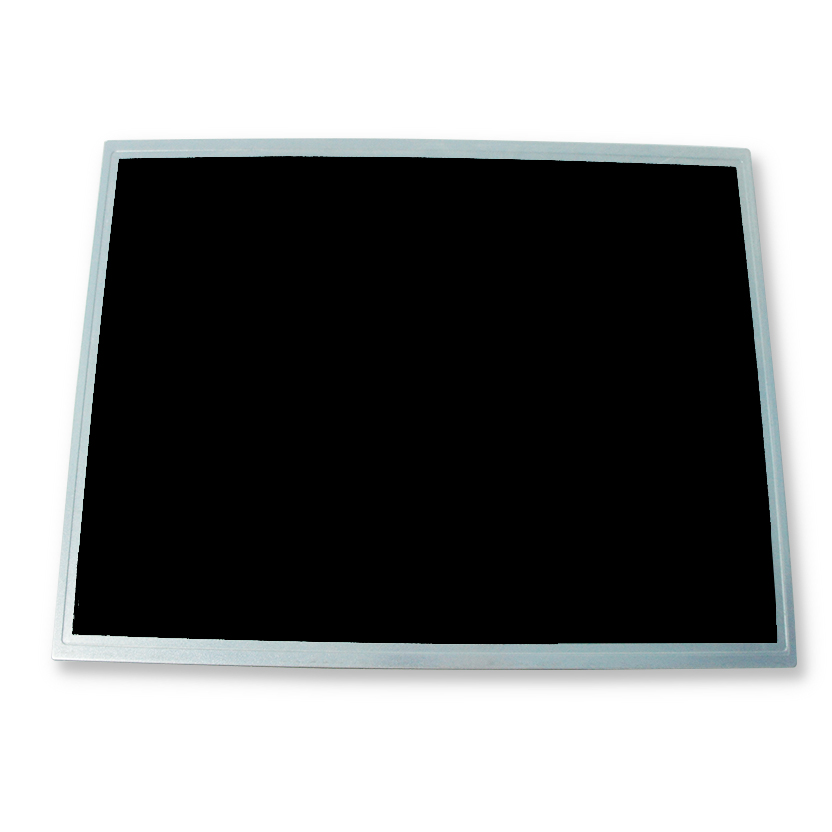
The module's native resolution is 1024 (RGB) x 768 pixels, conforming to the XGA (Extended Graphics Array) standard. In today's context of 4K and beyond, this may seem modest. However, its utility is profound in specific contexts. The 85 Pixels Per Inch (PPI) density creates a distinctly low-dpi visual experience, where individual interface elements—icons, text, control buttons—are rendered with ample size and clarity without requiring excessive operating system scaling.
This characteristic is invaluable for human-machine interfaces (HMIs), medical devices, point-of-sale systems, and factory floor monitors. Operators can read data and interact with controls from a distance or at a glance, reducing eye strain and potential for error. Furthermore, the XGA resolution places a lower computational load on the system's graphics controller and requires less bandwidth for data transmission, simplifying system architecture and reducing overall cost for applications that do not benefit from ultra-high definition.
Form Factor and Integration: The LCM Advantage
The AA150XN07 is offered as an LCD Module (LCM). This is a critical distinction from a standalone monitor. An LCM typically includes the LCD panel, the driver circuits, the backlight unit (CCFL in this case), and the interface connectors, all mounted within a structural frame. It is a component meant for integration into a larger host device.
This form factor provides OEMs (Original Equipment Manufacturers) with maximum flexibility. Engineers can design a custom enclosure, bezel, and mounting solution that seamlessly fits the end product's aesthetic and ergonomic requirements. The integration process involves connecting power, the LVDS (Low-Voltage Differential Signaling) interface, and brightness control. This approach allows for optimized space utilization, tailored thermal management, and the creation of a cohesive, proprietary product look and feel, which is essential for commercial and industrial equipment.
The Backlight System: CCFL Legacy and Considerations
A defining characteristic of this module is its use of a CCFL (Cold Cathode Fluorescent Lamp) backlight system. While LED backlighting has become dominant in consumer markets, CCFL technology offers specific advantages in certain scenarios. CCFLs typically provide a very uniform, diffuse light across the entire panel surface, which is excellent for applications requiring consistent luminance without hotspots.
However, this choice carries implications. CCFL backlights generally have a higher operating voltage than LEDs, require an inverter circuit to drive them, and have a finite lifespan (often rated around 25,000 to 50,000 hours) after which luminance degrades. They are also less energy-efficient and generate more heat than modern LED arrays. For long-lifecycle products or greenfield designs, understanding the maintenance and power supply design for the CCFL system is a crucial part of the integration process.
Typical Application Environments and Use Cases
The technical specifications of the AA150XN07 directly map to a well-defined set of application environments. Its primary domain is in industrial automation and process control. Here, it serves as the display for PLC interfaces, SCADA system monitors, and CNC machine controls, where reliability and readability under factory lighting are paramount.
Other key verticals include:
Medical Equipment: For non-critical diagnostic devices, patient monitoring stations, and laboratory instruments where color consistency and stable performance are valued.
Point-of-Sale & Kiosks: In retail and hospitality for robust, always-on terminals.
Transportation & Marine: As information displays in vehicles or vessels, benefiting from its wide temperature tolerance.
Legacy System Upgrades: As a direct replacement for aging 15-inch XGA displays in existing equipment, ensuring continuity without software or driver changes.
Comparative Context: Positioning in the Modern Market
Positioning the AA150XN07 in the contemporary display landscape requires a shift in perspective. It is not competing with consumer-grade HD monitors on specs alone. Its value is defined by different metrics: long-term availability, component-level reliability, and interface stability. Mitsubishi Electric has a strong reputation for supporting industrial product lines for extended periods, which is vital for OEMs whose own products may have 10+ year lifecycles.
Compared to modern LED-backlit TFTs, it may consume more power. Compared to higher-resolution panels, it offers less detail. Yet, for its target applications, these are often secondary concerns. Its strengths are its predictability, its mechanical and electrical interface consistency, and its performance within specified industrial temperature ranges. It solves engineering problems related to longevity, supply chain certainty, and integration into systems where display technology is a component, not the product's central feature.
FAQs: AA150XN07 Mitsubishi Display Module
Q1: What does "LCM" stand for in AA150XN07 LCM?A1: LCM stands for LCD Module. It refers to the display as a component kit (panel, drivers, backlight, frame) for integration into a larger device, not a standalone monitor.
Q2: What is the screen resolution and size?A2: It is a 15-inch (diagonal) screen with an XGA resolution of 1024 (horizontal) x 768 (vertical) pixels.
Q3: What is the pixel density (PPI)?A3: The pixel density is approximately 85 PPI (Pixels Per Inch).
Q4: What type of backlight does it use?A4: It uses a CCFL (Cold Cathode Fluorescent Lamp) backlight system.
Q5: What is the main interface for signal input?A5: The primary interface is LVDS (Low-Voltage Differential Signaling), a common standard for connecting displays to control boards in embedded systems.
Q6: Is this a touch screen module?A6: The standard AA150XN07 is a display-only LCM. Touch screen functionality (resistive or capacitive) would typically be added as a separate overlay by the integrator.
Q7: What are typical applications for this display?A7: Industrial HMIs, medical devices, POS/kiosk systems, instrumentation, and as a replacement part in legacy equipment.
Q8: What are the advantages of its a-Si TFT technology?A8: Advantages include high manufacturing maturity, excellent long-term reliability, good performance across temperature ranges, and cost-effectiveness for industrial volumes.
Q9: How does CCFL compare to LED backlighting here?A9: CCFL offers excellent uniformity and is a proven technology, but it typically has higher power consumption, requires an inverter, and has a shorter lifespan than modern LED backlights.
Q10: Why choose this over a newer, higher-resolution panel?A10: Reasons include long-term supply commitment for OEMs, compatibility with existing XGA-based systems, lower system processing overhead, and superior readability of large UI elements in industrial settings.
Conclusion
The Mitsubishi AA150XN07 is far more than a simple collection of specifications on a datasheet. It embodies a specific design philosophy centered on reliability, longevity, and purposeful application. Its 15-inch XGA format with 85 PPI, built on robust a-Si TFT and CCFL technology, is meticulously tailored for environments where clarity, durability, and integration flexibility trump the pursuit of the highest pixel count.
For engineers and product developers, understanding this module is about recognizing the right tool for the job. In the demanding realms of industrial control, medical instrumentation, and commercial systems, the AA150XN07 continues to offer a compelling value proposition. It serves as a reminder that in technology, optimal performance is not defined by the latest benchmark, but by a component's flawless execution of its intended role over years of continuous service.





