













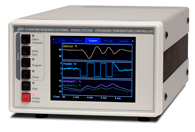

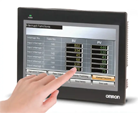





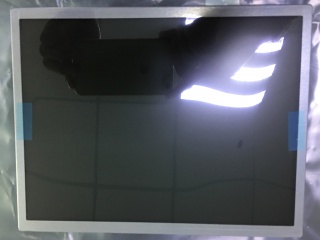
In the intricate world of industrial and embedded display solutions, specific components become the unsung heroes of reliability and performance. One such component is the AA104VJ02, a 10.4-inch TFT-LCD module manufactured by Mitsubishi Electric. This display module represents a fascinating intersection of mature technology and enduring application-specific value. Far from being just another screen, the AA104VJ02 is engineered for environments where consistency, durability, and precise visual communication are non-negotiable.


This article delves into a comprehensive analysis of the Mitsubishi AA104VJ02. We will move beyond basic specifications to explore the engineering rationale behind its design, the specific market niches it serves, and the technical advantages that have allowed it to maintain relevance. From its a-Si TFT-LCD construction to its VGA-resolution interface and 76 PPI pixel density, each characteristic tells a story of purposeful design. Our exploration will provide system integrators, engineers, and procurement specialists with a deep understanding of where and why this particular LCM continues to be a critical component in countless industrial, medical, and instrumentation applications around the globe.

Deconstructing the Core Technology: a-Si TFT-LCD
The foundation of the AA104VJ02 lies in its Amorphous Silicon (a-Si) Thin-Film Transistor (TFT) technology. This mature and highly refined manufacturing process is the workhorse of the industrial LCD world. Unlike newer technologies like IPS or OLED that prioritize ultra-wide viewing angles or perfect blacks, a-Si TFT is celebrated for its exceptional stability, high production yield, and cost-effectiveness for standard-size panels.
For the AA104VJ02, this translates into a display known for its consistent performance over a wide operating temperature range and a long operational lifespan. Each pixel is controlled by its own transistor, ensuring good response time and preventing the "ghosting" effect common in passive matrix displays. The technology provides a robust and predictable visual platform, which is paramount in settings where the display is an interface for critical systems, not merely for media consumption. Its reliability under continuous operation makes it a trusted choice.
The Significance of Resolution and Pixel Density: 640x480 VGA at 76 PPI
The AA104VJ02 features a native resolution of 640 (RGB) x 480 pixels, commonly known as VGA. In an era of 4K and beyond, this may seem archaic. However, this resolution is a deliberate and strategic choice. VGA remains a universal, deeply embedded standard in industrial computing, PLC interfaces, and legacy instrumentation. Its 4:3 aspect ratio is perfectly suited for displaying traditional control panels, data readouts, and diagnostic menus without wasteful letterboxing or complex scaling.
The resulting pixel density of approximately 76 Pixels Per Inch (PPI) is low by consumer smartphone standards but ideal for its intended use. At a typical viewing distance for industrial equipment, this density renders sharp, legible characters and clear graphics without the need for excessive anti-aliasing. It simplifies GUI design for engineers and ensures that information is instantly readable, reducing operator error. This combination of VGA and 76 PPI represents a sweet spot of functionality, compatibility, and clarity for machine-to-human interfaces.
Interface and Integration: The Role of the LCM
It is crucial to understand that the AA104VJ02 is not a standalone monitor; it is a Liquid Crystal Module (LCM). This means it typically requires an external controller board to process video signals (like LVDS or RGB) and provide power and backlight driving. This modular approach offers significant advantages for system integrators. It allows for greater flexibility in designing the overall electronics, enabling the display to be embedded into custom enclosures and paired with specialized control hardware tailored to the end application.
The module's design integrates the LCD panel, backlight unit, and driver circuitry into a single, manageable unit. This simplifies the mechanical and electrical integration process, reducing time-to-market for OEMs. By handling the complexities of pixel addressing and timing internally, the LCM presents a cleaner interface to the host system, allowing developers to focus on application software rather than low-level display driving complexities.
Backlighting and Environmental Durability
A critical, often overlooked aspect of any industrial display is its backlighting system and environmental robustness. The AA104VJ02 typically employs a CCFL (Cold Cathode Fluorescent Lamp) backlight, known for its even illumination, stable white point, and long life—often rated at 50,000 hours or more. This reliability is essential for systems that run 24/7.
Furthermore, the module is built to withstand the rigors of non-office environments. While specific ratings depend on the final assembly, modules like this are often designed to resist vibrations, operate across a wide temperature range (e.g., -20°C to 70°C for the panel), and manage humidity and condensation. This inherent durability ensures that the display remains functional in factory floors, medical carts, outdoor kiosks, or transportation systems, where consumer-grade displays would rapidly fail.
Primary Application Domains and Use Cases
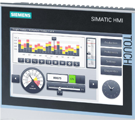
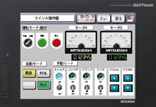
The technical profile of the AA104VJ02 directly maps to several key vertical markets. In industrial automation, it is the face of Human-Machine Interfaces (HMIs) for PLCs, CNC machines, and process control systems, displaying control buttons, graphs, and alarm status. The medical device field utilizes it in patient monitoring equipment, diagnostic instruments, and older ultrasound machines, where standardization and reliability are critical for patient safety.
Additionally, it finds a home in test and measurement instrumentation (oscilloscopes, spectrum analyzers), point-of-sale (POS) systems, and specialized transportation and aerospace consoles. In these applications, the display is valued not for multimedia prowess but for being a dependable, low-maintenance portal for mission-critical data. Its longevity also makes it a preferred choice for maintaining and servicing legacy equipment that remains in operation for decades.
The Legacy and Replacement Considerations
As a product with a long history, the AA104VJ02 exists in a context of technological evolution. While newer panels with LED backlights, higher resolutions, and wider viewing angles are available, the AA104VJ02 maintains its place due to the immense inertia of installed systems and design cycles. For many OEMs, a direct replacement that is mechanically and electrically compatible is essential for extending the life of their products without costly re-certification or redesign.
This creates a vibrant aftermarket and a need for careful sourcing. When seeking a replacement or for a new design inspired by this standard, engineers must consider not just the physical dimensions and hole patterns, but also the interface pinout, voltage requirements, and backlight inverter compatibility. Understanding the original module's exact specifications is key to a successful integration or upgrade path, ensuring seamless continuity in performance.
FAQs
Q: What does LCM stand for?A: LCM stands for Liquid Crystal Module. It includes the LCD panel, backlight, and basic drive electronics, but usually requires an external controller board.
Q: Is the AA104VJ02 a touch screen?A: No, the standard AA104VJ02 is a display-only LCM. Touch functionality (resistive or capacitive) would require an additional overlay and controller.
Q: What is the main advantage of the VGA (640x480) resolution?A: Its main advantages are universal compatibility with legacy industrial systems, simple GUI design, and excellent character legibility on a 10.4" screen.
Q: What type of backlight does it use?A: It typically uses a CCFL (Cold Cathode Fluorescent Lamp) backlight, prized for its even light distribution and long lifespan.
Q: Can I connect this directly to a modern PC's VGA port?A: No. As an LCM, it lacks a standard VGA input. It requires a separate LCD controller board that converts VGA (or other signals) to the module's native LVDS or RGB interface.
Q: What is the typical operating temperature range?A: While dependent on the specific version, the LCD panel is often rated for operation from -20°C to +70°C, suitable for harsh environments.
Q: Is this display still in production?A: It may be in extended or limited production, but it is widely available through authorized distributors and specialized electronic component suppliers.
Q: What are common replacements or equivalents?A> Direct equivalents are often sought from other manufacturers like AUO or Innolux, focusing on matching the 10.4" size, VGA resolution, 4:3 aspect ratio, and interface pinout.
Q: Why choose this over a modern LED-backlit panel?A: Reasons include legacy system compatibility, need for a specific mechanical form factor, design inertia, and the proven reliability of CCFL in continuous-use scenarios.
Q: What does "76 PPI" mean for image quality?A: 76 Pixels Per Inch results in a slightly pixelated appearance up close, but at arm's length, it provides sharp, highly legible text and graphics ideal for data display, not photo realism.
Conclusion
The Mitsubishi AA104VJ02 10.4" TFT-LCD module is a testament to the principle that in engineering, the "best" technology is the one that most perfectly fits the application's requirements. Its enduring presence in critical fields is not an accident of obsolescence but a result of its deliberate design. The combination of stable a-Si TFT technology, the universally compatible VGA resolution, robust CCFL backlighting, and a modular LCM format creates a package of exceptional reliability and focused utility.
For anyone involved in designing, maintaining, or sourcing components for industrial, medical, or instrumentation systems, understanding the nuanced value proposition of modules like the AA104VJ02 is essential. It represents a cornerstone of embedded display technology—a component whose value is measured not in megapixels or contrast ratios, but in decades of dependable service, seamless integration, and unwavering performance in the machines that power our world.





