













































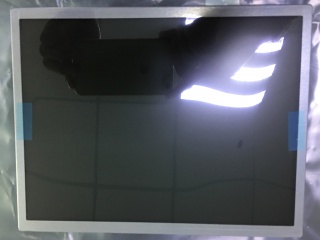
In the intricate ecosystem of industrial and embedded systems, the display module serves as the critical nexus between machine intelligence and human interaction. Among the specialized components that fulfill this role, the AA104VC09 Mitsubishi 10.4" a-Si TFT-LCD LCM stands out as a benchmark of reliability and performance for demanding applications. This module, with its 640(RGB)×480 VGA resolution and 76 PPI pixel density, represents a specific class of display technology engineered not for consumer novelty, but for operational endurance and clarity in controlled environments.

This article delves into a comprehensive analysis of the AA104VC09, moving beyond basic specifications to explore its architectural significance. We will examine the enduring relevance of its VGA standard, the practical implications of its 76 PPI density in industrial contexts, and the integrated LCM (LCD Module) design that simplifies integration. Furthermore, we will investigate its typical application landscapes, key interfacing and operational considerations, and finally, situate it within the broader market of industrial display solutions. The goal is to provide engineers, system integrators, and procurement specialists with a deep, actionable understanding of this component's capabilities and optimal use cases.

Enduring Legacy: The VGA Standard in a Modern Industrial Context
The 640x480 VGA resolution of the AA104VC09 might seem anachronistic in an age of 4K and 8K displays. However, in industrial and embedded applications, this perception is misleading. VGA remains a profoundly relevant and robust standard. Its technical simplicity translates to exceptional reliability and lower system overhead. The analog RGB interface is well-understood, widely supported by legacy and modern single-board computers and industrial PCs alike, and is less susceptible to certain electromagnetic interference issues compared to some high-speed digital interfaces over long cables.
For the target applications of this display—such as machine control panels, diagnostic equipment, or specialized instrumentation—the information presented is often textual, symbolic, or composed of simple graphical user interfaces (GUIs). The VGA resolution is more than adequate to render these elements with sharp clarity. Choosing a display like the AA104VC09 eliminates the need for complex scaling logic or more powerful (and expensive) processing units to drive higher resolutions, resulting in a cost-effective and stable systemarchitecture. Its endurance is a testament to the principle that in engineering, the most appropriate technology is not always the newest, but the one that offers the optimal balance of performance, compatibility, and robustness for the task.
The Practical Rationale Behind 76 PPI Pixel Density
Pixel density, measured in Pixels Per Inch (PPI), is a crucial determinant of perceived image sharpness. At 76 PPI, the AA104VC09 offers a density that is intentionally functional rather than "retina-grade." This specification is a direct consequence of its screen size (10.4 inches diagonal) and native VGA resolution. The resulting pixel structure is visible at typical viewing distances, but this is not a drawback in its intended environment.
In industrial settings, operators may be viewing the screen from a distance or through protective glass, and the content prioritizes legibility and immediate recognition over photographic realism. The slightly larger pixels enhance character and shape legibility, reducing eye strain during long monitoring sessions. Furthermore, this density is ideal for displaying legacy software interfaces that were designed for lower-resolution CRTs, as it prevents UI elements from becoming impossibly small. The 76 PPI specification thus reflects a deliberate design choice that aligns with human factors engineering for control rooms, factory floors, and medical devices, where quick, error-free reading of data is paramount.
Integrated Design: The Advantages of the LCM Approach
The "LCM" in AA104VC09's designation stands for LCD Module. This is a key differentiator from a bare LCD panel. Mitsubishi supplies this product as a fully integrated unit, incorporating the a-Si TFT (Amorphous Silicon Thin-Film Transistor) glass, the driver electronics, the backlight unit (typically CCFL or LED), and the power supply circuitry into a single, cohesive package. This integration provides monumental advantages for the system integrator.
Firstly, it dramatically reduces development time and complexity. Engineers do not need to source disparate components—the panel, controller boards, inverters, and connectors—and then undertake the delicate and noise-sensitive task of interfacing them. The AA104VC09 presents a standardized set of input interfaces (like VGA) and power requirements. Secondly, it ensures performance and quality assurance. The display and its drivers are calibrated and tested as a unit by Mitsubishi, guaranteeing optimal performance and eliminating compatibility guesswork. This turnkey solution allows OEMs to focus their resources on their core application software and hardware, accelerating time-to-market for the end product.
Typical Application Landscapes and Use Cases
The technical profile of the AA104VC09 defines its natural habitat. It excels in environments where reliability, readability, and long-term availability trump ultra-high resolution. A primary domain is industrial automation and control. Here, it serves as the face of PLCs (Programmable Logic Controllers), CNC machine interfaces, and process control systems, displaying real-time parameters, system status, and control buttons.
Another significant field is medical and laboratory instrumentation. Devices such as patient monitors, ultrasound systems, and diagnostic analyzers benefit from its stable performance, clear display of waveforms and numerical data, and proven longevity. Furthermore, it finds use in transportation systems (for onboard information displays), point-of-sale/kiosk systems, and specialized military and aerospace applications. In all these cases, the display operates as a dedicated component within a larger, mission-critical system, often requiring 24/7 operation and extended product lifecycles that consumer-grade displays cannot support.
Critical Interfacing and Operational Considerations
Successfully deploying the AA104VC09 requires attention to several technical parameters beyond the screen itself. Power requirements are fundamental; the module needs a specific voltage and current, often requiring a stable DC power supply separate from the logic side of the host system. The backlight type and lifetime are also crucial—whether it uses CCFL or LED technology affects power consumption, heat generation, and maintenance schedules. LED backlights generally offer longer life and wider operating temperature ranges.
Mechanical integration is another key factor. The module's datasheet provides precise outline dimensions, mounting hole patterns, and bezel recommendations. Ensuring proper mechanical fixation and considering heat dissipation are vital for long-term reliability. Additionally, understanding the interface pinout and signal timing is essential for creating a reliable connection to the host graphics source. Finally, environmental specifications such as operating temperature range and storage humidity must be respected to ensure the display performs as specified in its target environment.
Market Context and Comparison with Alternative Solutions
Positioning the AA104VC09 within the broader market clarifies its value proposition. It competes not with consumer monitors, but with other industrial-grade LCMs from manufacturers like AUO, Innolux, and Sharp. Its strengths lie in Mitsubishi's reputation for high-quality, long-lifecycle components and the specific balance of size, resolution, and integration it offers. Alternatives might include newer panels with wider viewing angles (IPS technology) or higher resolutions like XGA (1024x768) on a similar 10.4-inch footprint.
The choice often boils down to a trade-off. Higher resolution may offer more screen real estate but requires more processing power and cost. A newer panel technology might offer better viewing angles but could have a shorter guaranteed procurement lifecycle. The AA104VC09 represents a mature, proven, and stable solution for applications where its VGA resolution is sufficient. For projects upgrading from older systems or requiring guaranteed component availability for a decade or more, this module offers a lower-risk, highly reliable path forward compared to chasing the latest panel specifications.
FAQs
Q1: What does "a-Si TFT-LCD LCM" stand for?A1: It means Amorphous Silicon Thin-Film Transistor Liquid Crystal Display Module. It describes the panel technology and that it's a fully integrated unit.
Q2: Is the VGA interface on this module analog or digital?A2: The VGA (Video Graphics Array) interface is an analog signal standard, using separate RGB (Red, Green, Blue) analog channels.
Q3: What is the typical backlight for the AA104VC09?A3: While specifications can vary, industrial modules of this era and type commonly use CCFL (Cold Cathode Fluorescent Lamp) backlights, though LED-backlit versions may also be available.
Q4: Is this display suitable for outdoor use?A4: No, it is designed for indoor or controlled environments. Its brightness and contrast are not sufficient for direct sunlight, and it lacks the sealing and ruggedization for outdoor conditions.
Q5: Can I touch-enable this display?A5> Yes, but not directly. You would need to source and integrate a compatible resistive or capacitive touch panel overlay and its separate controller onto the front of the LCM.
Q6: What is the expected operational lifespan of such a module?A6: Industrial LCMs like this are designed for long lifespans, often rated for 50,000 hours or more of backlight operation, suitable for years of continuous use.
Q7: Where can I find the detailed datasheet for integration?A7: The official datasheet should be sourced from Mitsubishi Electric or authorized distributors. It contains critical mechanical, electrical, and optical specifications.
Q8: How does 76 PPI compare to a standard office monitor?A8> A typical modern office monitor exceeds 100 PPI. The 76 PPI here results in more visible pixels but is optimized for legibility of industrial UI elements from a distance.
Q9: Is this module still in production?A9: The AA104VC09 is a mature product. Its availability status (active, end-of-life, etc.) must be checked with Mitsubishi or component distributors, as industrial parts often have very long lifecycles.
Q10: What are the main advantages over using a consumer LCD monitor?A10> Advantages include: integrated module design for easier engineering, longer guaranteed product lifecycle, often wider operating temperature range, and a form factor designed for embedding into equipment rather than standalone use.
Conclusion
The Mitsubishi AA104VC09 10.4" LCD module exemplifies the engineering philosophy that drives the industrial components sector: optimized performance, unwavering reliability, and long-term stability. Its VGA resolution and 76 PPI density are not limitations but deliberate choices that align perfectly with the needs of machine interfaces, medical devices, and control systems where information clarity and system robustness are non-negotiable.
Through its integrated LCM design, it offers system integrators a turnkey solution that reduces development risk and complexity. While newer technologies with higher resolutions and wider viewing angles continue to emerge, the enduring value of proven workhorses like the AA104VC09 remains undeniable. For projects that prioritize a mature supply chain, predictable performance, and a display that faithfully performs its dedicated function for years on end, this module continues to be a compelling and intelligent choice in the engineer's toolbox.





