


















- Industrie-LCD-Display
-
Industrial Products
- DC Servo Drive
- AC Servo Drive
- PCB
- Siemens
- Switch Sensor
- Näherungsschalter
- Temperaturregler
- Schutzrelais
- Fiber Optic Sensor
- Encoder
- Fan
- other
- Heidelberg
- MITSUBISHI
- FANUC
- Siemens adapter
- Fujitsu connector
- Der Aufsichtsrat
- Board
- Contactor
- Circuit
- Omron
- Relais.
- Motortreiber
- power supply
- Cable
- Transformator
- HMI Touch-Glas
-
HMI-Vollautomat Ganze Einheit
- OMRON HMI Touch Panel
- Siemens HMI Touch Panel
- Mitsubishi HMI Touch Panel
- Allen-Bradley Automatisierung HMI Touch
- DELTA HMI Touch Panel
- EVIEW DELTA HMI Touch Panel
- KINCO DELTA HMI Touch Panel
- HITECH HMI Touch Panel
- WEINTECK HMI Touch Panel
- TECVIEW HMI Touch Panel
- WEINVIEW HMI Touch Panel
- PANASONIC HMI Touch Panel
- KYOCERA HMI Touch Panel
- SCHNEIDER HMI Touch Panel
- Module
- LCD Wechselrichter
- Membran Tastenfeld Schalter
- Winni Touch Screens
- Frequenzumrichter
- Servo Motor
- PLC
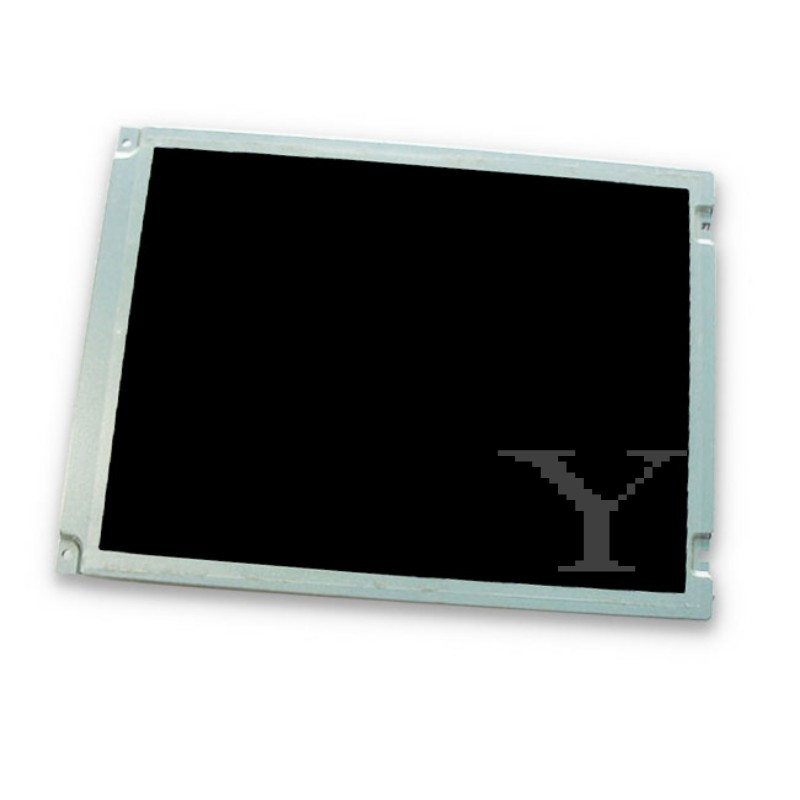
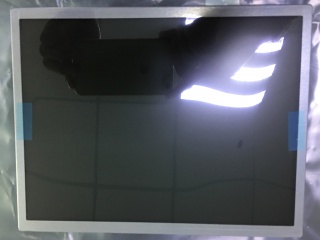
In the intricate world of industrial and embedded display solutions, the precise specification of components is paramount. Among the myriad of options, the LVDS AA104SH02-T1 emerges as a distinct and critical module for engineers, procurement specialists, and product developers. This 10.4-inch TFT LCD screen, with its native resolution of 800 x 600 pixels (SVGA), represents more than just a panel; it embodies a specific set of technological choices tailored for reliability in demanding environments.
This article delves into a comprehensive analysis of the AA104SH02-T1, moving beyond basic datasheet parameters. We will explore its core interface technology, dissect its optical performance characteristics, and examine the mechanical and electrical design that defines its integration profile. Understanding this screen's advantages and inherent limitations is crucial for determining its ideal application fields, ensuring it aligns perfectly with project requirements for longevity, readability, and stability.
Decoding the LVDS Interface: The Backbone of Signal Integrity
At the heart of the AA104SH02-T1's performance lies its LVDS (Low-Voltage Differential Signaling) interface. This is not merely a connector type but a fundamental transmission methodology. Unlike older single-ended TTL interfaces, LVDS uses a pair of wires to transmit a signal as the difference between two complementary voltages. This differential approach provides exceptional immunity to electromagnetic interference (EMI) and common-mode noise, which is pervasive in industrial settings filled with motors, power supplies, and other electronic equipment.
The use of LVDS allows for high-speed data transmission from the system's controller to the LCD panel at relatively low power. This is critical for maintaining signal fidelity over the cable connecting the mainboard to the display module, especially in larger devices where this distance can be significant. The "AA104SH02-T1" designation typically implies a specific LVDS pinout and power sequence, making compatibility with standard controller boards a key consideration during system design.
Optical Performance: Analyzing the 800x600 SVGA Display
The panel's 800 x 600 pixel resolution on a 10.4-inch diagonal defines its visual granularity and application suitability. This SVGA format offers a balance between detail and cost, providing clear legibility for text, user interface elements, and schematic diagrams without the excessive processing power and cost associated with higher-resolution displays. The pixel pitch and resulting pixels per inch (PPI) are calculated to be functional rather than ultra-high-definition, aligning with its industrial purpose.
Key optical parameters include its brightness, typically measured in nits (cd/m²), which ensures viewability under various ambient lighting conditions, including indoor offices or factory floors. Contrast ratio defines the depth between blacks and whites, impacting text clarity and image quality. Furthermore, the viewing angle technology (typically IPS or similar for industrial panels) is crucial, allowing operators to see accurate content from wide horizontal and vertical perspectives without color inversion or contrast shift, a vital feature for control panels viewed by multiple personnel.

Mechanical and Electrical Integration Profile
Integrating the AA104SH02-T1 into a product requires meticulous attention to its mechanical and electrical footprint. Mechanically, the module includes the TFT glass, driver circuits, and backlight unit, often housed within a metal frame that provides structural rigidity and aids in heat dissipation. The exact outline dimensions, mounting hole positions, and bezel size are critical for chassis design.
Electrically, integration revolves around the power supply requirements and the LVDS signal connection. The screen requires a stable DC power input, usually for the logic board and the backlight (often a CCFL or LED array), each with specific voltage and current demands. The LVDS connector type (e.g., 20-pin or 30-pin) and the required number of data lanes must match the output of the system's timing controller (TCON) or graphics source. Proper handling of power sequencing—the order in which logic power and panel power are applied—is essential to prevent permanent damage to the LCD.
The Backlight System: Illumination Technology and Longevity
The visual output of any LCD is entirely dependent on its backlight. The AA104SH02-T1 traditionally utilizes either a CCFL (Cold Cathode Fluorescent Lamp) or a more modern LED (Light Emitting Diode) backlight system. CCFL backlights offer wide, even illumination and were long the industry standard, but they require a high-voltage inverter, generate more heat, and have a shorter lifespan compared to LEDs.
An LED-backlit version is often preferred for its superior advantages: lower power consumption, longer operational life (often exceeding 50,000 hours), instant-on capability, and a wider dimming range. The choice impacts not only power design but also the overall thickness and thermal management of the end product. The backlight's uniformity and color temperature (e.g., cool white or neutral white) are also specified parameters that affect the final user's visual experience.
Ideal Application Environments and Use Cases
The specific characteristics of the AA104SH02-T1 make it unsuitable for consumer tablets but highly valuable in specialized sectors. Its robustness and reliability target embedded and industrial applications where failure is not an option. Primary use cases include industrial human-machine interfaces (HMIs) for factory automation, process control monitors, medical diagnostic equipment (non-patient-critical displays), transportation vehicle dashboards, and point-of-sale/kiosk systems.
In these environments, the screen must withstand extended operating hours, potential temperature fluctuations, vibration, and consistent user interaction. The 10.4-inch size is a sweet spot, offering sufficient display real estate without occupying excessive panel space on machinery or equipment. The SVGA resolution is perfectly adequate for displaying control software, data logs, and diagnostic information clearly and efficiently.
Comparative Advantages and Design Considerations
Choosing the AA104SH02-T1 over other displays involves weighing its advantages against project needs. Its primary strengths are proven reliability, strong EMI resistance thanks to LVDS, and wide availability as a standardized module. It offers a predictable performance profile in challenging conditions.
However, designers must also consider its limitations. The 800x600 resolution is considered low by modern touch-centric standards and may not be ideal for highly detailed graphics. The overall thickness of the module, especially with CCFL backlights, may be greater than ultra-slim modern panels. Furthermore, sourcing should focus on reputable suppliers to ensure consistent quality and avoid issues like screen burn-in or backlight degradation over time. The decision ultimately hinges on a balance of durability, cost, and technical specification alignment.
FAQs: LVDS AA104SH02-T1 10.4" LCD Screen
1. What does "LVDS" mean for this screen?LVDS (Low-Voltage Differential Signaling) is a noise-resistant interface for high-speed data transmission from the device's mainboard to the display.
2. What is the screen's resolution and size?It is a 10.4-inch diagonal TFT LCD with a native resolution of 800 pixels horizontally by 600 pixels vertically (SVGA).
3. What is the typical brightness of this panel?Brightness varies, but industrial models typically range from 300 to 450 nits (cd/m²) for good indoor visibility.
4. Does it have a touch screen?The AA104SH02-T1 is typically a display-only module. Touch functionality (resistive or capacitive) would be a separate overlay added during integration.
5. What type of backlight does it use?It may use either CCFL or LED backlighting. LED versions are now more common due to longer life and lower power consumption.
6. What are the main power requirements?It requires separate low-voltage DC power for the logic board (e.g., 3.3V or 5V) and for the backlight (e.g., 12V or LED driver voltage).
7. What is it commonly used for?Common applications include industrial HMIs, medical devices, POS/kiosk systems, and transportation dashboards.
8. What are the key advantages?Key advantages are high reliability, strong noise immunity from the LVDS interface, and a standardized form factor for easier integration.
9. What are its limitations?Limitations include a lower SVGA resolution compared to modern HD panels and potentially greater thickness than ultra-slim modules.
10. How do I ensure compatibility with my controller?You must match the LVDS pinout, voltage levels, and data lane configuration between the screen's datasheet and your graphics controller's output.
The LVDS AA104SH02-T1 10.4-inch TFT LCD screen is a specialized component engineered for endurance and clarity in professional environments. Its value is derived not from cutting-edge pixel density, but from a proven blend of reliable LVDS signaling, robust optical performance, and a mechanical design suited for integration into larger systems.
For engineers and product managers, selecting this module is a deliberate choice favoring long-term stability and noise-resistant performance over consumer-grade specifications. It serves as a critical reminder that in industrial design, the optimal component is the one that aligns perfectly with the environmental demands and functional requirements of the application, ensuring seamless operation where it matters most.





