


















- Industrial display
-
Industrial Products
- DC Servo Drive
- AC Servo Drive
- Industrial board
- Siemens
- Switch Sensor
- Proximity Switch
- Temperature Controller
- Protection Relay
- Fiber Optic Sensor
- Encoder
- Fan
- other
- Heidelberg
- MITSUBISHI
- FANUC
- Siemens adapter
- Fujitsu connector
- Motherboard
- Board
- Contactor
- Circuit
- OMRON
- Relay
- Motor Driver
- power supply
- Cable
- Transformer
- HMI Touch Glass
-
HMI Full Machine Whole unit
- OMRON HMI Touch Panel
- Siemens HMI Touch Panel
- Mitsubishi HMI Touch Panel
- Allen-Bradley automation HMI Touch Panel
- DELTA HMI Touch Panel
- Proface HMI Touch Panel
- KINCO DELTA HMI Touch Panel
- HITECH HMI Touch Panel
- WEINTEK HMI Touch Panel
- TECVIEW HMI Touch Panel
- WEINVIEW HMI Touch Panel
- PANASONIC HMI Touch Panel
- KYOCERA HMI Touch Panel
- SCHNEIDER HMI Touch Panel
- Module
- lcd inverter
- Membrane Keypad Switch
- Zhiyan Customized Touch Screens
- Frequency Inverter
- Servo Motor
- PLC
In the intricate world of industrial and embedded display solutions, the Mitsubishi AA090MF11stands as a quintessential example of engineering tailored for reliability and performance. This 9-inch TFT-LCD module is not merely a screen; it is a critical interface component designed to operate flawlessly in demanding environments, from factory floors and medical devices to transportation systems and point-of-sale terminals. Its specifications—an 800(RGB)×480 WVGA resolution on an amorphous Silicon (a-Si) panel delivering 103 PPI—paint a picture of a display built for clarity and durability rather than consumer-grade flash.
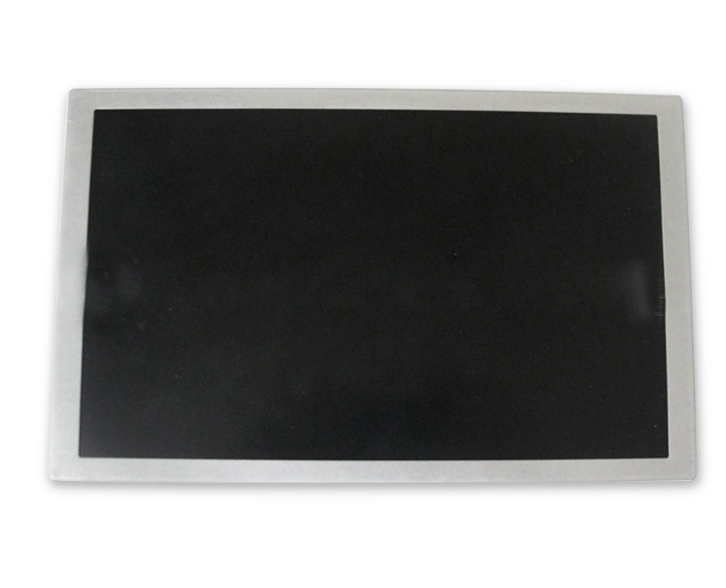
This article delves deep into the AA090MF11, moving beyond basic datasheet parameters to explore its architectural significance, technological underpinnings, and practical application value. We will dissect what makes this LCM (LCD Module) a preferred choice for engineers and product designers, examining its optical performance, rugged construction, interface ecosystem, and the specific market niches it serves. Our goal is to provide a comprehensive resource that illuminates why this specific module matters in the broader landscape of human-machine interface (HMI) technology.
Deconstructing the Core Specifications: WVGA, a-Si, and 103 PPI
The AA090MF11's foundational identity is built upon three key specifications. The 800×480 WVGA resolution represents a sweet spot for industrial interfaces, offering sufficient pixel density to display detailed schematics, data readouts, and control menus without imposing excessive processing overhead on the system's controller. This aspect ratio is wide enough for modern UI layouts yet remains efficient to drive.
Secondly, the use of amorphous Silicon (a-Si) TFT technology is a strategic choice. While low-temperature polysilicon (LTPS) offers higher pixel density, a-Si is renowned for its manufacturing maturity, cost-effectiveness for larger sizes, and excellent reliability over long operational lifetimes. It is a proven, stable workhorse technology ideal for applications where consistent performance is paramount.
Finally, the 103 Pixels Per Inch (PPI) figure is critical. In consumer gadgets, high PPI is marketed for razor-sharpness. In industrial contexts, 103 PPI strikes a deliberate balance. It ensures text and icons are legible without being overly fine, reducing eye strain during prolonged monitoring. This pixel pitch is optimized for viewing distances typical of embedded equipment, where the operator is often within arm's reach.
The Optical Engine: Brightness, Contrast, and Viewing Angles
Beyond resolution, the visual performance of an LCM dictates usability in varied lighting conditions. The AA090MF11 is engineered as a robust optical engine. Its high brightness, typically around 500 cd/m² or more, is a standout feature, enabling clear visibility even under strong ambient light found in outdoor kiosks or sunlit factories. This is often coupled with an optical bonding option, which reduces surface reflections and enhances contrast.
The module's contrast ratio defines its ability to render deep blacks alongside bright whites, crucial for displaying complex graphics with depth. Furthermore, its wide viewing angles (typically 80/80/80/80 in Left/Right/Up/Down directions) ensure that the information on screen remains consistent and color-stable even when viewed from off-center positions. This is essential in multi-operator environments or devices with screens mounted at non-ideal angles. The combination of these optical traits ensures the display delivers information reliably, a non-negotiable requirement in critical operational settings.
Ruggedized Design for Harsh Environment Operation
What truly separates industrial LCMs like the AA090MF11 from consumer displays is their built-in resilience. This module is designed from the ground up to survive where standard screens would fail. Its construction accounts for extended temperature ranges, often from -30°C to +80°C for operation, allowing functionality in freezing cold storage or hot machinery enclosures.
Resistance to vibration and shock is paramount in automotive, aerospace, or heavy equipment applications. The module's internal components are secured, and the frame is designed to dampen mechanical stresses. Additionally, considerations for humidity resistance and protection against dust and contaminants are integral. This ruggedization extends the product's lifecycle, reduces maintenance costs, and ensures system uptime, which are critical factors in total cost of ownership calculations for B2B clients.
Interface and Integration: The LVDS Connection Standard
The AA090MF11 typically employs an LVDS (Low-Voltage Differential Signaling) interface. This choice is significant. LVDS has been the long-standing backbone for industrial and automotive displays due to its robustness against electromagnetic interference (EMI). The differential signaling method minimizes noise, allowing for clean data transmission over longer cable lengths within a device chassis.
This interface standard simplifies integration for engineers. It connects directly to many standard embedded processors and display controllers. The predictability and stability of LVDS reduce development risk and time-to-market. Understanding this interface is key to successfully embedding the module into a larger system, involving considerations for compatible controller boards, cabling, and power sequencing to ensure a stable and flicker-free image from power-on.
Application Landscape: Where the AA090MF11 Excels
The specific blend of features in the AA090MF11 carves out a clear application niche. It is a premier choice for Industrial Human-Machine Interfaces (HMIs) on PLCs, CNC machines, and test equipment, where its readability and durability are essential. In transportation, it serves as a display for fleet management systems, train control panels, or auxiliary vehicle displays.
The medical field utilizes such modules in diagnostic and monitoring equipment, where reliability can be mission-critical. Furthermore, it finds a home in point-of-sale (POS) terminals, kiosks, and ruggedized handheld devices. In each case, the common thread is the need for a display that is a dependable component, not a consumer-grade accessory. It must perform consistently as part of a larger, often mission-critical, system for years on end.
Lifecycle and Supply Chain Considerations
For product designers, component longevity is as crucial as technical specs. Mitsubishi, as a long-established industrial supplier, is known for extended product lifecycle support. This means the AA090MF11 is less likely to be abruptly discontinued compared to consumer LCD panels, which follow faster fashion cycles. This stability is vital for products that may be in development for years and remain in the field for a decade or more.
Procuring such a module also involves engaging with a specialized industrial electronics supply chain. It emphasizes guaranteed specifications, batch consistency, and technical support over the lowest possible price point. Engineers must consider not just the initial purchase, but the availability of technical documentation, evaluation kits, and the supplier's commitment to future availability, ensuring the sustainability of their own end product.
FAQs
Q1: What does LCM stand for?A1: LCM stands for LCD Module. It refers to the complete package including the LCD panel, backlight, driver circuits, and interface connectors, ready for integration.
Q2: Is the AA090MF11 a touch screen?A2: The base AA090MF11 is a display-only LCM. However, it is commonly available with optional resistive or projective capacitive touch screen overlays added by distributors or system integrators.
Q3: What is the advantage of WVGA (800x480) resolution?A3: WVGA offers an ideal balance for industrial UIs: it provides more horizontal space than standard VGA for modern layouts while being less computationally intensive than higher resolutions like 1080p.
Q4: Why is a-Si TFT technology used?A4: Amorphous Silicon is a mature, cost-effective, and highly reliable technology perfect for applications prioritizing long-term stability and performance over ultra-high pixel density.
Q5: What does the 103 PPI specification mean for usability?A5: 103 PPI ensures excellent legibility at typical arm's-length viewing distances common in embedded systems, reducing eye strain during prolonged use.
Q6: How does the high brightness benefit the display?A6: High brightness (e.g., 500 cd/m²) combats screen washout from ambient light, making it readable in brightly lit factories, outdoors, or under direct lighting.
Q7: What is LVDS and why is it important?A7: LVDS is a robust video interface standard that resists electrical noise, ensuring a stable image. It's the industry standard for reliable display connectivity in challenging environments.
Q8: Can this display operate in extreme temperatures?A8: Yes, industrial LCMs like the AA090MF11 are specified for wide temperature ranges (often -30°C to +80°C), unlike commercial displays.
Q9: What are typical applications for this module?A9: It excels in Industrial HMIs, medical devices, transportation systems, POS/kiosks, and any application requiring a rugged, reliable display.
Q10: Where can I buy or integrate the AA090MF11?A10: It is sourced through specialized industrial electronic component distributors or directly from Mitsubishi's authorized channels, who also provide integration support.
Conclusion
The Mitsubishi AA090MF11 9-inch TFT-LCD module exemplifies the engineering philosophy underpinning professional-grade display solutions. It is a component where every specification—from its WVGA resolution and a-Si backbone to its 103 PPI density and high-brightness output—is meticulously chosen to serve a purpose beyond aesthetics. Its value lies in its ruggedness, reliability, and seamless integrability into systems where failure is not an option.
For designers and engineers, selecting a display like the AA090MF11 is a strategic decision. It involves prioritizing long-term performance, environmental resilience, and supply chain stability over fleeting trends. In a world increasingly dependent on robust human-machine interfaces, this module stands as a testament to the enduring importance of specialized, purpose-built components that form the reliable backbone of technology we interact with daily, often without a second thought.





