


















- Industrial display
-
Industrial Products
- DC Servo Drive
- AC Servo Drive
- Industrial board
- Siemens
- Switch Sensor
- Proximity Switch
- Temperature Controller
- Protection Relay
- Fiber Optic Sensor
- Encoder
- Fan
- other
- Heidelberg
- MITSUBISHI
- FANUC
- Siemens adapter
- Fujitsu connector
- Motherboard
- Board
- Contactor
- Circuit
- OMRON
- Relay
- Motor Driver
- power supply
- Cable
- Transformer
- HMI Touch Glass
-
HMI Full Machine Whole unit
- OMRON HMI Touch Panel
- Siemens HMI Touch Panel
- Mitsubishi HMI Touch Panel
- Allen-Bradley automation HMI Touch Panel
- DELTA HMI Touch Panel
- Proface HMI Touch Panel
- KINCO DELTA HMI Touch Panel
- HITECH HMI Touch Panel
- WEINTEK HMI Touch Panel
- TECVIEW HMI Touch Panel
- WEINVIEW HMI Touch Panel
- PANASONIC HMI Touch Panel
- KYOCERA HMI Touch Panel
- SCHNEIDER HMI Touch Panel
- Module
- lcd inverter
- Membrane Keypad Switch
- Zhiyan Customized Touch Screens
- Frequency Inverter
- Servo Motor
- PLC
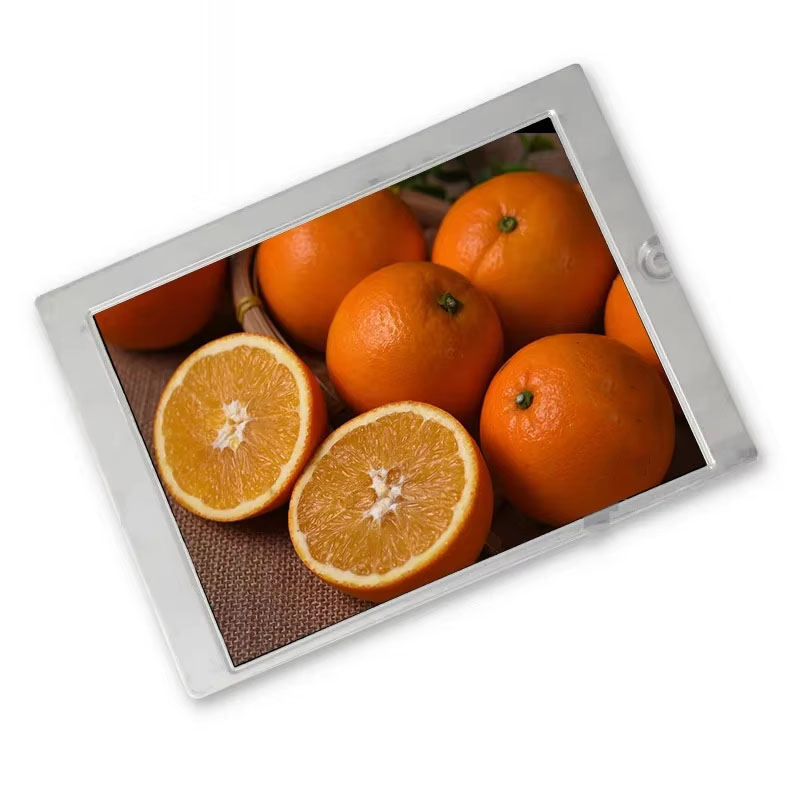
In the intricate world of industrial and embedded display solutions, the choice of a single component can define the performance, reliability, and user experience of an entire system. At the heart of countless medical devices, industrial control panels, test and measurement equipment, and specialized human-machine interfaces (HMIs) lies a critical piece of technology: the TFT-LCD LCM (Liquid Crystal Display Module). This article delves deep into one such pivotal component—the AA084SD01 by Mitsubishi Electric. This 8.4-inch display module is not merely a screen; it is a meticulously engineered solution built for demanding environments where consistency, clarity, and longevity are non-negotiable.
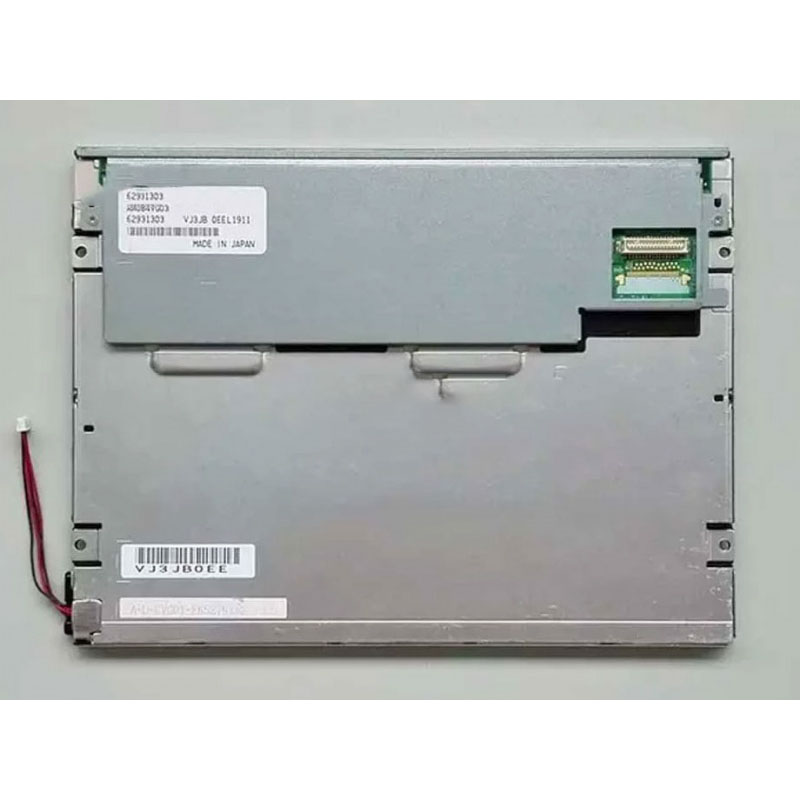
We will explore its technical DNA, from the a-Si TFT panel architecture to its precise SVGA resolution and 119 PPI pixel density. Beyond the datasheet specifications, we will uncover the practical implications of its design, examining its optical performance, mechanical and electrical integration, and the robust environmental durability that sets it apart. Furthermore, we will analyze its ideal application ecosystems and provide a comparative perspective against modern display alternatives. This comprehensive analysis aims to equip engineers, procurement specialists, and product designers with the insights needed to evaluate theAA084SD01 not just as a component, but as a strategic asset for mission-critical applications.
Deconstructing the Core Technology: a-Si TFT and SVGA Resolution
The foundation of the AA084SD01 is its Amorphous Silicon (a-Si) Thin-Film Transistor (TFT) active matrix. This mature and highly reliable technology is the workhorse of the industrial display world. Unlike consumer-grade displays that may prioritize ultra-high refresh rates or extreme color gamuts, a-Si TFT excels in stability, production yield, and cost-effectiveness for mid-size panels. It provides excellent control over each individual pixel, ensuring consistent performance over a wide operating temperature range and a long operational lifespan, which is critical for equipment with multi-year deployment cycles.
Complementing this stable backbone is its SVGA (800 x 600 pixel) resolution. In an era of 4K displays, this might seem modest. However, for 8.4-inch diagonals, it results in a 119 Pixels Per Inch (PPI) density. This is a strategic sweet spot. It offers sufficient detail for displaying complex schematics, text-based data, and control interfaces without the scaling issues or excessive processing power required by higher resolutions. The pixel structure is inherently legible, reducing eye strain during prolonged monitoring. This combination of reliable a-Si technology and purpose-built resolution forms a display core engineered for functional clarity rather than multimedia spectacle.
Optical Performance and Readability in Demanding Conditions
The utility of a display is determined by what the user sees. The AA084SD01 is engineered for high readability in varied lighting environments. It typically features a high-brightness backlight, often in the range of 400-500 nits or higher, enabling clear visibility under strong ambient light conditions found in factories or medical settings. The contrast ratio is optimized to deliver sharp differentiation between foreground and background elements, crucial for interpreting data accurately.
Furthermore, the module offers wide viewing angles (typically 80/80/80/80 in Left/Right/Up/Down directions), ensuring the display content remains consistent and color-stable even when viewed from off-axis positions. This is vital for multi-operator stations or devices viewed from different angles. The surface treatment often includes anti-glare (AG) coating to diffuse ambient light reflections, preventing hotspots and glare that could obscure critical information. These optical characteristics are not afterthoughts but are integral to the module's design, ensuring information is always accessible and unambiguous.
Mechanical and Electrical Integration: Built for Seamless Implementation
For system integrators, a display module is a component that must fit—both physically and electrically. The AA084SD01 is designed as a complete LCM, meaning it includes the LCD panel, backlight unit, driver circuitry, and often a defined interface connector. This turnkey approach significantly reduces engineering overhead. Mechanically, it comes with a precise outline and mounting hole patterns, allowing for secure and straightforward installation into enclosures.
Electrically, it commonly features a standard LVDS (Low-Voltage Differential Signaling)interface. LVDS is renowned for its robustness, noise immunity, and ability to transmit high-speed data over longer distances within a device compared to older TTL interfaces. This simplifies the connection to a host controller or single-board computer. The power supply requirements are clearly defined, and the module typically operates on a single low-voltage DC input, streamlining power system design. This focus on integration transforms the module from a complex assembly into a predictable black-box component.
Environmental Durability and Reliability Metrics
This is where industrial components truly differentiate themselves from consumer parts. The AA084SD01 is built to withstand the rigors of non-climate-controlled environments. Its operating temperature range is broad, often spanning from -20°C or -30°C to +70°C or +80°C. This ensures reliable startup and performance in freezing cold warehouses or hot industrial floors. Storage temperature ranges are even wider, safeguarding the module during shipping and non-operational periods.
Reliability is quantified through rigorous Mean Time Between Failures (MTBF) calculations, often reaching tens of thousands of hours. The components are selected and the assembly process is controlled to minimize failure points. This durability extends to resistance to vibration and shock, which is paramount for mobile or heavy machinery applications. Such robustness guarantees that the display will not be the weak link in a system, supporting 24/7 operation for years with minimal downtime.
Target Applications and Industry-Specific Value
The technical attributes of the AA084SD01 directly map to a suite of demanding applications. In medicaldiagnostics (e.g., ultrasound machines, patient monitors), its stable performance, high brightness, and grayscale clarity are essential for accurate image interpretation and patient data display. Within industrialautomation, it serves as the face of PLC control panels, CNC machine interfaces, and test bench equipment, where readability under factory lighting and resistance to electrical noise are critical.
It is also found in transportation systems (e.g., dashboard displays for specialized vehicles), test and measurement instruments, and point-of-sale/kiosk systems that require longer lifecycles than consumer tablets. In these fields, the value proposition is clear: a proven, reliable, and serviceable display solution that reduces total cost of ownership by minimizing failures and ensuring long-term supply consistency, which is often guaranteed by a manufacturer like Mitsubishi.
Comparative Analysis: The AA084SD01 in the Modern Display Landscape
Positioning the AA084SD01 requires context. Compared to modern consumer IPS panels, it may lag in color saturation and viewing angle. However, this comparison is misguided. Its true peers are other industrial a-Si modules. Its advantages lie in its specific balance of size, resolution, and the trusted Mitsubishi supply chain. Against newer technologies like IGZO (Indium Gallium Zinc Oxide) TFT, a-Si is more cost-effective for this performance tier, while IGZO might target higher resolutions or lower power.
The most relevant comparison today is often against replacement or "pin-to-pin" compatible modules. The AA084SD01, as a long-standing model, has established a mechanical and electrical footprint. When considering alternatives for maintenance or upgrade, factors like exact mounting holes, connector type, voltage levels, and initialization sequences (via its dedicated controller IC) become paramount. Its enduring value is often as a legacy component that ensures system continuity, with its specifications serving as the benchmark for any potential replacement.
FAQs: AA084SD01 Display Module
1. What does "a-Si TFT-LCD LCM" stand for?It stands for Amorphous Silicon Thin-Film Transistor Liquid Crystal Display Module, describing the panel technology and its complete, integrated form.
2. What is the screen size and resolution?It is an 8.4-inch diagonal screen with an SVGA resolution of 800 (horizontal) x 600 (vertical) pixels.
3. What is the pixel density (PPI)?The pixel density is approximately 119 Pixels Per Inch (PPI).
4. What is the primary interface for this module?It typically uses an LVDS (Low-Voltage Differential Signaling) interface for reliable data transmission from the host controller.
5. Is this display suitable for outdoor use?While it has high brightness, it is not specifically designed as a sunlight-readable outdoor display. It is best for bright indoor industrial environments.
6. What are the typical operating and storage temperature ranges?Operating range is typically -20°C to +70°C, with storage range wider, often -30°C to +80°C (exact specs vary; consult datasheet).
7. What industries commonly use this module?Medical devices, industrial automation/HMI, test & measurement equipment, and specialized transportation systems.
8. Does it have a touchscreen?The standard AA084SD01 is a display module only. Touchscreen panels (resistive or capacitive) can usually be added as an optional overlay.
9. Why choose this over a standard consumer LCD panel?For its wide temperature range, long-term reliability (high MTBF), stable supply chain, and robustness against vibration/electrical noise.
10. Is this module still in production and available?Availability depends on Mitsubishi's lifecycle status. It may be in active production, on extended life support, or available through authorized distributors and specialists in legacy components.
Conclusion
The Mitsubishi AA084SD01 8.4" SVGA display module exemplifies the engineering philosophy behind successful industrial components. It is not defined by chasing the highest specs, but by mastering a specific set of parameters—reliability, clarity, integrability, and durability—that create enduring value in professional applications. Its a-Si TFT foundation and 119 PPI SVGA resolution represent a carefully calibrated balance between performance, cost, and longevity.
For designers and maintainers of critical systems, understanding such a component in depth is crucial. It informs not just a purchasing decision, but also system architecture, lifecycle planning, and long-term serviceability. In a landscape of rapidly changing consumer technology, the AA084SD01 stands as a testament to the power of focused, robust design, ensuring that the interface between machine and human remains steadfastly clear and dependable for years to come.





